Copyright © 2026 Yorke Antique Textiles
.avif)

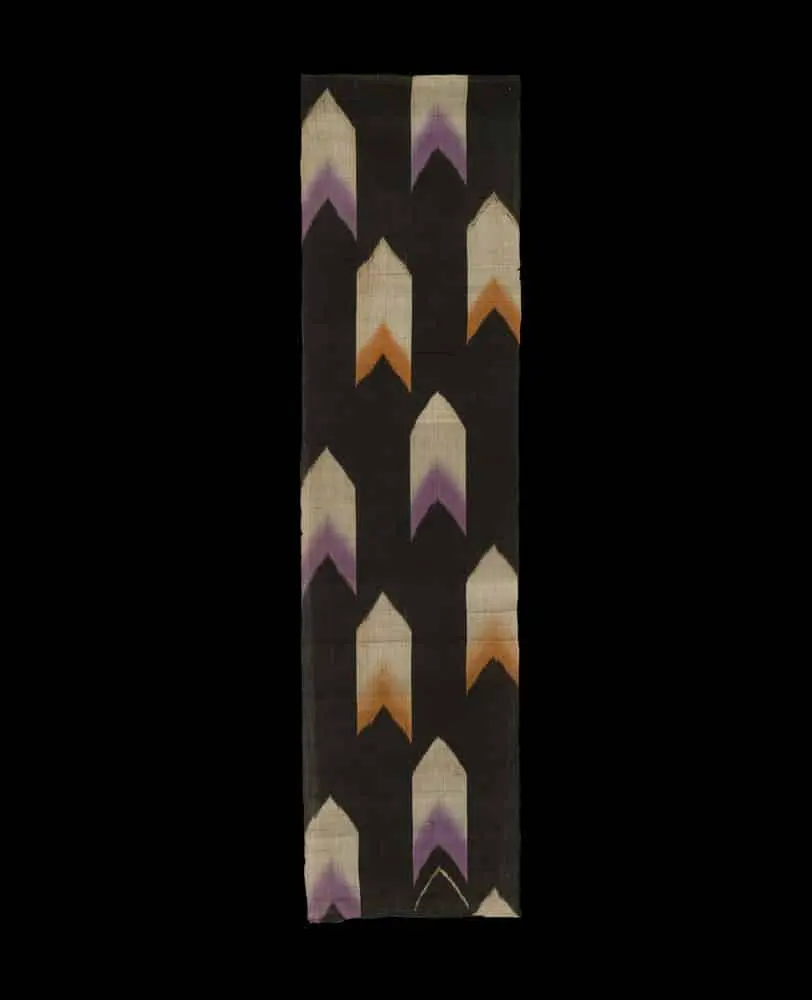
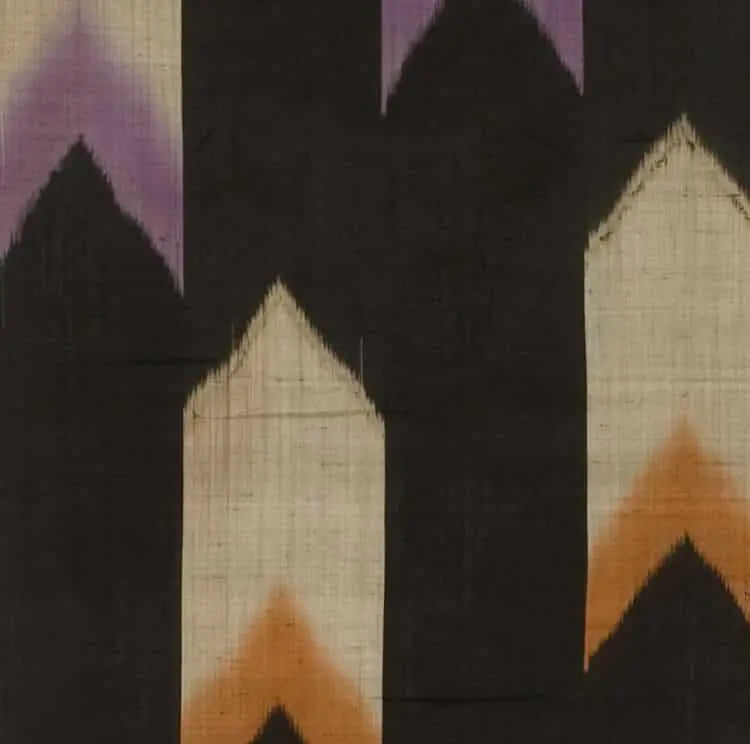
This striking textile originates from Japan’s early Showa period (1926–1940) and is a scholarly example of the bold, geometric experimentation that defined urban pre-war fashion. Measuring 14 inches by 54 inches (36 cm x 137 cm), the piece represents a complete panel from a disassembled kimono, preserved in excellent condition. It is crafted from meisen silk, a material celebrated for its crisp handle and the distinctive "blurred" edges of its patterns, achieved through the innovative kasuri (ikat) pre-dyeing technique.
The visual narrative is dominated by a rhythmic arrangement of oversized yagasuri (arrow feather) motifs set against a deep midnight-black field. Traditionally a symbol of steadfastness and focus, the arrow motif is reimagined here with a modernist flair, featuring gradients of soft lavender and warm apricot orange within the ivory feather forms. The slightly feathered, pixelated edges of the arrows—a hallmark of the meisen weaving process—add a sense of vibration and fluid energy to the architectural structure of the pattern. This juxtaposition of a classical talismanic symbol with an Art Deco color palette reflects the early Showa era's transition toward abstract, graphic design.

Payment Options: We primarily accept PayPal for all transactions. Credit and debit cards are not accepted. If you prefer to pay by personal check instead of PayPal, please note this preference in the "Additional comments" field when placing your order.Ordering Process
To receive your PayPal invoice, simply fill out the form.
Shipping Details: We ship all orders to the address associated with your PayPal payment. Please ensure your PayPal shipping address is current and accurate.A phone number is required during checkout, as our shipping carrier may need to contact you regarding delivery questions.Shipping RatesUnited States and Canada: $20International destinations (air mail): $40
