Copyright © 2026 Yorke Antique Textiles
.avif)

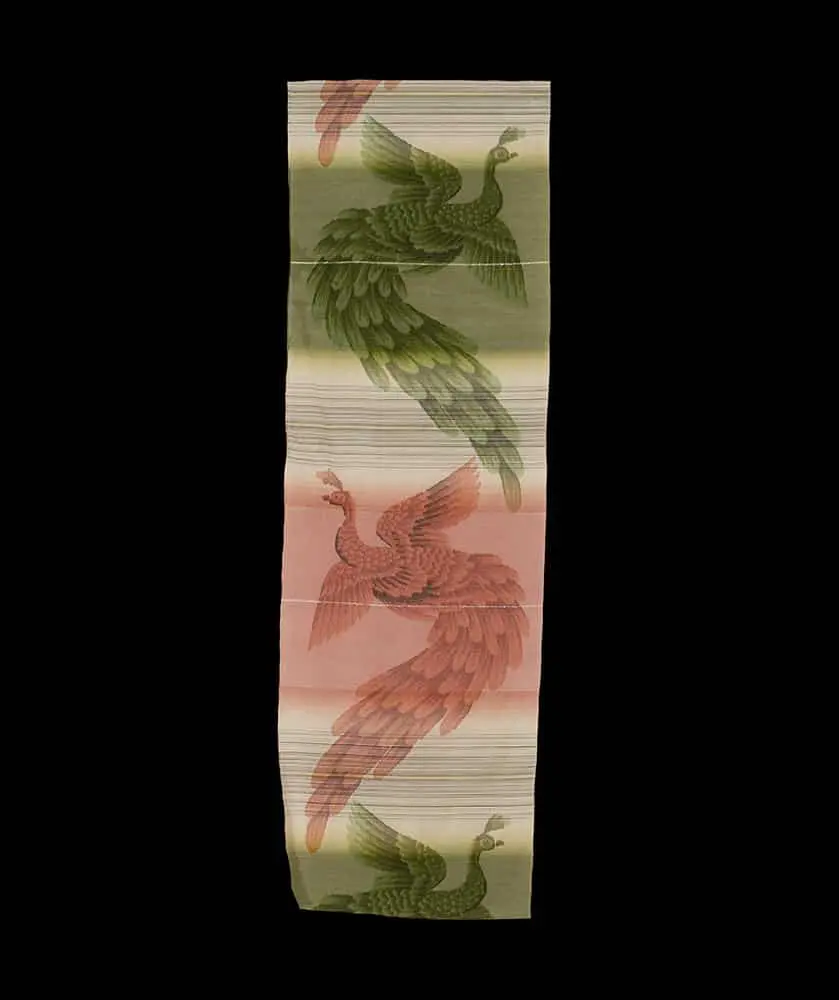
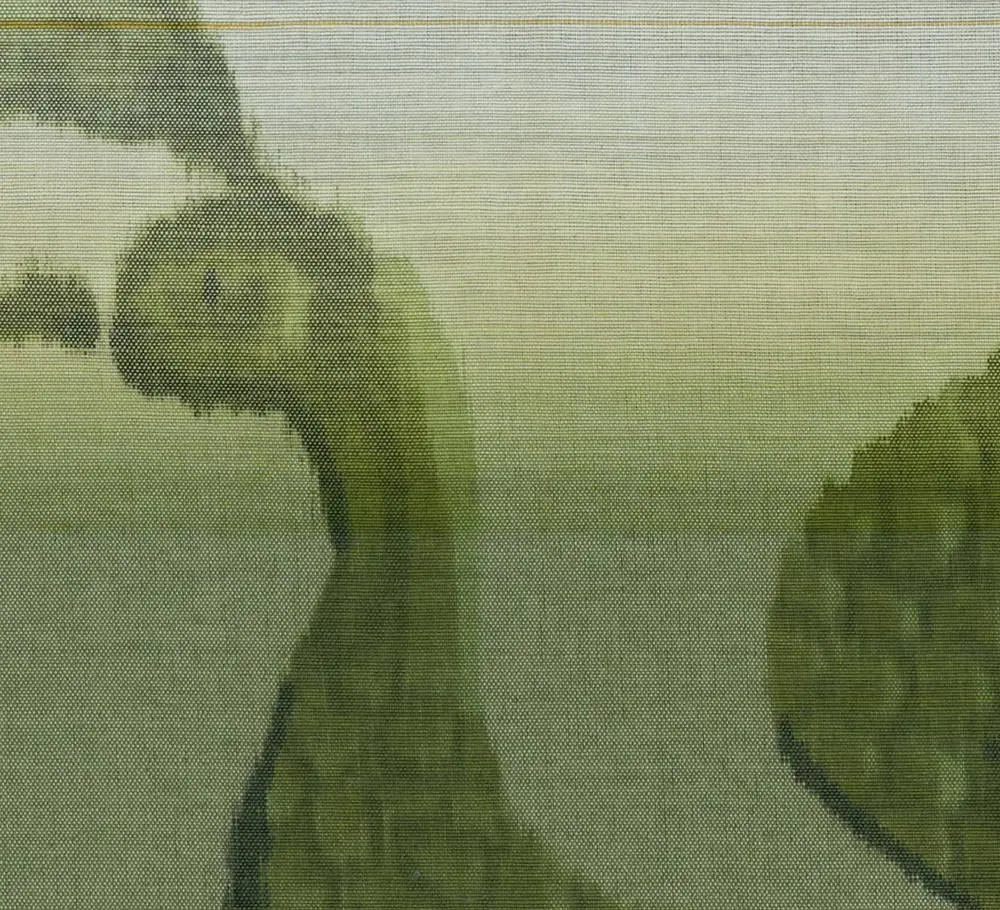
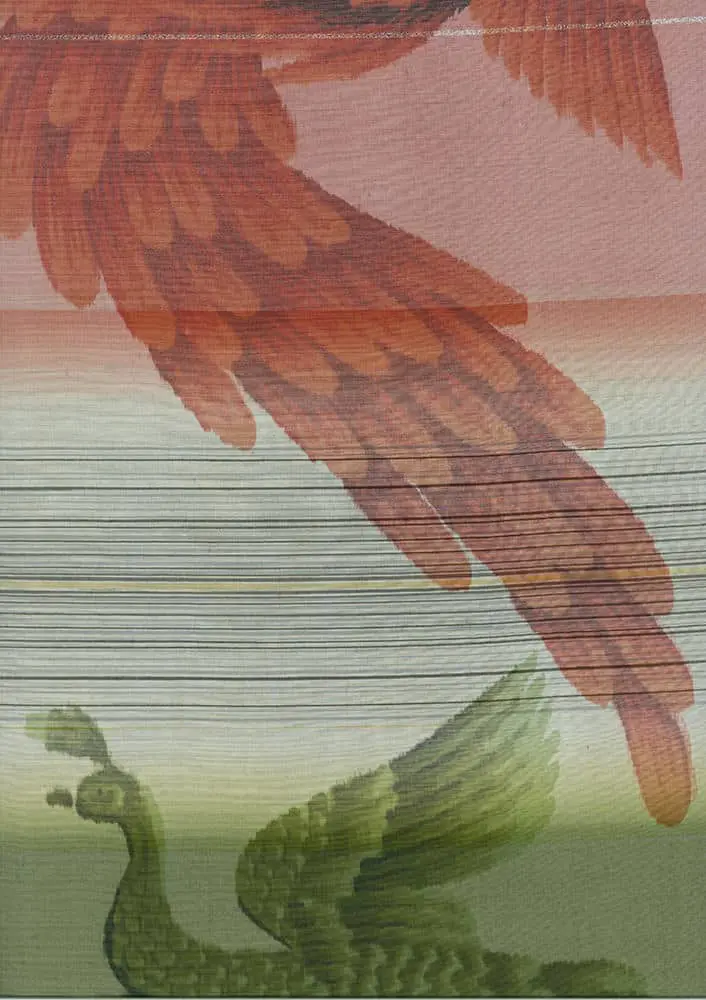

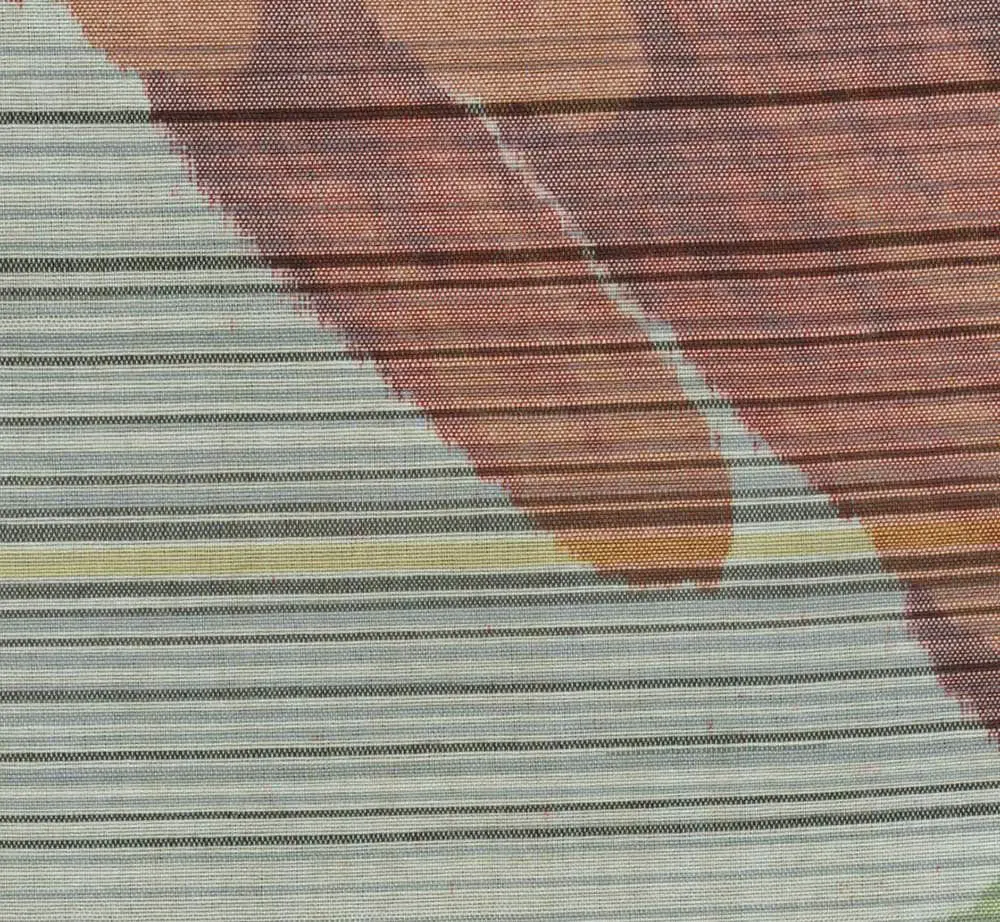
This striking textile originates from Japan’s early to mid-Showa period (1920–1950) and is a scholarly example of the bold, illustrative experimentation found in meisen silk production. Sourced from an unused vintage kimono roll, the panel measures 14 inches by 46 inches (36 cm x 117 cm) and remains in excellent condition. It possesses the distinctive lightweight, "crisp" texture that made meisen a favorite for stylish everyday wear during the mid-20th century.
The visual narrative is dominated by large-scale, stylized peacock motifs that exhibit a sophisticated use of color graduation. One peacock is rendered in a spectrum of greens, ranging from vibrant lime to deep bottle green, while the other features a transition from dusty pink to rich maroon. Adding a touch of understated luxury, each bird is adorned with a subtle, narrow metallic silver band. The background is equally dynamic, utilizing a light cream field punctuated by graduated horizontal lines in donkey brown, mid-grey, and butter yellow. This rhythmic, linear backdrop serves to emphasize the organic curves of the peacocks, reflecting the era's unique fusion of traditional avian symbolism with modern, graphic design principles.

Payment Options: We primarily accept PayPal for all transactions. Credit and debit cards are not accepted. If you prefer to pay by personal check instead of PayPal, please note this preference in the "Additional comments" field when placing your order.Ordering Process
To receive your PayPal invoice, simply fill out the form.
Shipping Details: We ship all orders to the address associated with your PayPal payment. Please ensure your PayPal shipping address is current and accurate.A phone number is required during checkout, as our shipping carrier may need to contact you regarding delivery questions.Shipping RatesUnited States and Canada: $20International destinations (air mail): $40
