Copyright © 2026 Yorke Antique Textiles
.avif)

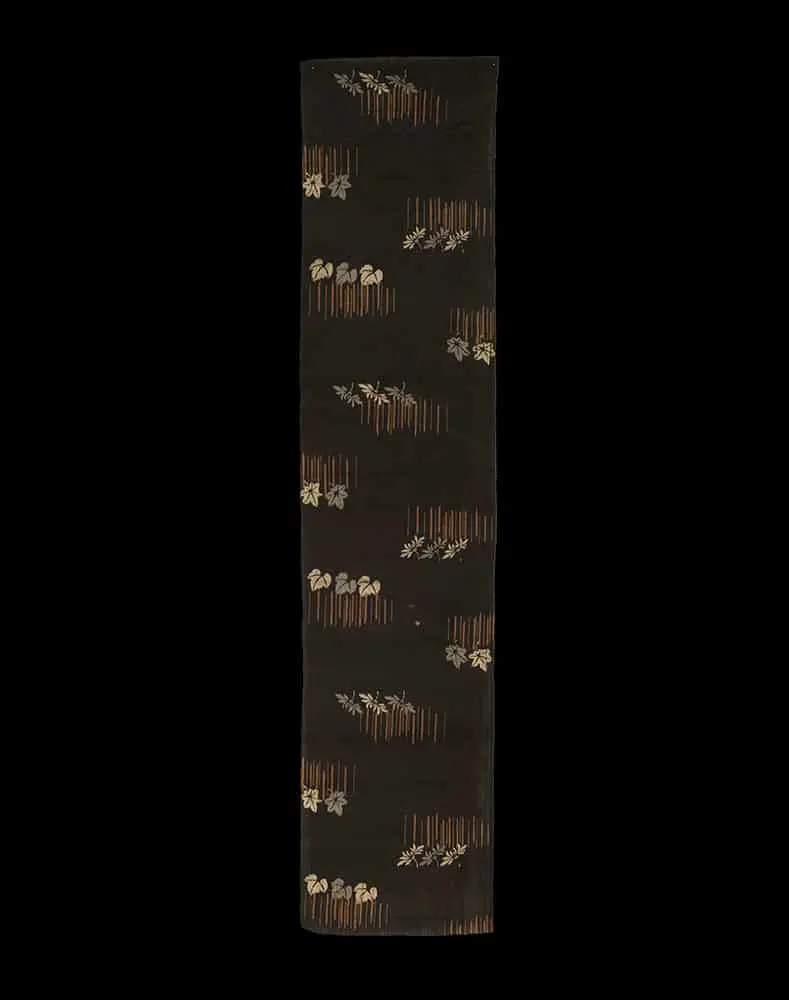
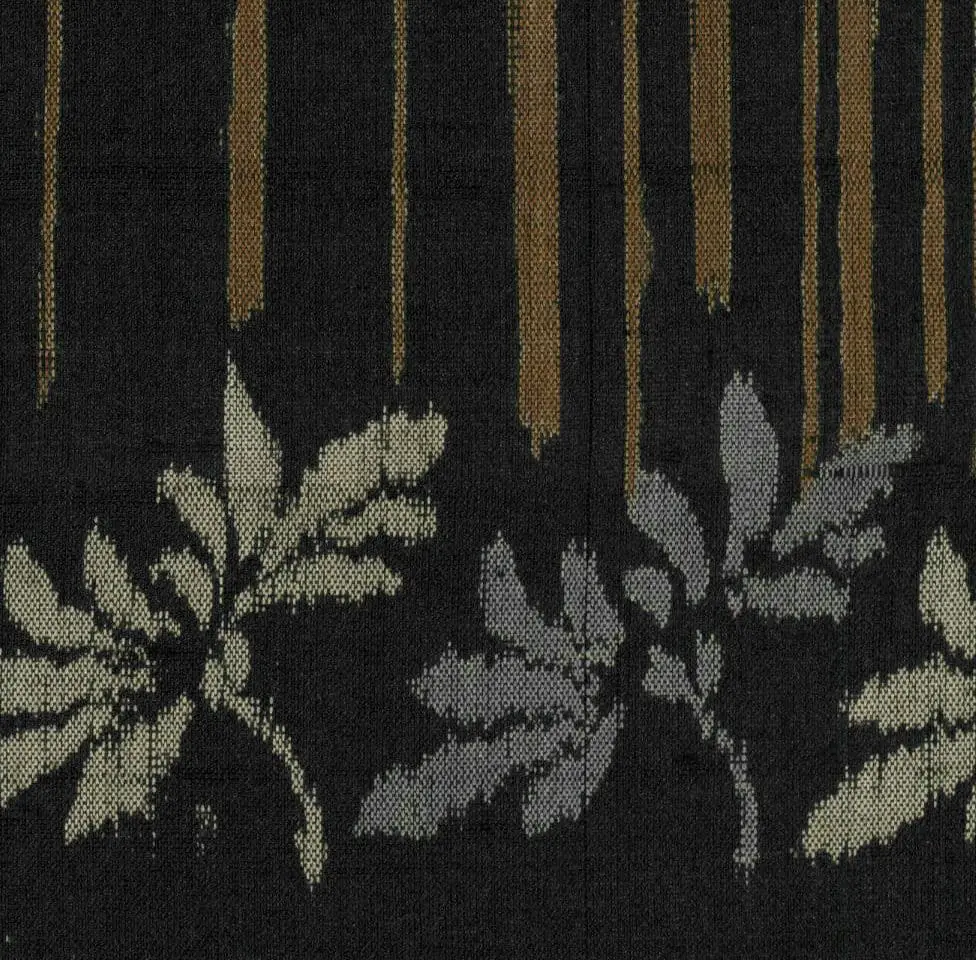
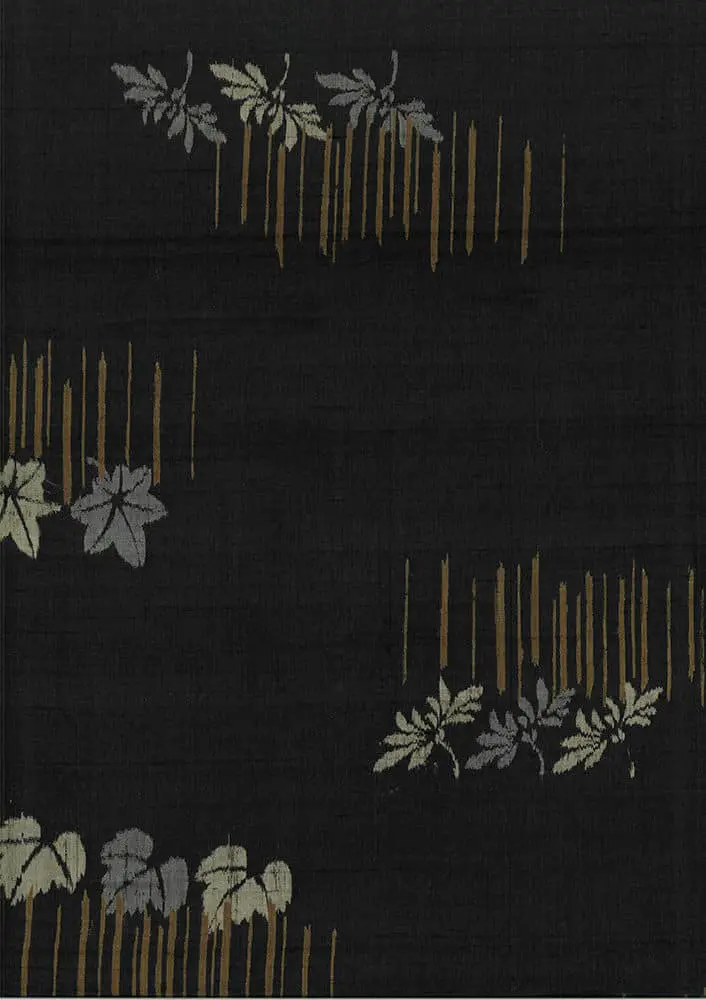

This vibrant textile originates from Japan’s early Showa period (1930–1940) and is a scholarly example of the energetic, large-scale graphic designs that defined meisen silk during the pre-war era. Measuring 13.5 inches by 60 inches (34 cm x 152 cm), the panel is crafted from high-quality silk that offers a slightly crisp texture, yet its lighter weight ensures a graceful drape. The composition is set against a saturated magenta-pink ground, featuring a tonal, figured geometric pattern woven into the substrate that provides a sophisticated architectural foundation for the printed motifs.
The visual narrative is dominated by a bold, teal-blue hexagonal lattice, or kikkō (tortoiseshell) pattern, which stretches across the entire length of the panel. Overlaid upon this structure are oversized, stylized lily blossoms in vibrant shades of butter-yellow and deep teal, accented with crisp white leaves. The pattern is executed using the kasuri (ikat) technique, resulting in the signature "blurred" edges that give the blossoms a sense of vibrating movement and painterly depth. This specific combination of a traditional protective geometric lattice with modern, almost tropical floral imagery reflects the era's fashionable "Modern Girl" aesthetic, which sought to blend heritage symbols with contemporary global trends.

Payment Options: We primarily accept PayPal for all transactions. Credit and debit cards are not accepted. If you prefer to pay by personal check instead of PayPal, please note this preference in the "Additional comments" field when placing your order.Ordering Process
To receive your PayPal invoice, simply fill out the form.
Shipping Details: We ship all orders to the address associated with your PayPal payment. Please ensure your PayPal shipping address is current and accurate.A phone number is required during checkout, as our shipping carrier may need to contact you regarding delivery questions.Shipping RatesUnited States and Canada: $20International destinations (air mail): $40
