Copyright © 2026 Yorke Antique Textiles
.avif)

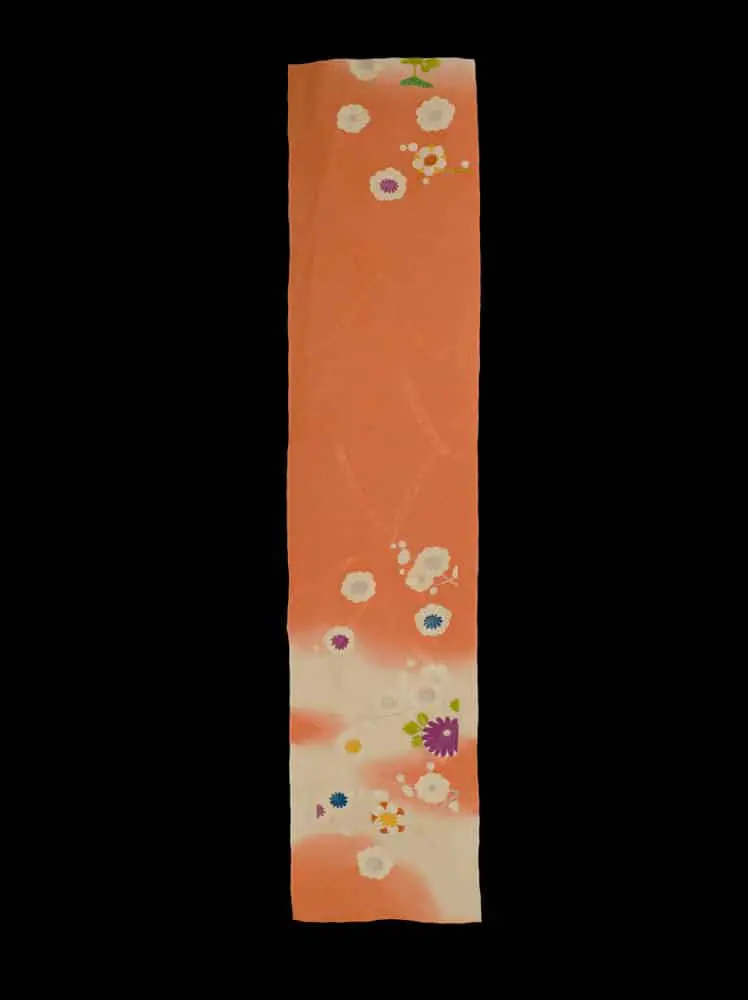
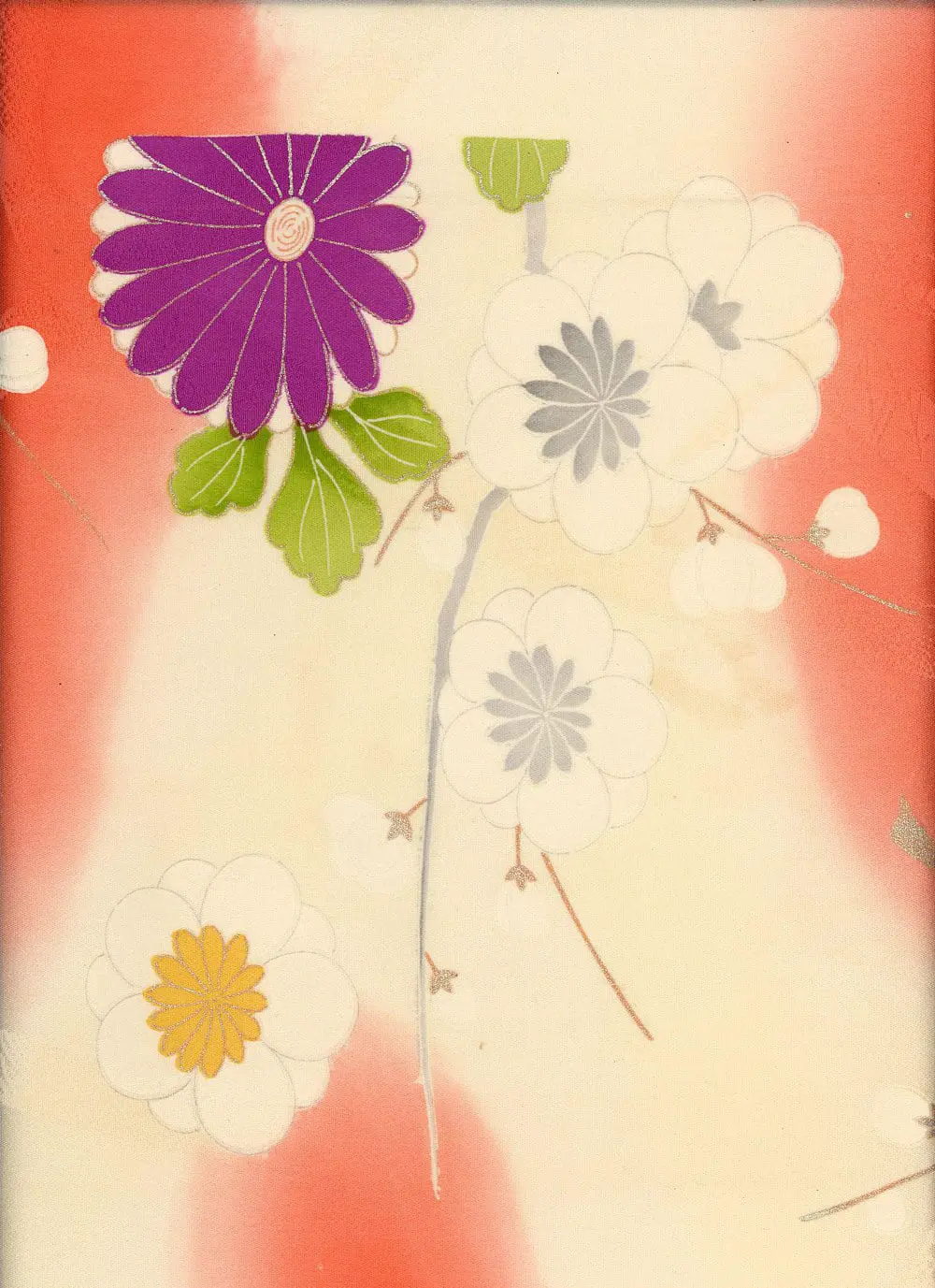
This opulent textile originates from Japan’s Showa period (1940–1960) and is a scholarly example of the mid-century trend toward combining traditional floral motifs with bold, metallic accents. Measuring 14 inches by 64 inches (36 cm x 163 cm), the panel is crafted from high-quality rinzu (silk damask), featuring a vibrant "true orange" and crisp white base. While the piece remains in very good condition with a fantastic handle and drape, some water spots are present on the fabric, consistent with its age and previous use.
The visual narrative is defined by a rhythmic arrangement of kiku (chrysanthemum) blossoms rendered in a joyful spectrum of rainbow shades, including purple, yellow, turquoise, and various pinks. These flowers are skillfully placed against a soft, cloud-like bokashi (color gradation) background that transitions seamlessly from saturated orange to white. The entire composition is elevated by abundant gold metallic outlining around the petals, a technique used to add structural definition and a sense of luxury to formal attire during the post-war era. The kiku, a symbol of longevity and the imperial house, is presented here with a modernist energy through the use of high-contrast pigments and shimmering thread work.

Payment Options: We primarily accept PayPal for all transactions. Credit and debit cards are not accepted. If you prefer to pay by personal check instead of PayPal, please note this preference in the "Additional comments" field when placing your order.Ordering Process
To receive your PayPal invoice, simply fill out the form.
Shipping Details: We ship all orders to the address associated with your PayPal payment. Please ensure your PayPal shipping address is current and accurate.A phone number is required during checkout, as our shipping carrier may need to contact you regarding delivery questions.Shipping RatesUnited States and Canada: $20International destinations (air mail): $40
