Copyright © 2026 Yorke Antique Textiles
.avif)

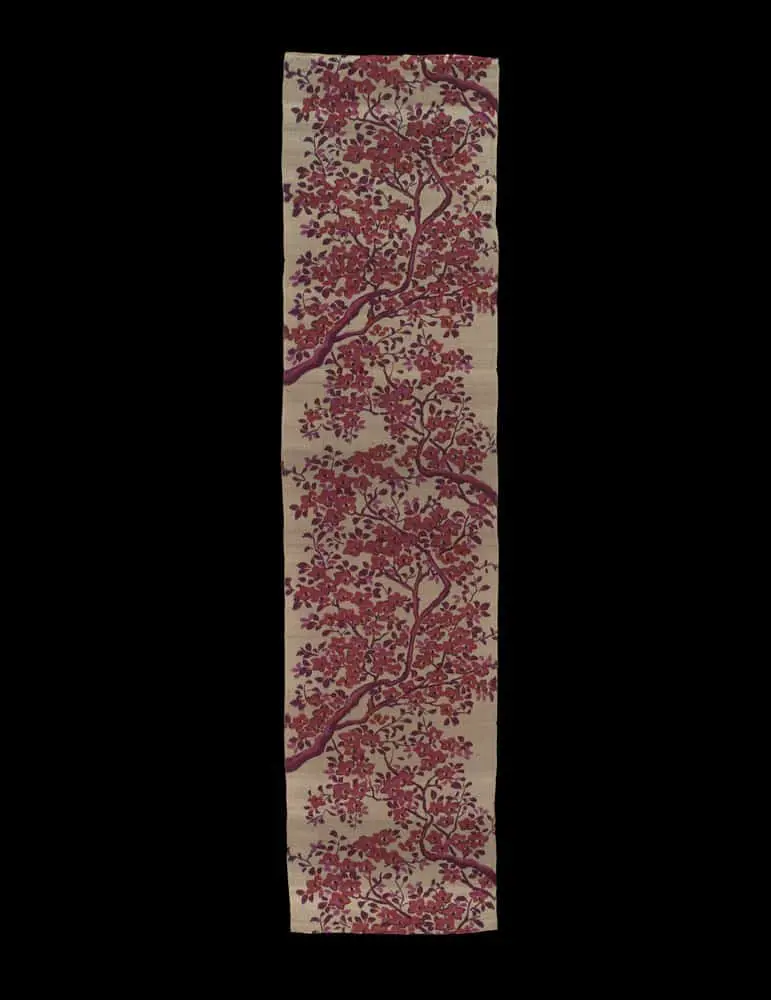

This striking textile originates from Japan’s early to mid-Showa period (1930–1950) and is a scholarly example of the bold, painterly aesthetic achieved through pre-war weaving innovations. Measuring 14.5 inches by 60 inches (37 cm x 152 cm), the panel is crafted from high-quality meisen silk, which remains in excellent condition. Consistent with the meisen variety, the base fabric is characterized by a thinner, more crisp profile than formal damask, yet it possesses a wonderful drape and a soft, matte finish.
The visual narrative is set against a sophisticated taupe background, providing a neutral stage for a vertical composition of flowering sakura (cherry blossom) branches. These branches are rendered in an unusually bold palette for the motif, featuring deep purple, rich red, and vibrant magenta. The pattern is executed using the kasuri (ikat) technique, where the silk threads were resist-dyed prior to weaving; this creates the signature "blurred" edges that give the blossoms an impressionistic, vibrating quality. The dense, upward-reaching arrangement of the gnarled branches reflects the mid-century trend of reinterpreting classical spring symbols with a more graphic, modern energy.

Payment Options: We primarily accept PayPal for all transactions. Credit and debit cards are not accepted. If you prefer to pay by personal check instead of PayPal, please note this preference in the "Additional comments" field when placing your order.Ordering Process
To receive your PayPal invoice, simply fill out the form.
Shipping Details: We ship all orders to the address associated with your PayPal payment. Please ensure your PayPal shipping address is current and accurate.A phone number is required during checkout, as our shipping carrier may need to contact you regarding delivery questions.Shipping RatesUnited States and Canada: $20International destinations (air mail): $40
