Copyright © 2026 Yorke Antique Textiles
.avif)

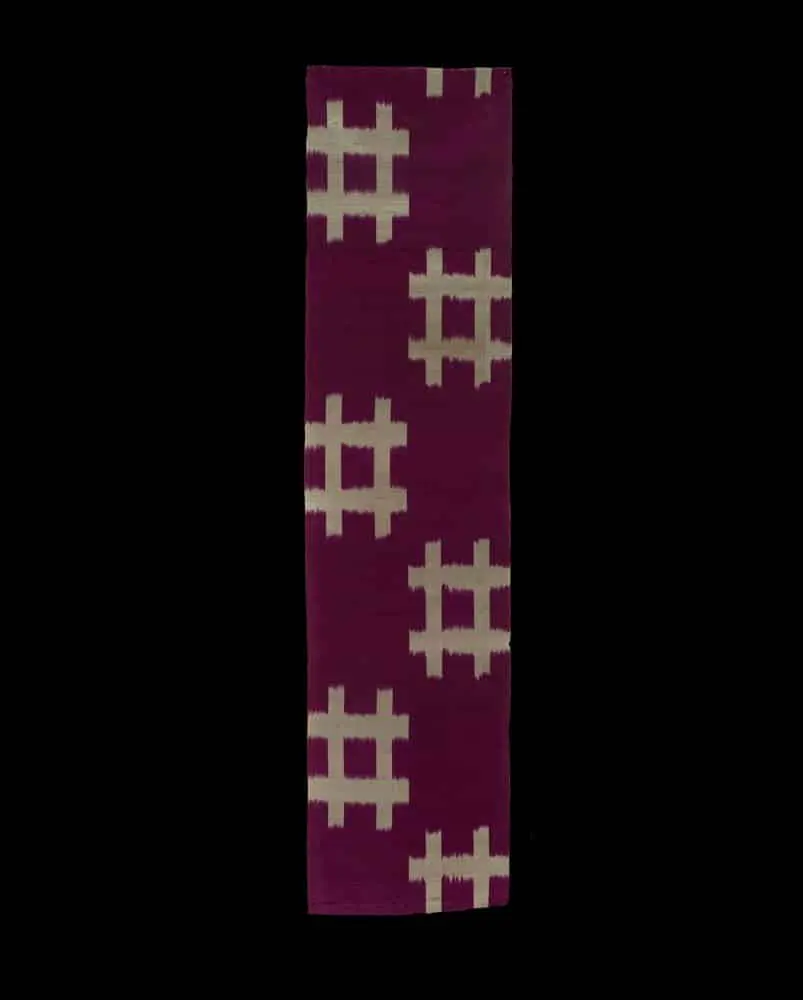
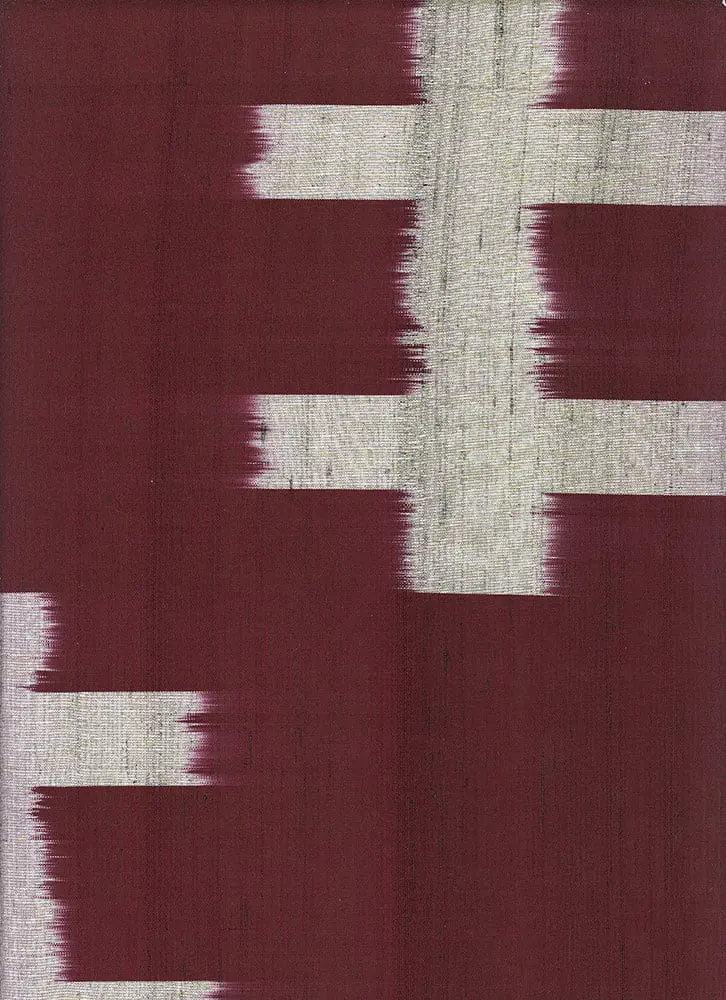
This striking textile originates from Japan’s early Showa period (1930–1940) and is a scholarly example of the bold, geometric abstraction that redefined meisen silk during the pre-war era. Measuring 14.25 inches by 59 inches (36 cm x 150 cm), the panel is crafted from a specific meisen variant that displays a slightly slubbier texture compared to other examples, providing a unique tactile quality. The base silk is thinner than formal damask but offers a superb drape, remaining in excellent condition.
The visual narrative is set against a saturated wine-colored ground with a subtle violet tinge. It features an oversized, rhythmic arrangement of bold "hash marks," known in Japanese textile tradition as the igeta (well-frame) motif. These marks are rendered in a high-contrast silvery grey using the kasuri (ikat) technique. The deliberate "blurring" at the edges of the silvery marks creates a sense of vibrating energy against the deep purple-red background. This minimalist yet powerful composition reflects the 1930s trend of magnifying traditional folk patterns to create a modern, architectural aesthetic that appealed to the cosmopolitan "Modern Girl" of the era.

Payment Options: We primarily accept PayPal for all transactions. Credit and debit cards are not accepted. If you prefer to pay by personal check instead of PayPal, please note this preference in the "Additional comments" field when placing your order.Ordering Process
To receive your PayPal invoice, simply fill out the form.
Shipping Details: We ship all orders to the address associated with your PayPal payment. Please ensure your PayPal shipping address is current and accurate.A phone number is required during checkout, as our shipping carrier may need to contact you regarding delivery questions.Shipping RatesUnited States and Canada: $20International destinations (air mail): $40
