Copyright © 2026 Yorke Antique Textiles
.avif)

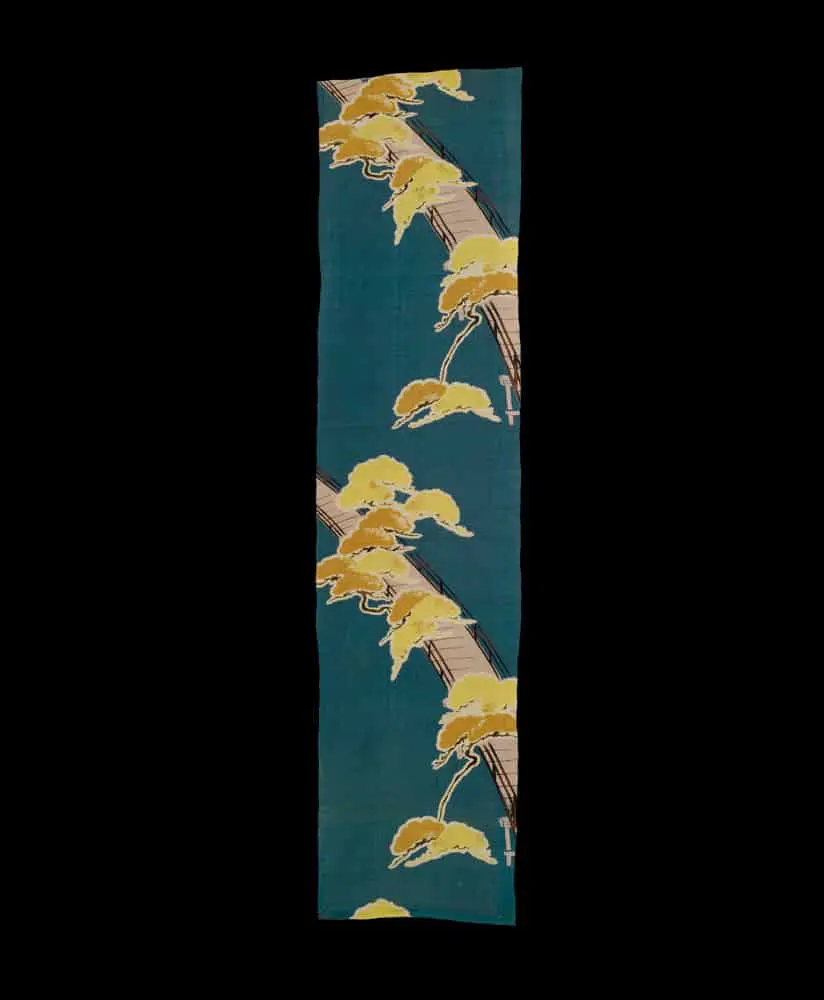
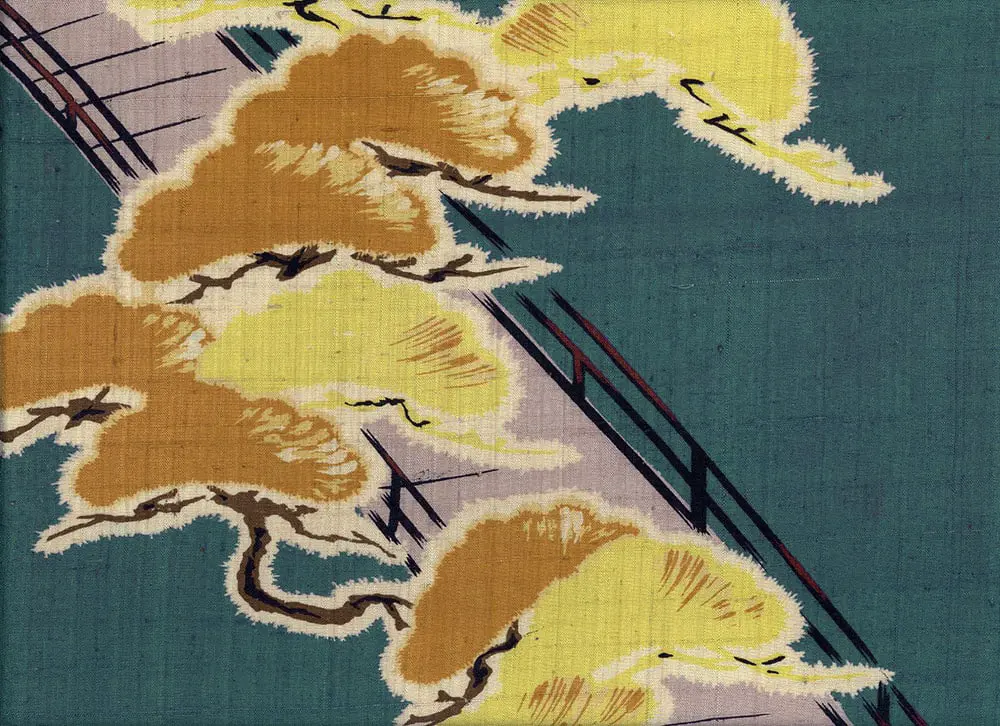
This exceptional textile originates from the early Showa period (1920–1940) and is a scholarly example of the creative material innovation found in rural Japanese weaving centers. Measuring 13.75 inches by 67 inches (35 cm x 170 cm), the panel is crafted from Jigine, a distinctive silk known for its billowy nature and characteristic slubs. While it shares organic qualities with tsumugi, the inclusion of tussah silk in the weaving process results in an exceptionally soft texture. The substrate is a delightful light teal blue, providing a serene and atmospheric foundation for the architectural motifs.
The visual narrative features a rhythmic, diagonal arrangement of stylized matsu (pine) trees and traditional wooden bridges. These elements are rendered in brilliant shades of gold, yellow, and brown, with sharp black outlines that provide structural definition. The design is a "faux meisen," utilizing sophisticated dyeing techniques to emulate the pixelated, feathered edges of true kasuri weaving on the textured Jigine base. As the pine symbolizes longevity and the bridge represents the transition between different worlds or stages of life, this composition combines auspicious traditional symbolism with the graphic, scenic sensibilities favored in pre-war garment design.

Payment Options: We primarily accept PayPal for all transactions. Credit and debit cards are not accepted. If you prefer to pay by personal check instead of PayPal, please note this preference in the "Additional comments" field when placing your order.Ordering Process
To receive your PayPal invoice, simply fill out the form.
Shipping Details: We ship all orders to the address associated with your PayPal payment. Please ensure your PayPal shipping address is current and accurate.A phone number is required during checkout, as our shipping carrier may need to contact you regarding delivery questions.Shipping RatesUnited States and Canada: $20International destinations (air mail): $40
