Copyright © 2026 Yorke Antique Textiles
.avif)

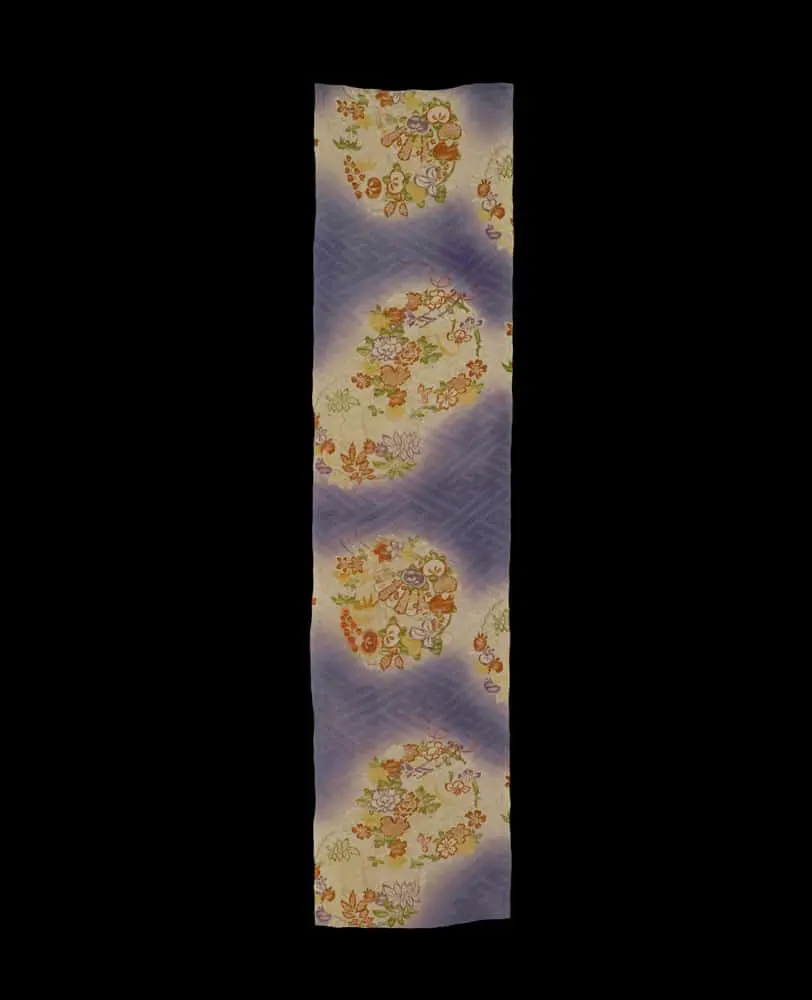
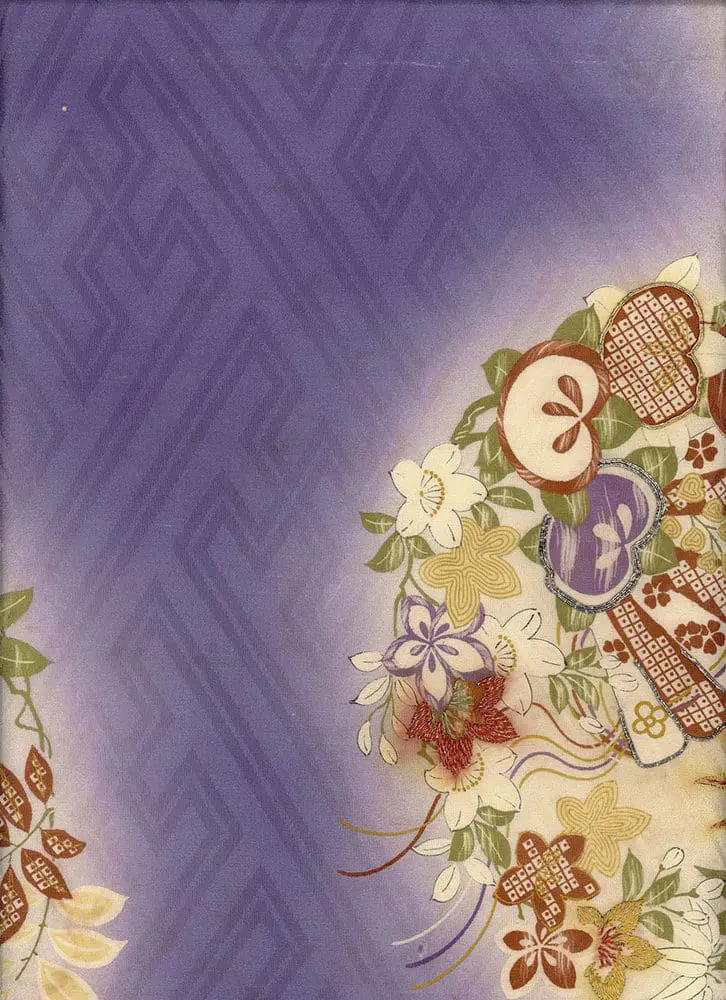
This exquisite textile originates from Japan’s early Showa period (1930–1940) and is a scholarly example of the refined, multi-technique craftsmanship that characterized pre-WWII luxury silk production. Measuring 14 inches by 60 inches (36 cm x 152 cm), the panel is crafted from a creamy vintage rinzu (silk damask) that features a delicate, figured geometric pattern woven into the substrate. The base is further enhanced by soft, cloud-like bokashi gradations in a light periwinkle blue shade. This lovely thin silk remains in good condition with a remarkable drape, though it exhibits slight color bleeding consistent with its age and the nature of vintage dyes.
The visual narrative consists of a vertical arrangement of large circular medallions, each containing a dense profusion of seasonally diverse florals, including chrysanthemums and peonies. Reflecting the high status of the original garment, these motifs are not merely dyed but are lavishly embellished with hand-applied silk thread embroidery and metallic thread couching. This combination of weaving, dyeing, and needlework creates a rich, three-dimensional texture that was typical of the era's formal feminine attire. The palette is a sophisticated blend of coral, soft greens, and golden tones, set against the serene periwinkle and cream ground to create a balanced, ethereal aesthetic.

Payment Options: We primarily accept PayPal for all transactions. Credit and debit cards are not accepted. If you prefer to pay by personal check instead of PayPal, please note this preference in the "Additional comments" field when placing your order.Ordering Process
To receive your PayPal invoice, simply fill out the form.
Shipping Details: We ship all orders to the address associated with your PayPal payment. Please ensure your PayPal shipping address is current and accurate.A phone number is required during checkout, as our shipping carrier may need to contact you regarding delivery questions.Shipping RatesUnited States and Canada: $20International destinations (air mail): $40
