Copyright © 2026 Yorke Antique Textiles
.avif)


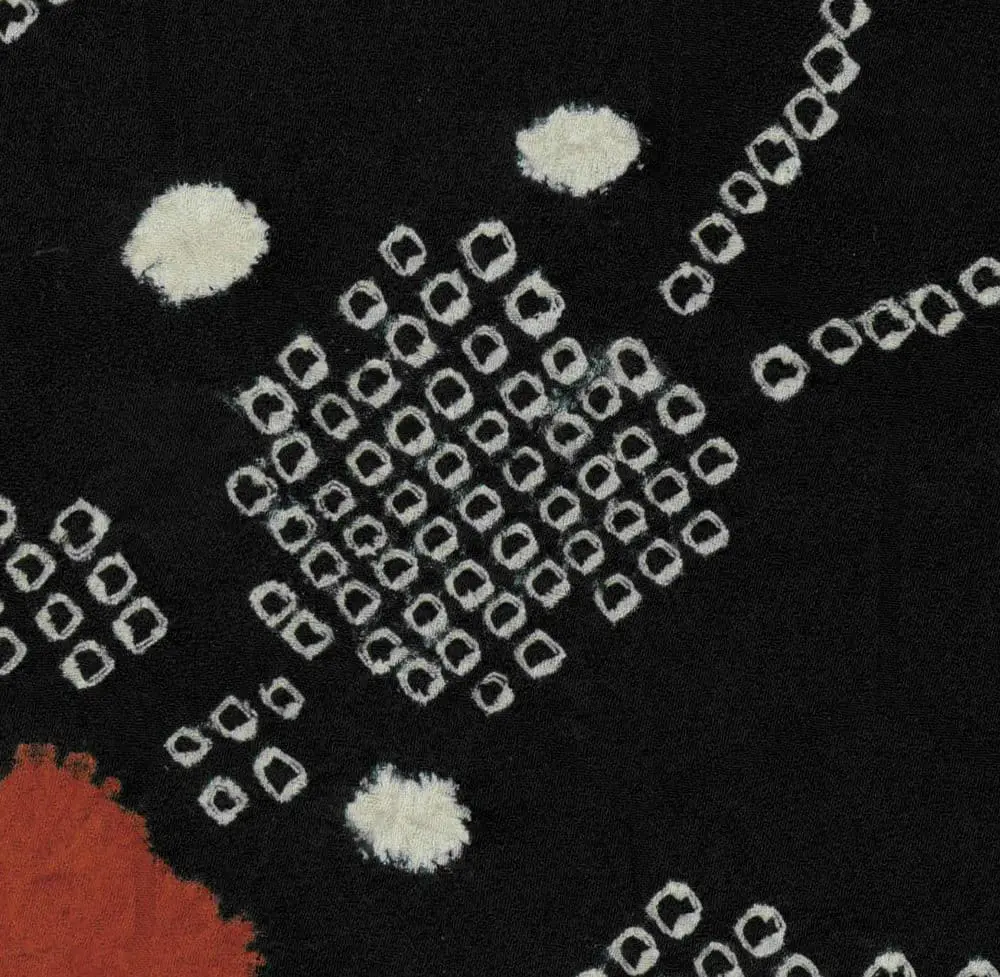
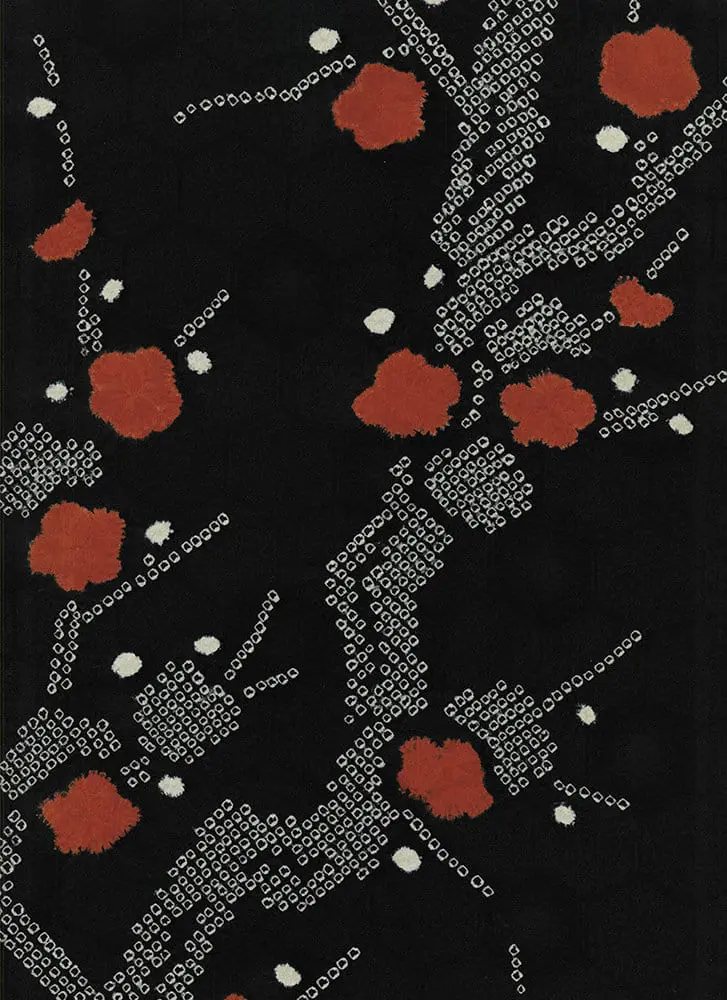
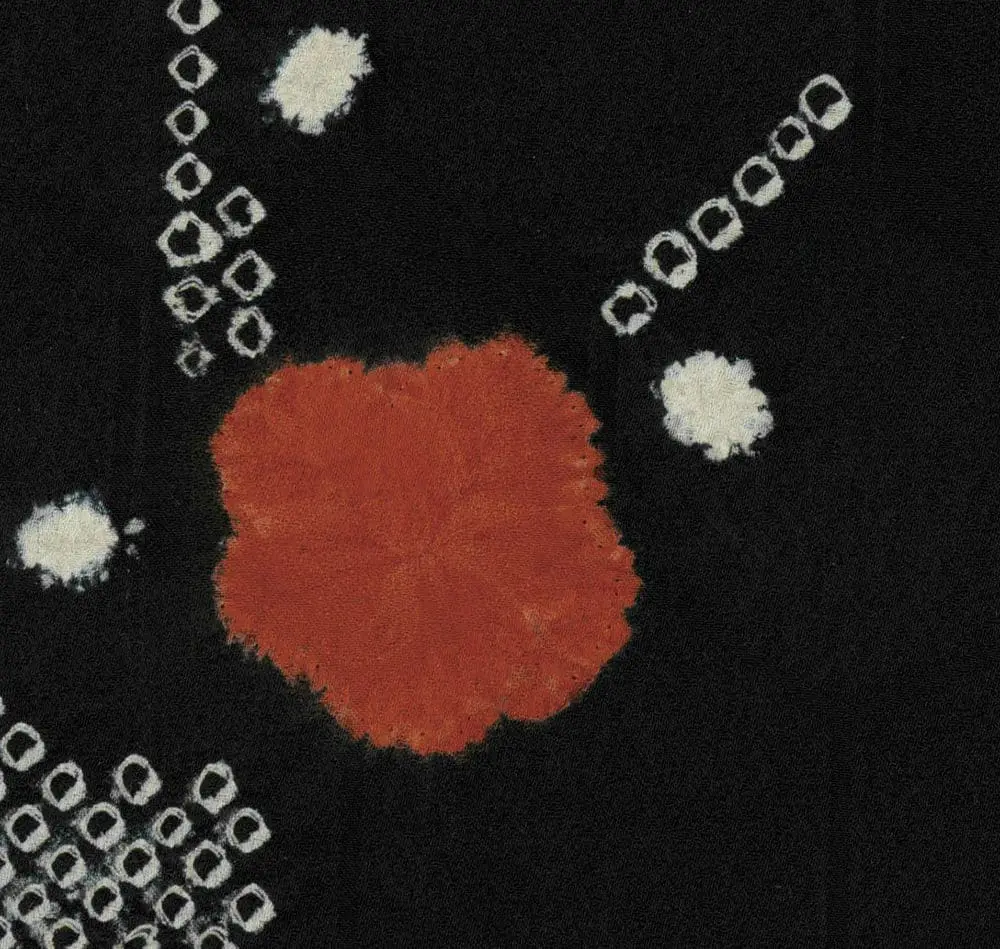
This striking textile originates from Japan’s mid-Showa period (1950–1970) and is a scholarly example of the bold, graphic contrast favored in post-war formal silk design. Measuring 14.25 inches by 55 inches (36 cm x 140 cm), the piece is a complete panel from a disassembled kimono, preserved in excellent condition. The substrate is a premium rinzu (silk damask), dyed in a deep, midnight black that provides a lustrous and structurally rich foundation for the decorative resists. The fabric is noted for its exceptional softness, shiny texture, and a fantastic drape.
The visual narrative is dominated by a vertical, ascending composition of ume (plum) blossoms, rendered in a high-contrast palette of vivid red and crisp white. These motifs are executed entirely in the shibori (resist-dyeing) tradition, featuring the characteristic granular, pebbled texture of hand-tied resists. The white stems arc gracefully across the black field in a jagged, rhythmic fashion, while the bold red blossoms are scattered like glowing embers along the branches. As the plum blossom is a classical symbol of resilience and hope—being the first flower to bloom in the late winter snow—this piece represents a modern, graphic interpretation of a deeply traditional theme.

Payment Options: We primarily accept PayPal for all transactions. Credit and debit cards are not accepted. If you prefer to pay by personal check instead of PayPal, please note this preference in the "Additional comments" field when placing your order.Ordering Process
To receive your PayPal invoice, simply fill out the form.
Shipping Details: We ship all orders to the address associated with your PayPal payment. Please ensure your PayPal shipping address is current and accurate.A phone number is required during checkout, as our shipping carrier may need to contact you regarding delivery questions.Shipping RatesUnited States and Canada: $20International destinations (air mail): $40
