Copyright © 2026 Yorke Antique Textiles
.avif)

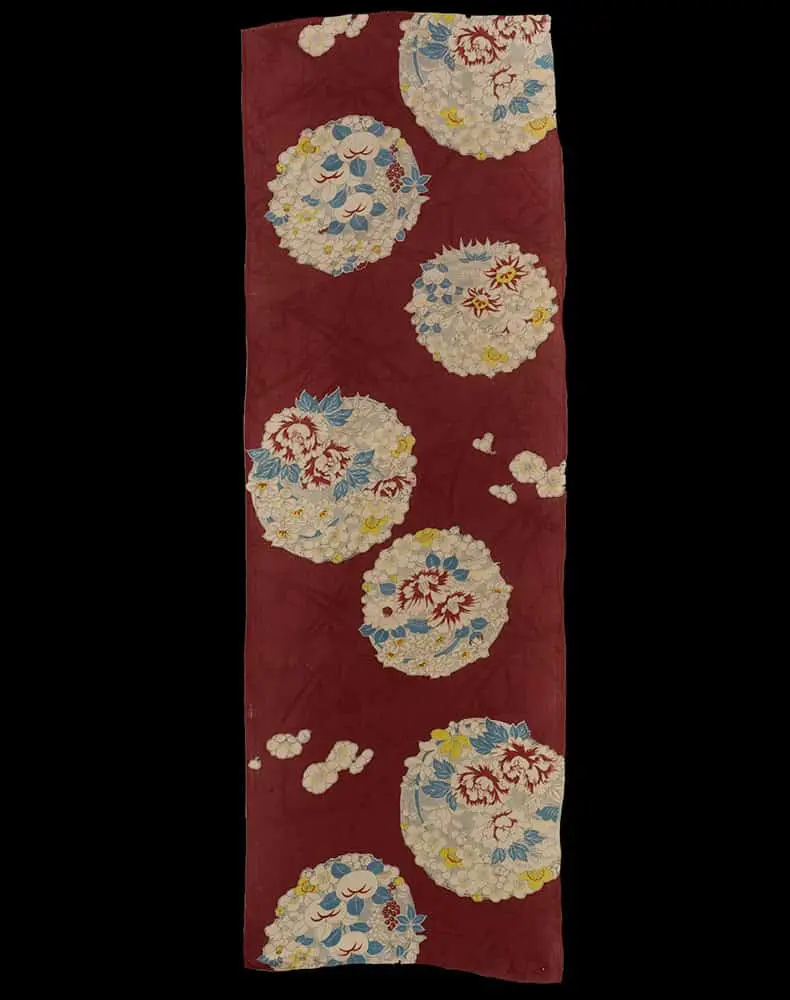
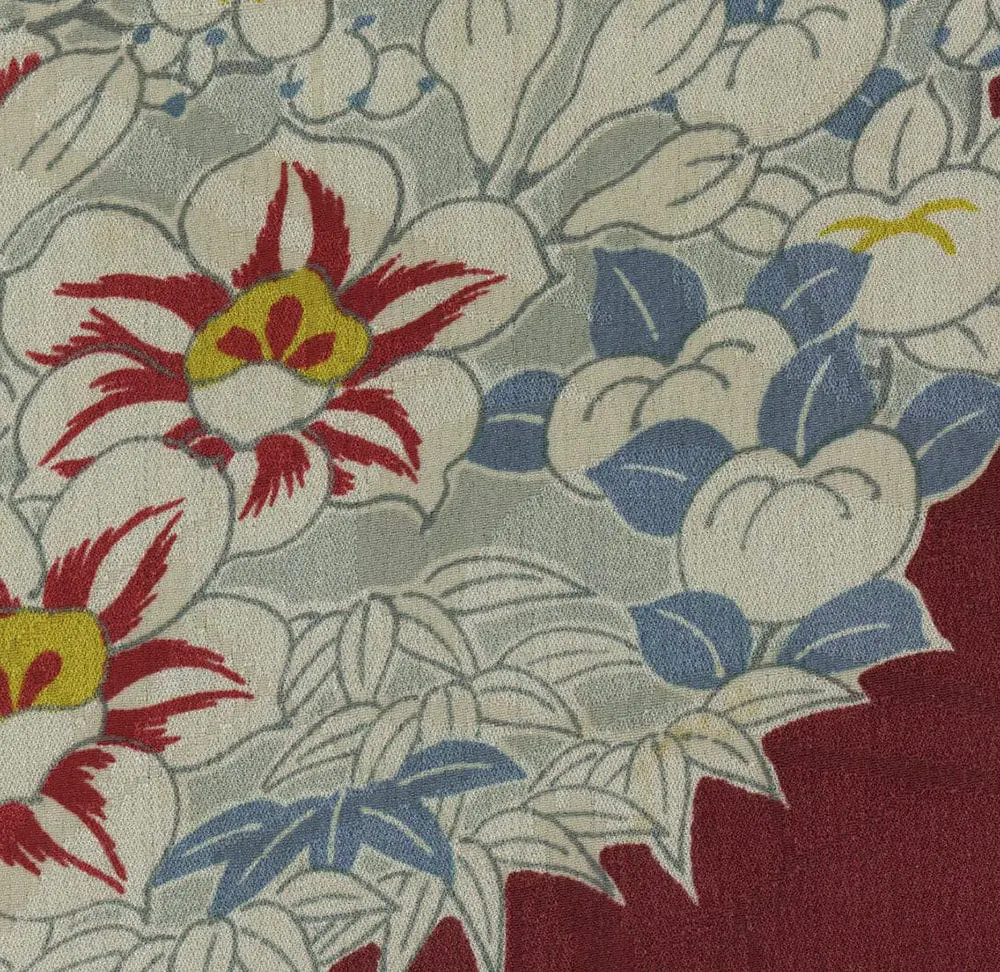
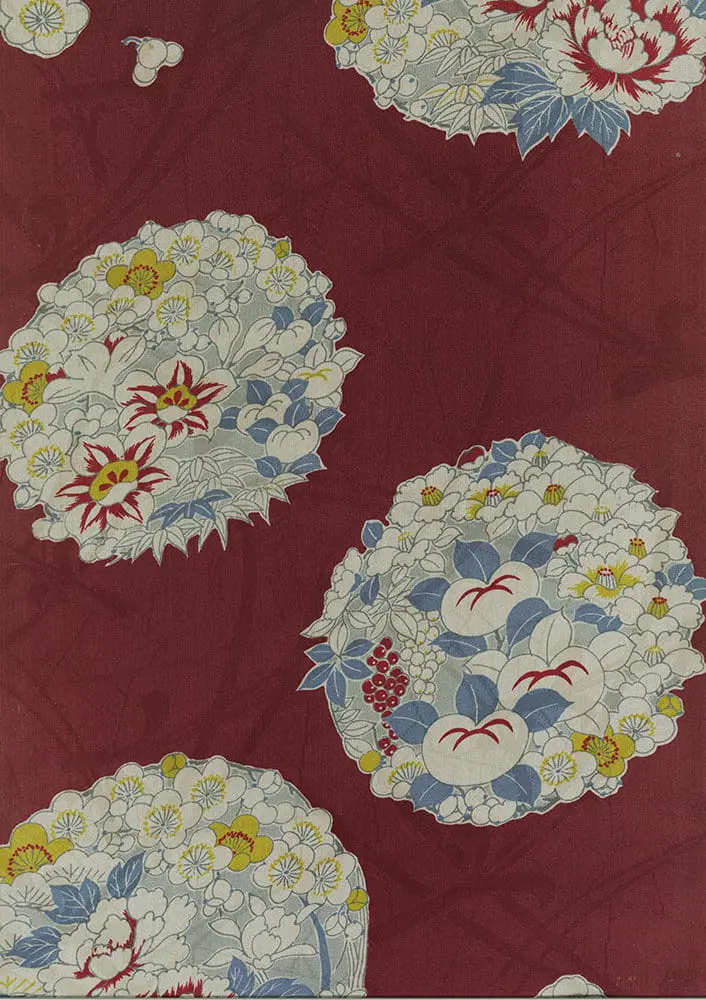

This elegant textile originates from Japan’s early Showa period (1920–1935) and is a scholarly example of the refined, circular motif compositions popular in pre-war feminine attire. Measuring 13.75 inches by 41 inches (35 cm x 104 cm), the panel is crafted from a specialized silk that exhibits a texture between the substantial grain of chirimen and the fluidity of a standard crepe. The piece remains in very good condition, showcasing a lovely hand and an excellent drape.
The visual narrative is set against a saturated wine-red ground, which features a subtle, self-patterned weave that adds depth to the substrate. It displays a rhythmic arrangement of large, cream-colored circular medallions, each containing delicately rendered florals such as peonies and plum blossoms in shades of soft blue, yellow, and deep rose. These medallions are interspersed with smaller, floating cloud-like floral sprays, creating a sense of balanced movement across the deep red field. This "floral ball" (hanakusu) aesthetic reflects the era's mastery of blending traditional auspicious symbols with the clean, graphic silhouettes favored during the transition from the Taisho to the early Showa years.

Payment Options: We primarily accept PayPal for all transactions. Credit and debit cards are not accepted. If you prefer to pay by personal check instead of PayPal, please note this preference in the "Additional comments" field when placing your order.Ordering Process
To receive your PayPal invoice, simply fill out the form.
Shipping Details: We ship all orders to the address associated with your PayPal payment. Please ensure your PayPal shipping address is current and accurate.A phone number is required during checkout, as our shipping carrier may need to contact you regarding delivery questions.Shipping RatesUnited States and Canada: $20International destinations (air mail): $40
