Copyright © 2026 Yorke Antique Textiles
.avif)

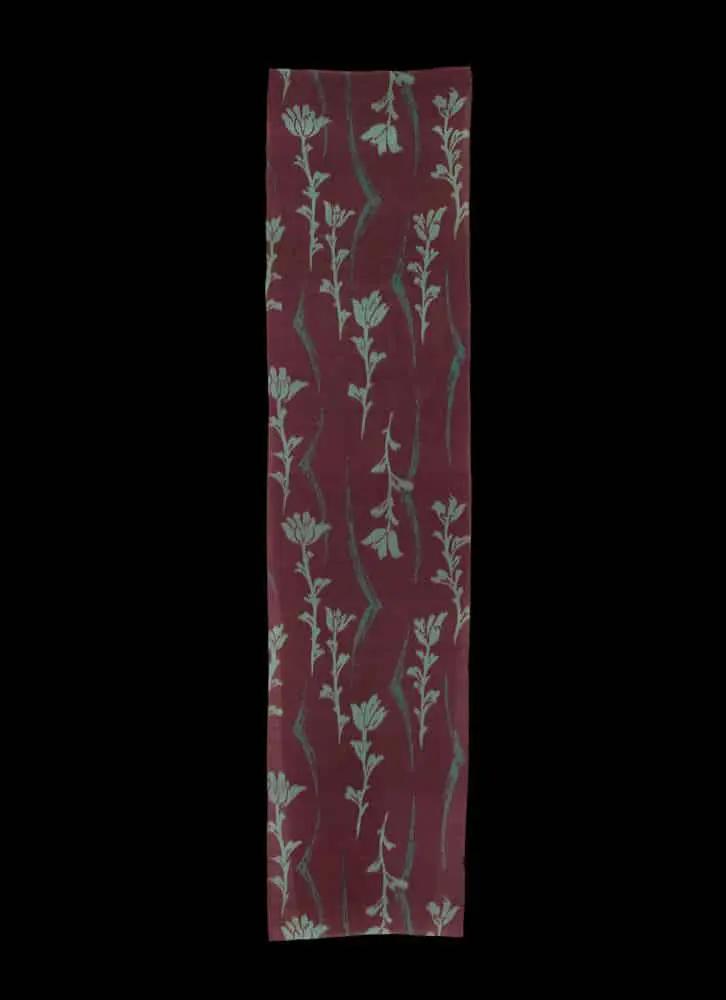
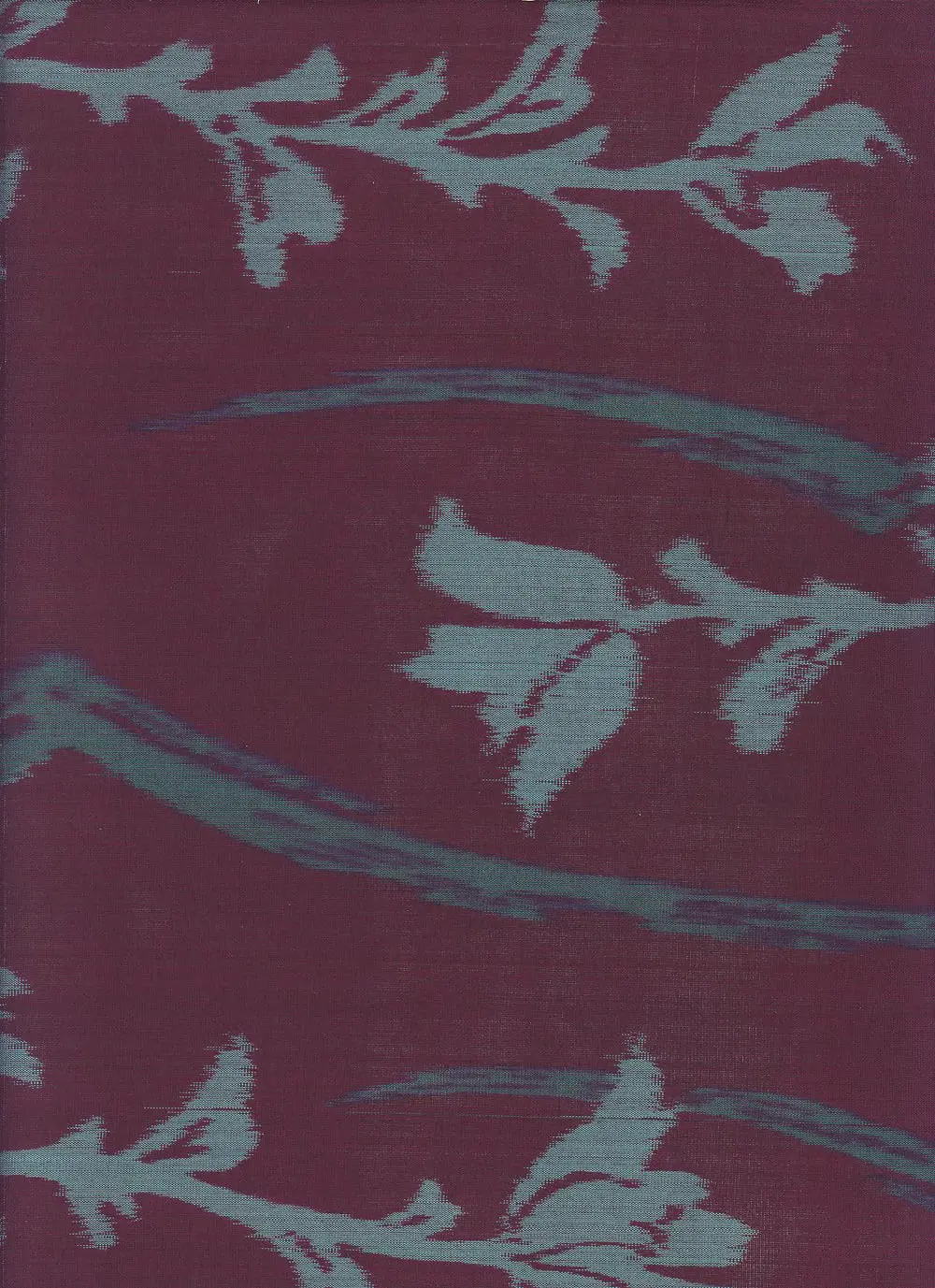
This exquisite textile originates from Japan’s pre-WWII era, dating to the early Showa period (1930–1940). Measuring 14 inches by 59 inches (36 cm x 150 cm), the panel is a classic example of meisen silk, a fabric celebrated for its bold, experimental designs and durability. Characteristic of meisen from this decade, the silk is thinner and possesses a slightly crisp texture, yet its light weight ensures a graceful, fluid drape. The piece remains in excellent condition, preserving the saturated depth of its primary dyes.
The visual narrative is set against a rich, deep wine-colored ground, providing a dramatic foundation for the botanical motifs. Large, abstracted peony-like florals are rendered in a cool-toned palette of icy blue and slightly muted turquoise. These blooms are connected by vertical, serrated white lines that suggest stylized stems or traditional shibori "spider" patterns, creating a rhythmic, upward movement across the nearly five-foot length of the fabric. The use of the ikat-dyeing technique gives the petals a soft, vibrating edge, a hallmark of the early 20th-century meisen aesthetic that bridged the gap between traditional craftsmanship and Art Deco-inspired modernism.

Payment Options: We primarily accept PayPal for all transactions. Credit and debit cards are not accepted. If you prefer to pay by personal check instead of PayPal, please note this preference in the "Additional comments" field when placing your order.Ordering Process
To receive your PayPal invoice, simply fill out the form.
Shipping Details: We ship all orders to the address associated with your PayPal payment. Please ensure your PayPal shipping address is current and accurate.A phone number is required during checkout, as our shipping carrier may need to contact you regarding delivery questions.Shipping RatesUnited States and Canada: $20International destinations (air mail): $40
