Copyright © 2026 Yorke Antique Textiles
.avif)

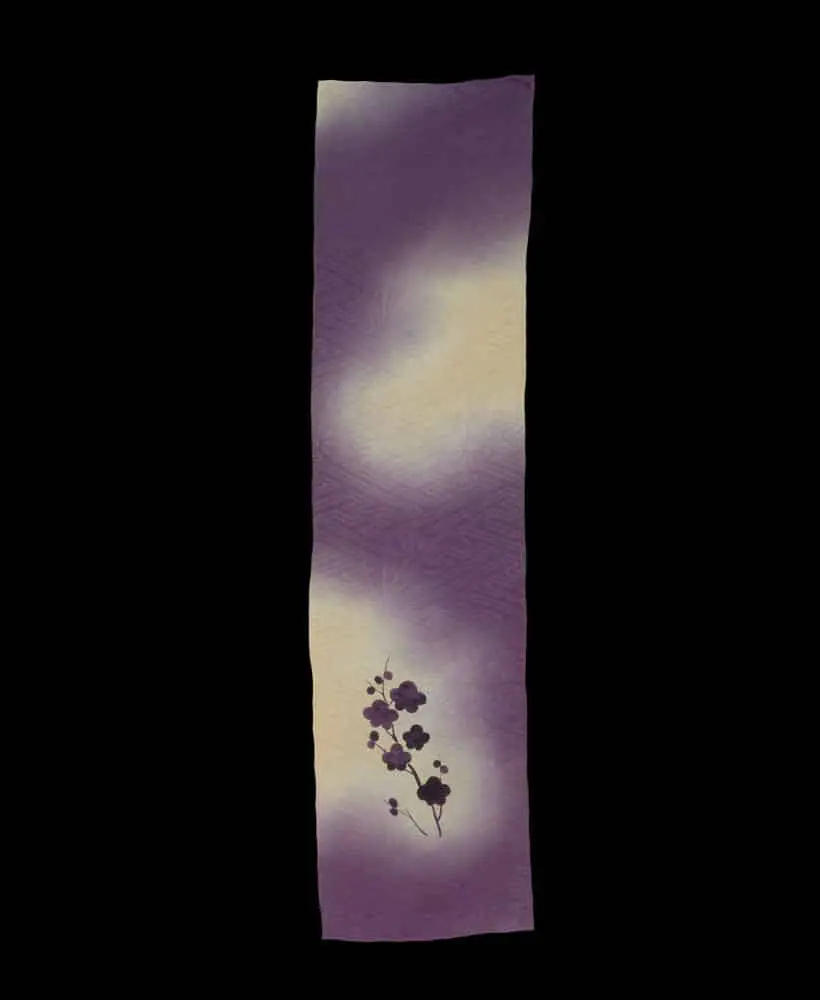

This vibrant textile originates from Japan’s early Showa period (1930–1940) and is a scholarly example of the sophisticated pre-WWII luxury silk production that favored soft, lightweight materials. Measuring 15.25 inches by 54 inches (39 cm x 137 cm), the panel is crafted from high-quality rinzu (silk damask), which remains in excellent condition with its original saturated yellow hue fully intact. Consistent with the characteristic style of formal kimonos from this era, the fabric features a complex background weave that expertly mimics hand-painted florals and leaves, though some wear is present on the fold lines at the edges.
The visual narrative is defined by a dense, rhythmic arrangement of small floral clusters set against a deep navy blue and golden yellow field. The composition is divided by horizontal, cloud-like bands of solid yellow, creating an architectural structure that balances the intricate floral pattern. Within the patterned sections, blossoms in shades of red, white, and mustard yellow are woven with precision, reflecting the high-status craftsmanship of pre-war textile centers. This joyful and energetic palette was a hallmark of the early Showa aesthetic, which sought to modernize traditional botanical themes through vibrant color contrasts and dense, layered silhouettes.

Payment Options: We primarily accept PayPal for all transactions. Credit and debit cards are not accepted. If you prefer to pay by personal check instead of PayPal, please note this preference in the "Additional comments" field when placing your order.Ordering Process
To receive your PayPal invoice, simply fill out the form.
Shipping Details: We ship all orders to the address associated with your PayPal payment. Please ensure your PayPal shipping address is current and accurate.A phone number is required during checkout, as our shipping carrier may need to contact you regarding delivery questions.Shipping RatesUnited States and Canada: $20International destinations (air mail): $40
