Copyright © 2026 Yorke Antique Textiles
.avif)

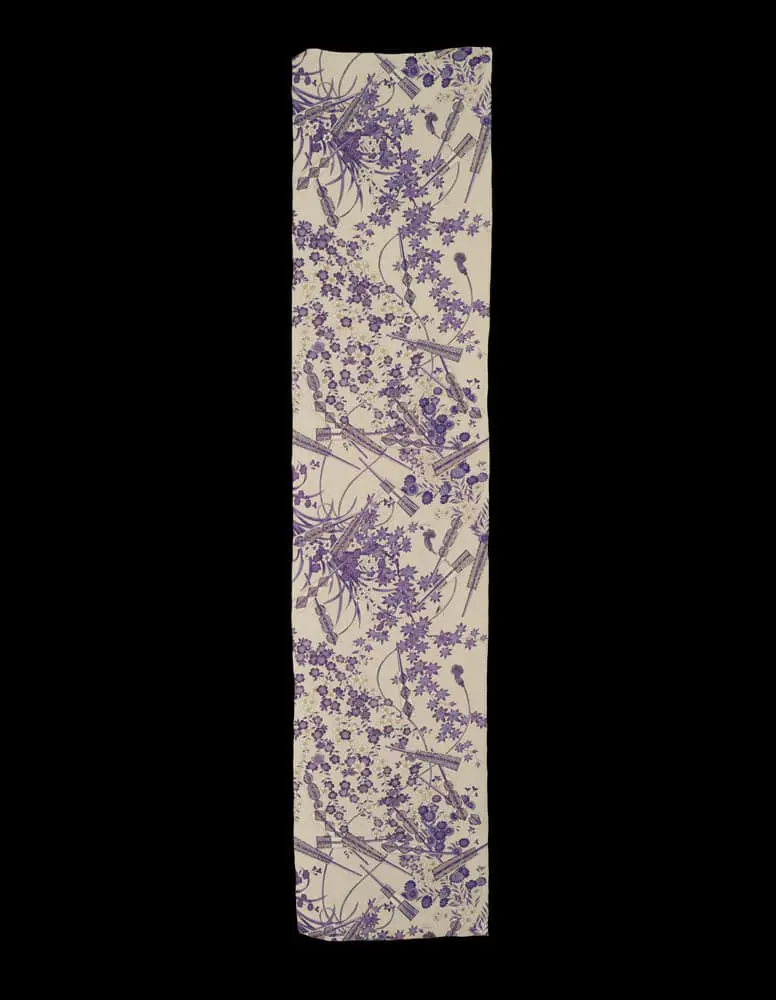
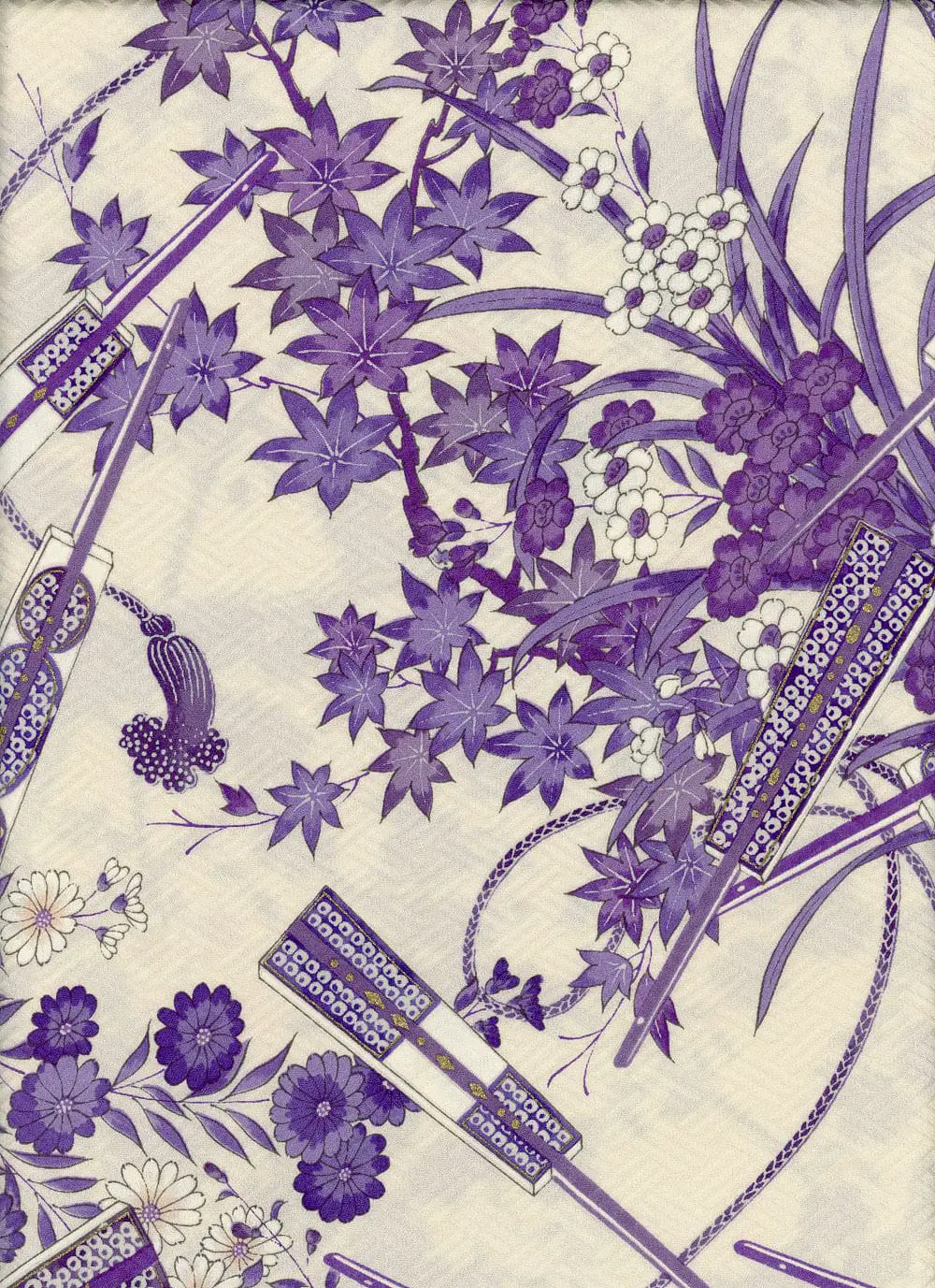
This elegant textile originates from Japan’s mid-Showa period (1950–1970) and is a scholarly example of the sophisticated seasonal imagery used in formal post-war silk production. Measuring 14.25 inches by 62 inches (36 cm x 157 cm), the panel is crafted from a premium creamy rinzu (silk damask) that features a complex basketweave ground pattern woven into the substrate. This high-quality silk possesses a soft, shiny texture and offers a great drape, remaining in excellent condition.
The visual narrative is a dense, rhythmic composition featuring a refined combination of sakura (cherry blossoms) and momiji (maple leaves). These botanical motifs are interspersed with intersecting fans—specifically hi-ogi or rectangular paddle-like court fans—which provide an architectural framework to the delicate floral elements. The entire design is rendered in a monochromatic palette of deep violet and slate purple against the cream ground, with each motif delicately outlined in abundant gold metallic thread. This pairing of spring and autumn symbols, known as shunju, represents the fleeting beauty of all seasons and was a prestigious choice for year-round formal wear during the mid-century era.

Payment Options: We primarily accept PayPal for all transactions. Credit and debit cards are not accepted. If you prefer to pay by personal check instead of PayPal, please note this preference in the "Additional comments" field when placing your order.Ordering Process
To receive your PayPal invoice, simply fill out the form.
Shipping Details: We ship all orders to the address associated with your PayPal payment. Please ensure your PayPal shipping address is current and accurate.A phone number is required during checkout, as our shipping carrier may need to contact you regarding delivery questions.Shipping RatesUnited States and Canada: $20International destinations (air mail): $40
