Copyright © 2026 Yorke Antique Textiles
.avif)

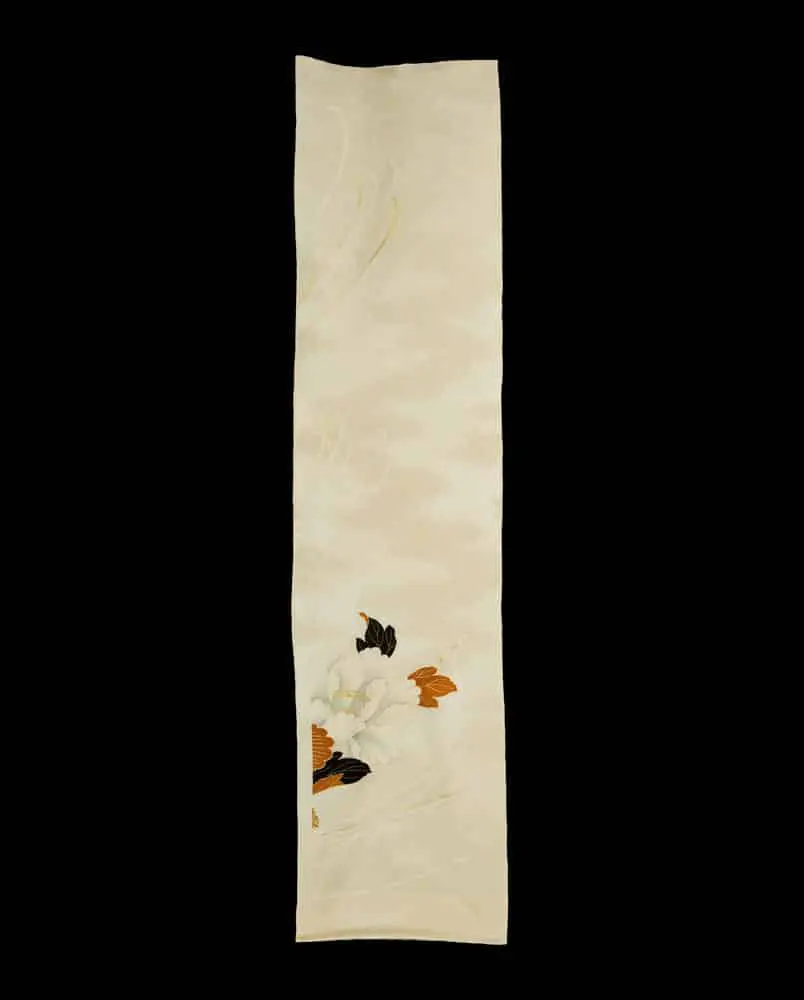
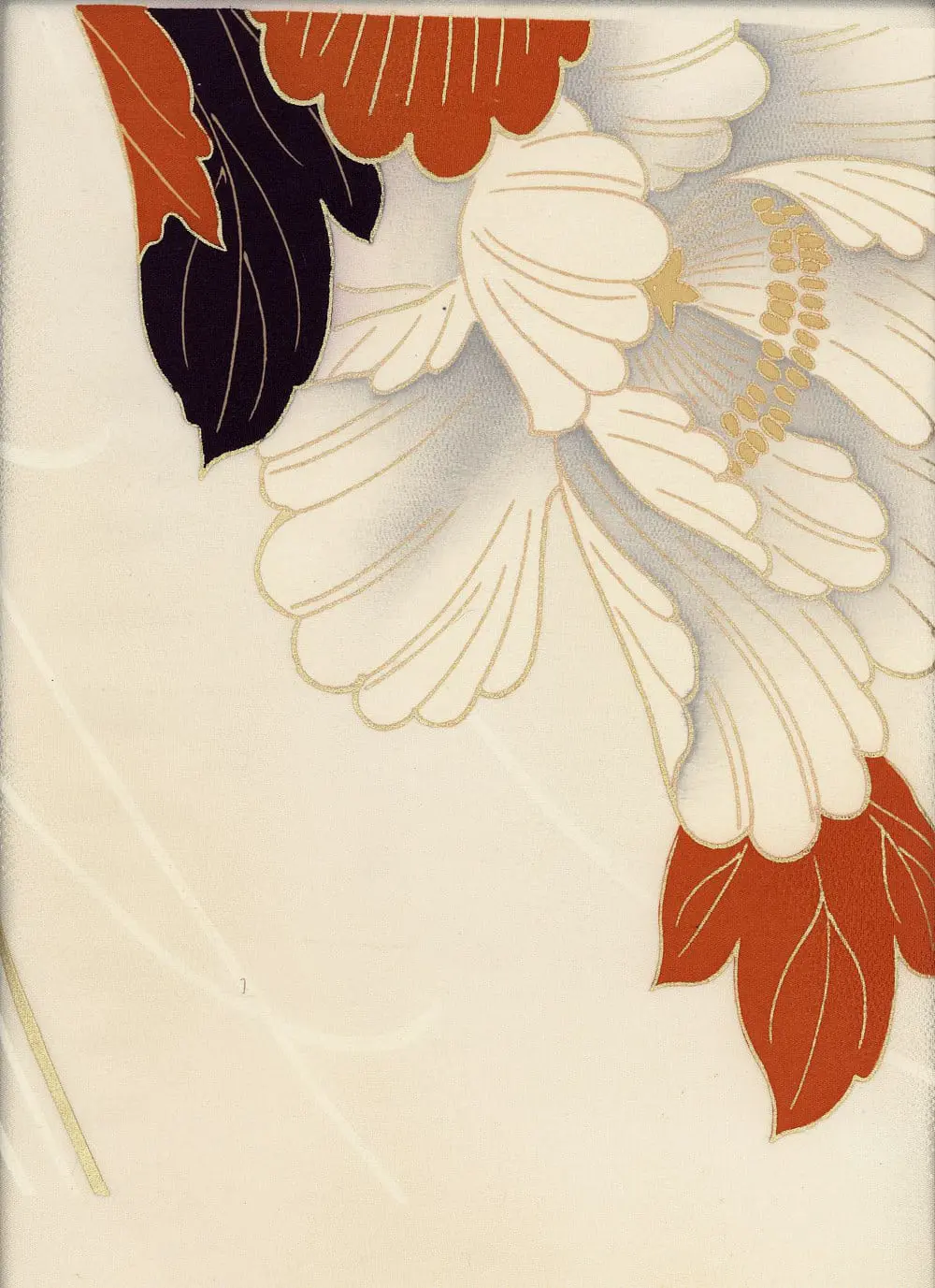
This elegant textile originates from Japan’s mid-Showa period (1950–1970) and is a scholarly example of the refined, large-scale botanical imagery used in formal post-war silk production. Measuring 14 inches by 63 inches (36 cm x 160 cm), the panel is crafted from a premium creamy off-white rinzu (silk damask). The high-quality silk features a subtle woven pattern in the substrate that creates a soft, shimmery texture and offers a great drape. This piece remains in excellent condition, preserving the delicate tonal gradations of its design.
The visual narrative is dominated by a single, large-scale botan (peony) motif positioned at the base of the panel. The blossom is beautifully rendered in varying shades of grey and white, creating a sophisticated monochromatic effect that contrasts with the warm cream background. The motif is further enhanced by abundant metallic gold accents and outlining, adding a touch of opulent shimmer that defines the lush, overlapping petals. This presentation of the peony—historically the "King of Flowers" representing nobility—reflects the mid-century trend of utilizing expansive negative space to highlight a singular, powerful graphic statement.

Payment Options: We primarily accept PayPal for all transactions. Credit and debit cards are not accepted. If you prefer to pay by personal check instead of PayPal, please note this preference in the "Additional comments" field when placing your order.Ordering Process
To receive your PayPal invoice, simply fill out the form.
Shipping Details: We ship all orders to the address associated with your PayPal payment. Please ensure your PayPal shipping address is current and accurate.A phone number is required during checkout, as our shipping carrier may need to contact you regarding delivery questions.Shipping RatesUnited States and Canada: $20International destinations (air mail): $40
