Copyright © 2026 Yorke Antique Textiles
.avif)

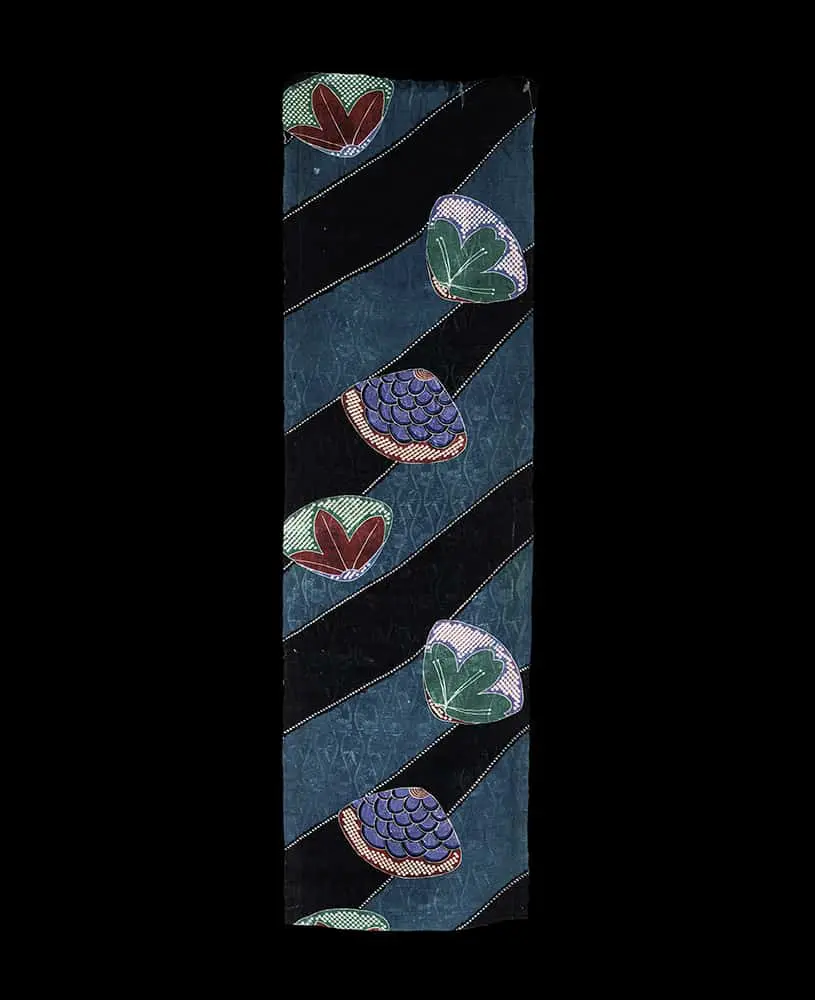
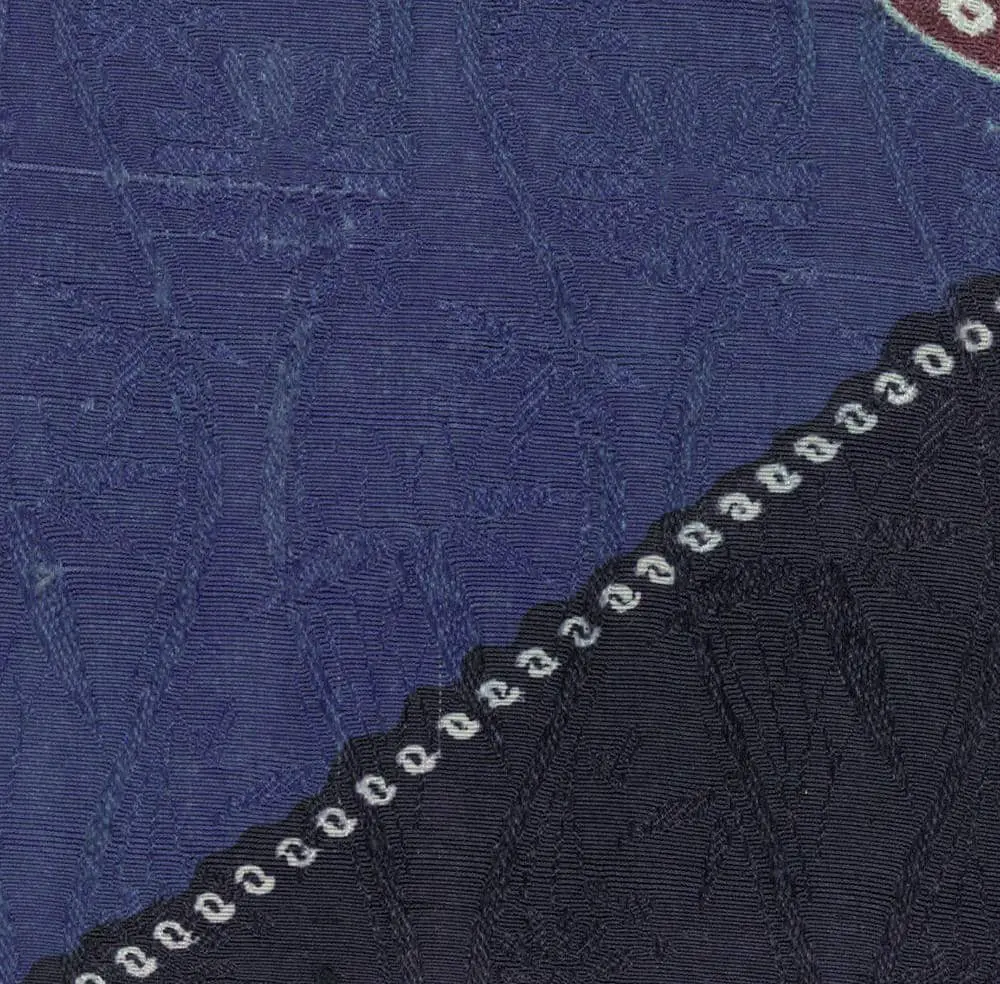

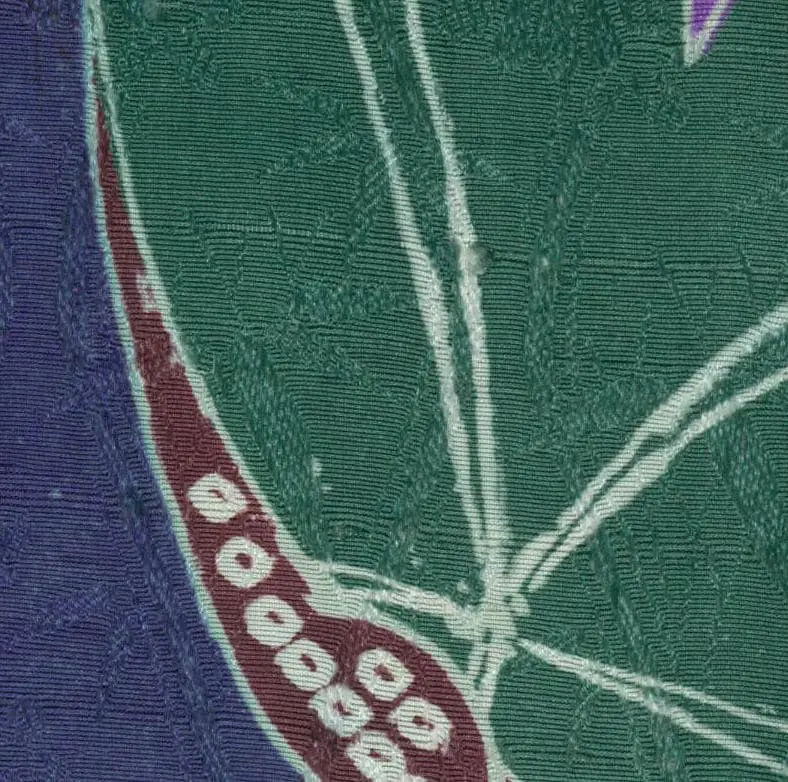
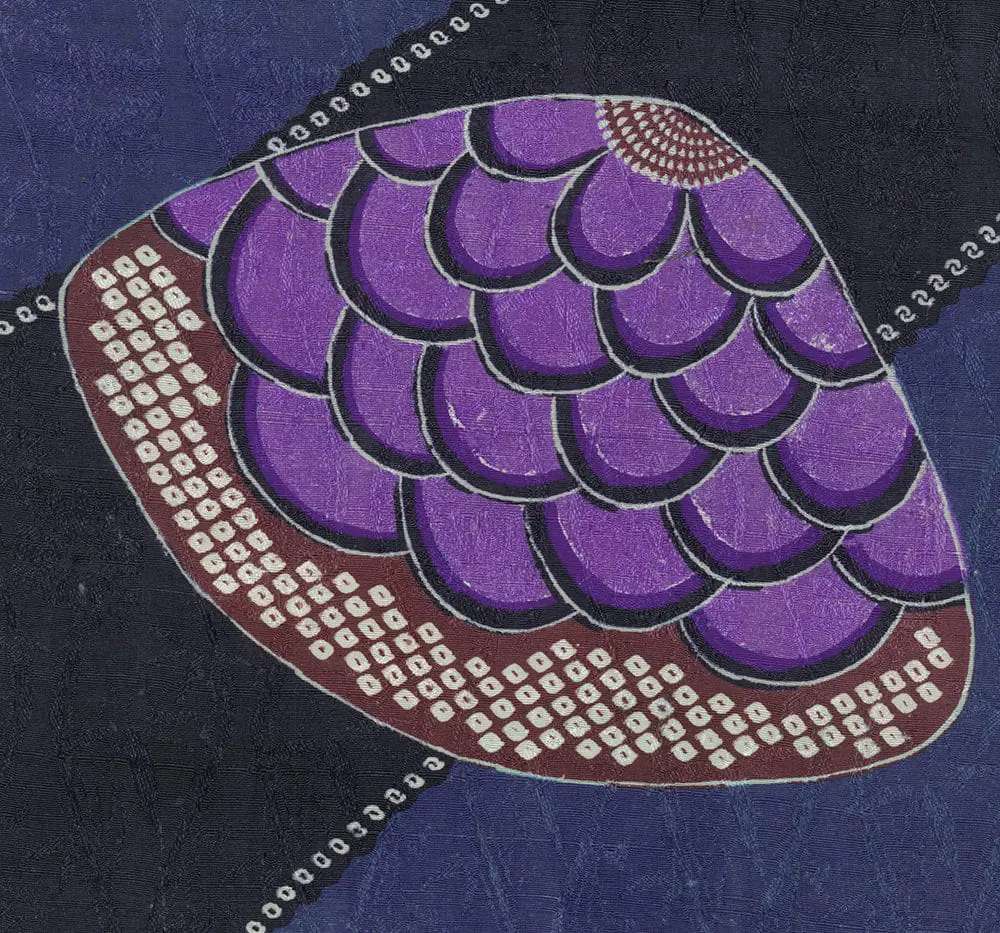
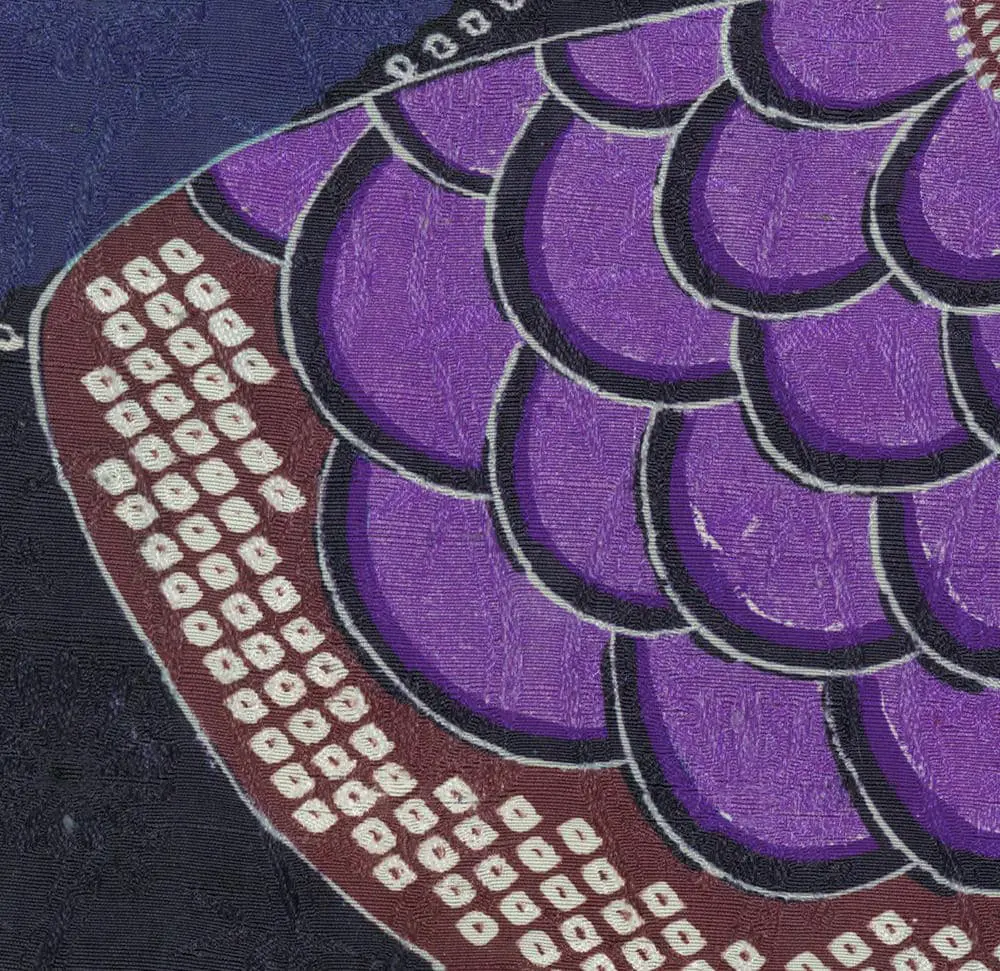
This exceptional textile originates from the Taisho or early Showa period (1912–1940) and is a scholarly example of the creative material innovation found in rural Japanese weaving centers. Measuring 14.5 inches by 50 inches (37 cm x 127 cm), the panel is crafted from Jigine, a distinctive silk known for its billowy nature and characteristic slubs. While it possesses the organic, rustic qualities of tsumugi, the inclusion of tussah silk in the weaving process results in a notably softer texture. The substrate is a vibrant blue rinzu (silk damask), featuring a tonal background weave that adds a refined structural layer to the textile's surface.
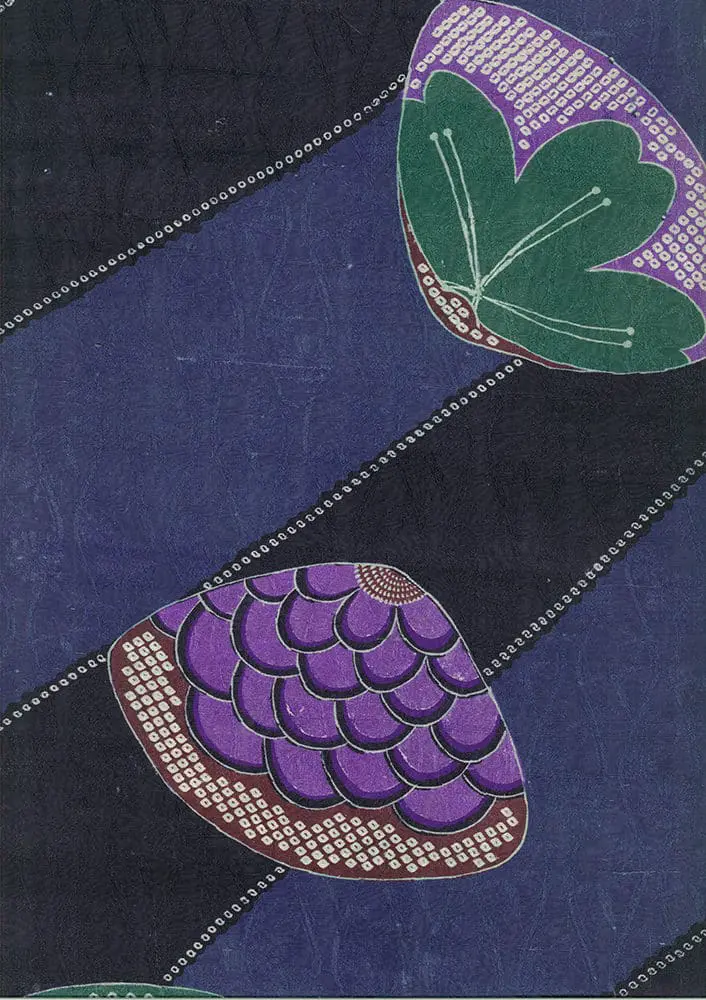
The visual narrative is dominated by a bold, diagonal stripe composition in midnight black and teal blue, creating a dynamic sense of movement. These stripes are populated by stylized, jewel-toned hamaguri (clam) shells, rendered in a striking palette of violet, emerald green, and deep burgundy. Each shell is meticulously detailed with geometric patterns and simulated kanoko dots. These dots emulate the appearance of labor-intensive shibori through a sophisticated screening process, reflecting the era's technical mastery in achieving complex traditional aesthetics through modern production methods. In Japanese culture, the clam is a classical symbol of marital fidelity, as the two halves of the shell fit only each other, making this a culturally resonant piece preserved in excellent condition.

Payment Options: We primarily accept PayPal for all transactions. Credit and debit cards are not accepted. If you prefer to pay by personal check instead of PayPal, please note this preference in the "Additional comments" field when placing your order.Ordering Process
To receive your PayPal invoice, simply fill out the form.
Shipping Details: We ship all orders to the address associated with your PayPal payment. Please ensure your PayPal shipping address is current and accurate.A phone number is required during checkout, as our shipping carrier may need to contact you regarding delivery questions.Shipping RatesUnited States and Canada: $20International destinations (air mail): $40
