Copyright © 2026 Yorke Antique Textiles
.avif)

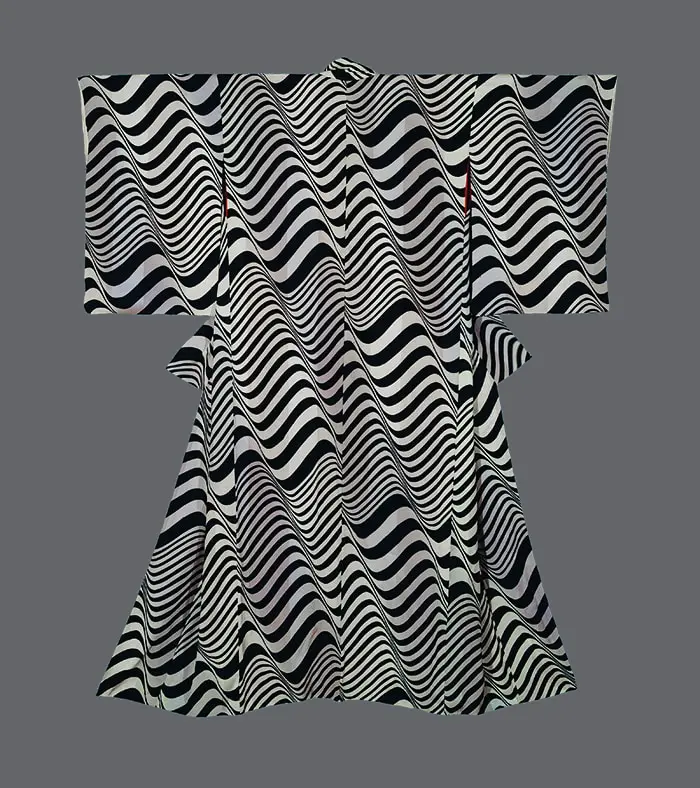

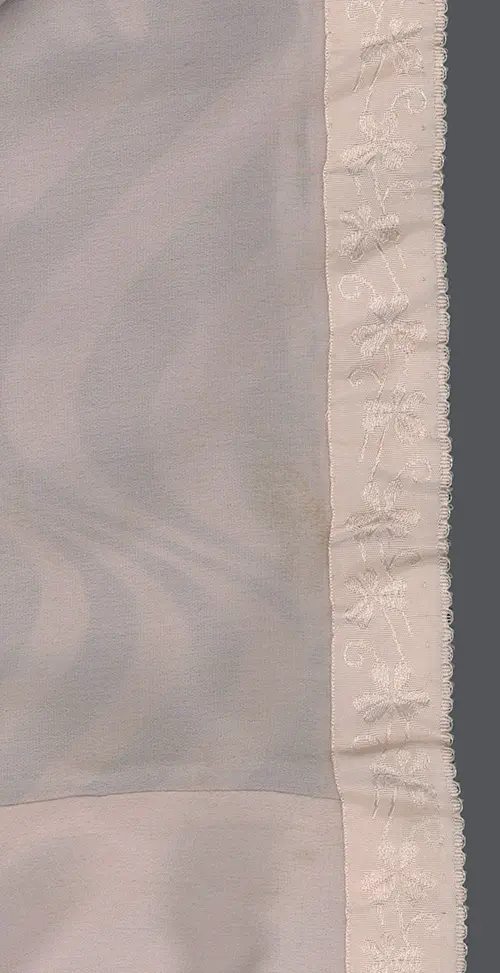

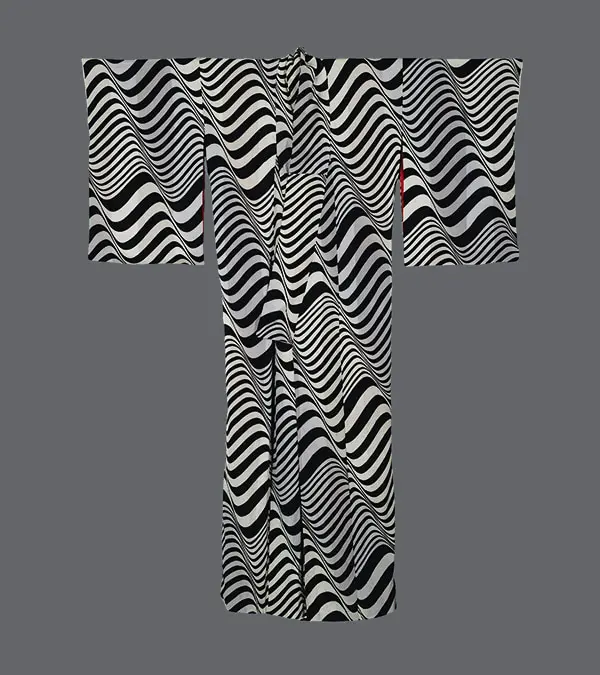
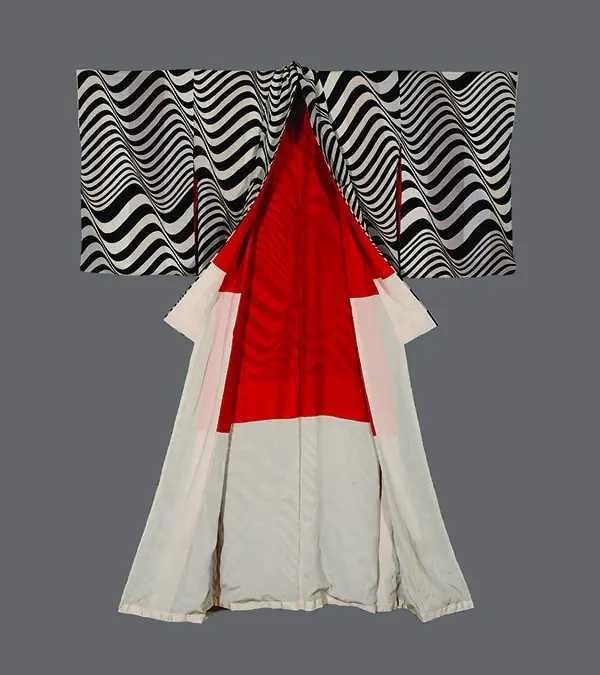
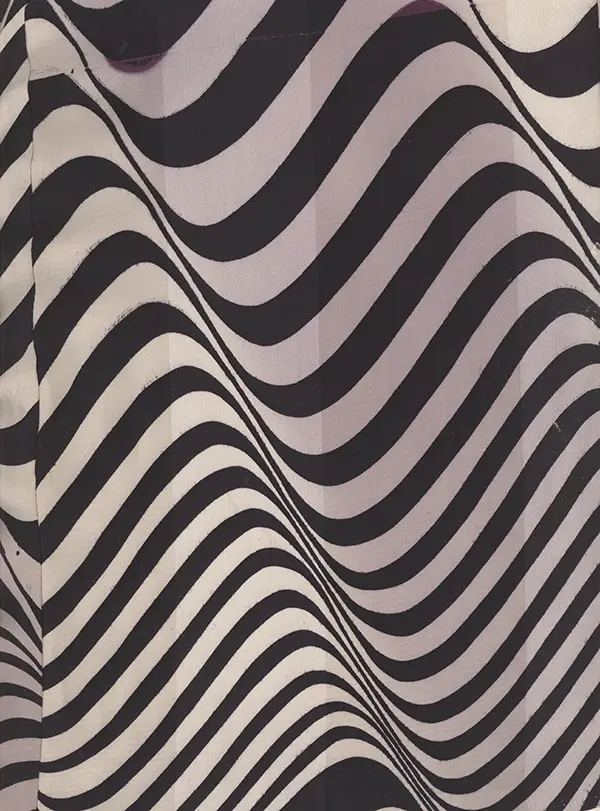
This mesmerizing 1930s kimono presents an all-over pattern of undulating black and white waves that cascade diagonally across the entire surface of the garment. The waves vary in thickness — some bands swelling into broad, voluptuous curves while others taper to razor-thin lines — creating a pulsating optical effect that appears to shimmer and move as the eye travels across the fabric. This dynamic interplay of positive and negative space is achieved through the kata-yuzen technique, a refined process combining stencil application with the yuzen paste-resist dyeing method, allowing for the crisp, clean edges and precise tonal gradations that give these waves their remarkable fluidity and graphic precision.
The design is an astonishing precursor to Op Art, the optical art movement that would not emerge in the West until the 1960s through artists such as Bridget Riley, whose celebrated black-and-white wave paintings bear an almost uncanny resemblance to this textile created three decades earlier. The same principles are at work — rhythmic repetition, high contrast, and manipulated line weight conspiring to trick the eye into perceiving motion on a static surface. There are also affinities with the kinetic sensibility of Futurism, which sought to capture movement and energy through visual dynamism.
At the same time, the motif is deeply rooted in Japanese tradition. Waves, or "nami," are among the most enduring symbols in Japanese art, representing the power and ceaseless motion of the sea, the flow of life, and resilience in the face of adversity. The diagonal orientation echoes the traditional "tatewaku" or rising steam pattern — sinuous vertical waves that have appeared in Japanese textiles since the Heian period as symbols of ascending energy and good fortune. Yet here, the motif has been radically abstracted and modernized, stripped of any naturalistic reference to become pure visual rhythm. The result is a garment that bridges centuries of Japanese design heritage with a strikingly contemporary aesthetic, standing as compelling evidence that Japanese textile artists were pioneering optical abstraction long before it gained recognition in Western galleries.
This kimono measures 49 inches (125cm) across the shoulders and 59 inches (150cm) in height.


Payment Options: We primarily accept PayPal for all transactions. Credit and debit cards are not accepted. If you prefer to pay by personal check instead of PayPal, please note this preference in the "Additional comments" field when placing your order.Ordering Process
To receive your PayPal invoice, simply fill out the form.
Shipping Details: We ship all orders to the address associated with your PayPal payment. Please ensure your PayPal shipping address is current and accurate.A phone number is required during checkout, as our shipping carrier may need to contact you regarding delivery questions.Shipping RatesUnited States and Canada: $20International destinations (air mail): $40
