Copyright © 2026 Yorke Antique Textiles
.avif)

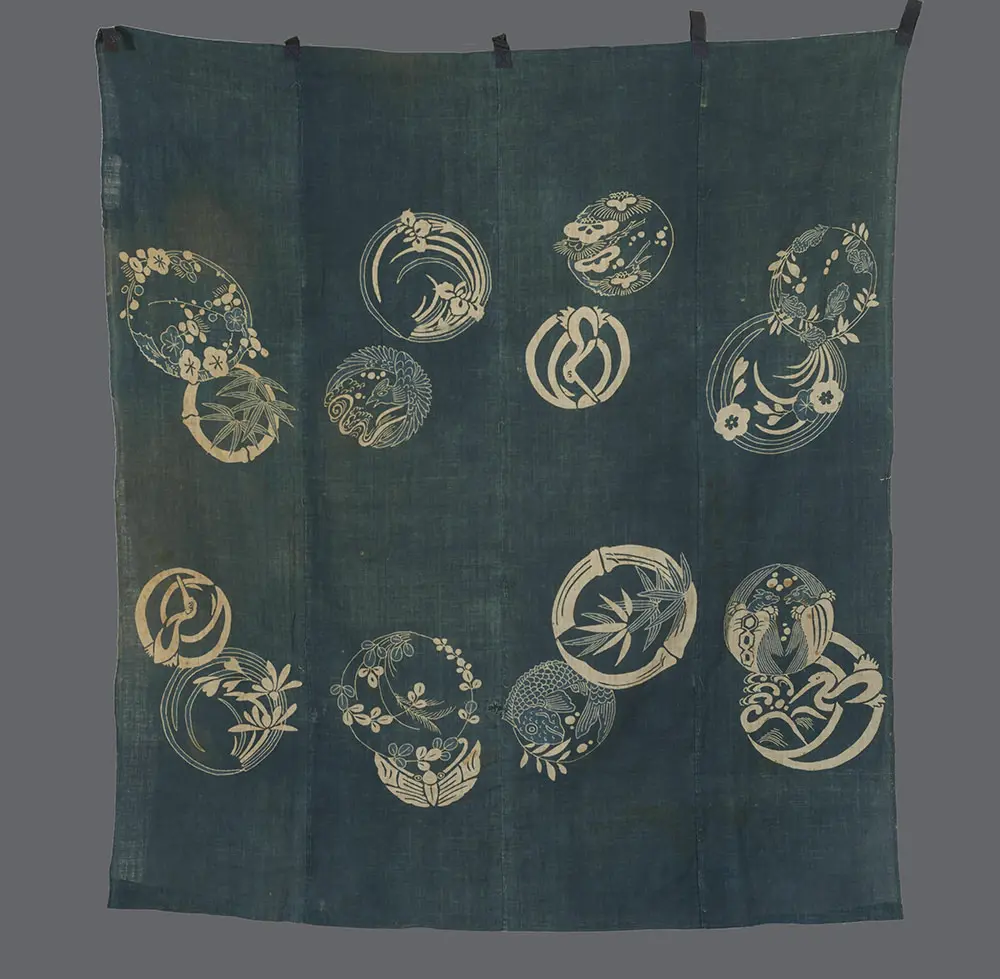
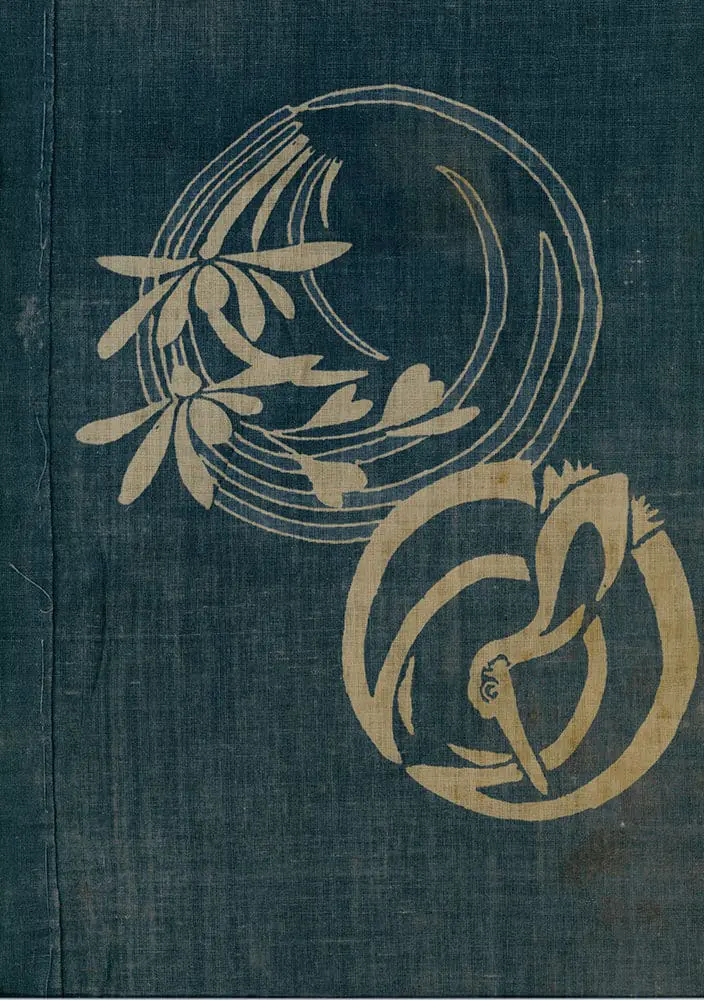
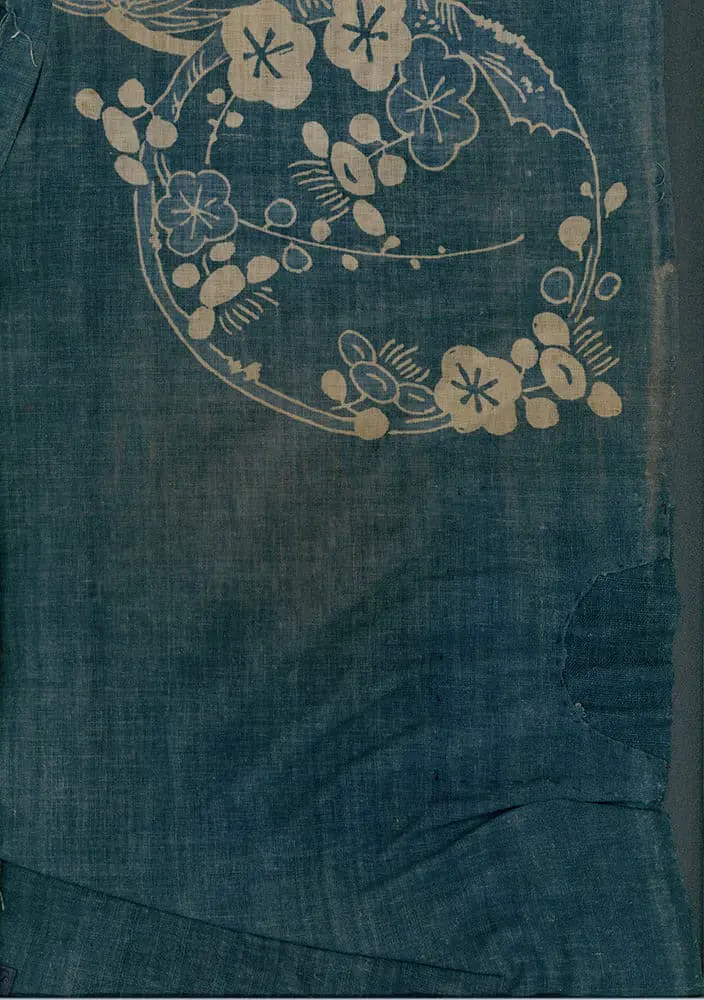

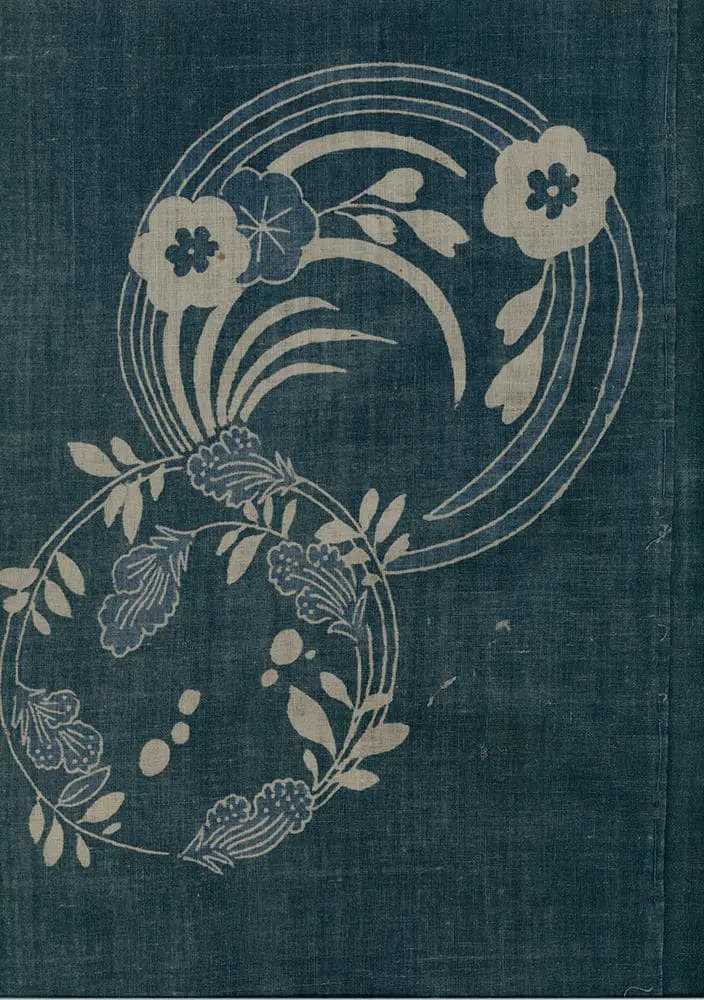
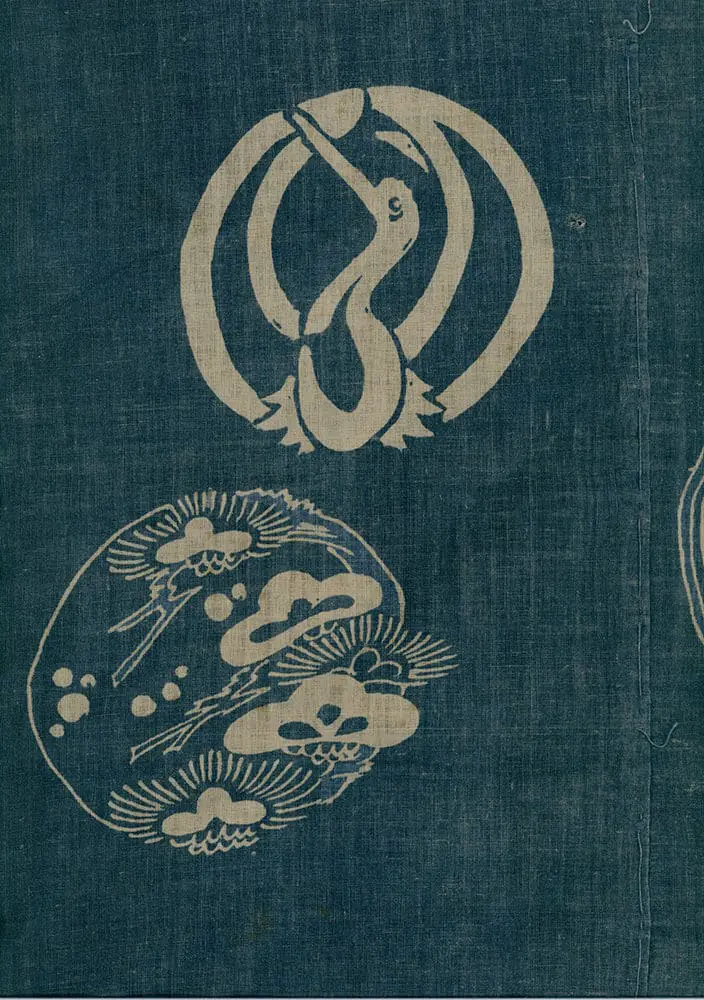
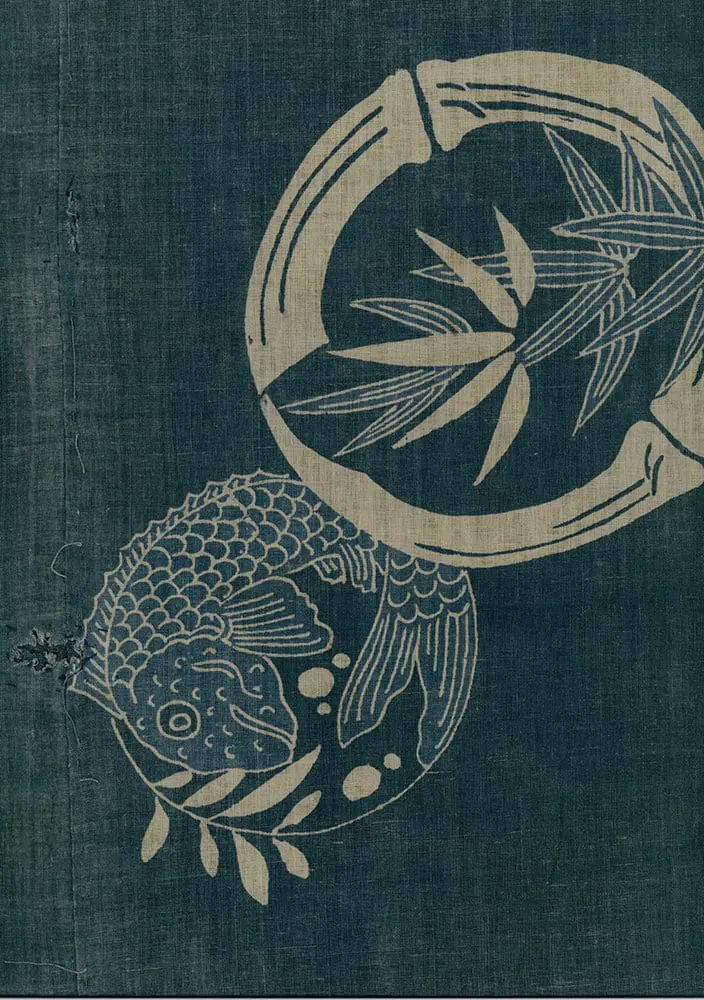

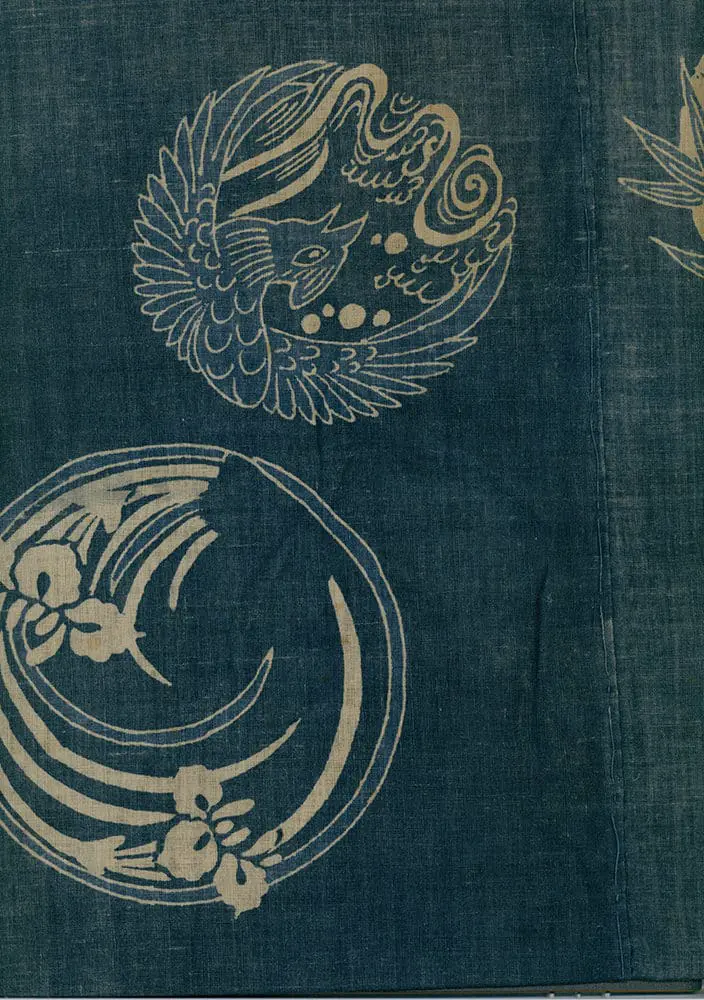
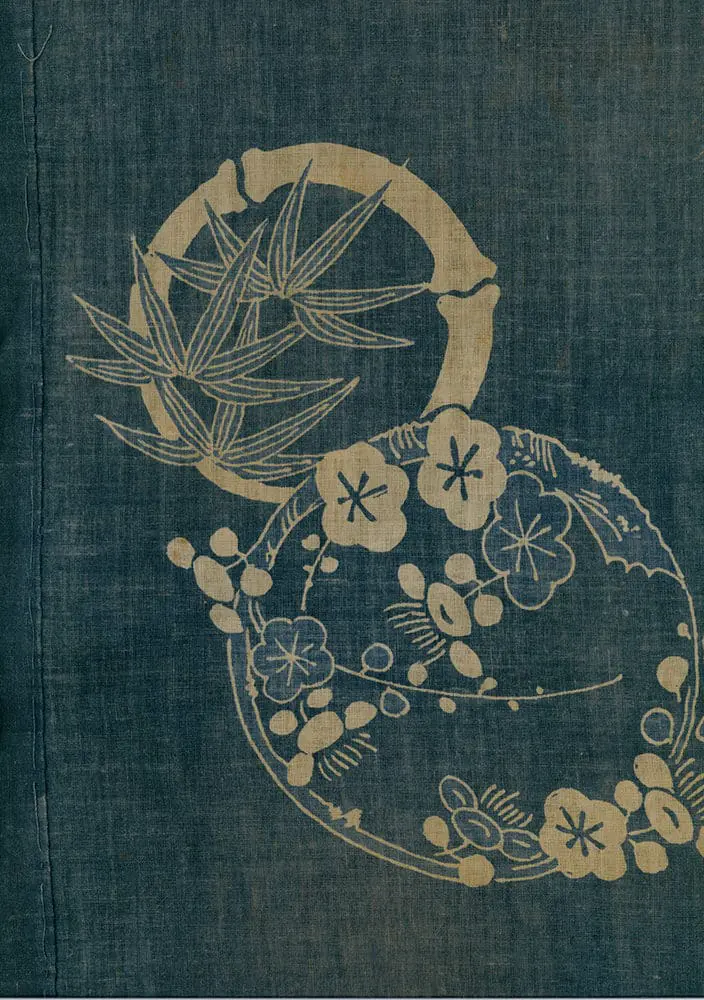
This striking tsutsugaki panel, dating from 1775–1825, is a beautiful example of Japanese folk textile art. Hand-spun and hand-woven from plain-weave cotton, the textile features a series of circular crests (mon) rendered in shades of indigo against a natural white background. These designs were achieved using a rice-paste resist technique, where the artisan hand-draws patterns that remain white after the fabric is submerged in an indigo dye vat.
The panel is constructed from four 12-inch wide strips of cotton stitched together, reaching a total dimension of 53 inches by 48 inches (135 cm x 122 cm). The simple light blue and white palette and the arrangement of scattered crests are characteristic of the tsutsugaki style originating from the Izumo area in Shimane Prefecture. While used as a functional household item, possibly for a wedding, the crests selected for this piece focus on general symbolic auspiciousness rather than specific familial lineage. Despite signs of its long history—including fading, staining, and several patched holes—it remains in good condition and includes newer hanging tabs for display.
This artwork is featured on pages 416-420 of Ceremonial Textiles of Japan, 18th to 20th Centuries. This book, published by Yorke Antique Textiles, can be previewed or purchased on our website here.

Payment Options: We primarily accept PayPal for all transactions. Credit and debit cards are not accepted. If you prefer to pay by personal check instead of PayPal, please note this preference in the "Additional comments" field when placing your order.Ordering Process
To receive your PayPal invoice, simply fill out the form.
Shipping Details: We ship all orders to the address associated with your PayPal payment. Please ensure your PayPal shipping address is current and accurate.A phone number is required during checkout, as our shipping carrier may need to contact you regarding delivery questions.Shipping RatesUnited States and Canada: $20International destinations (air mail): $40
