Copyright © 2026 Yorke Antique Textiles
.avif)


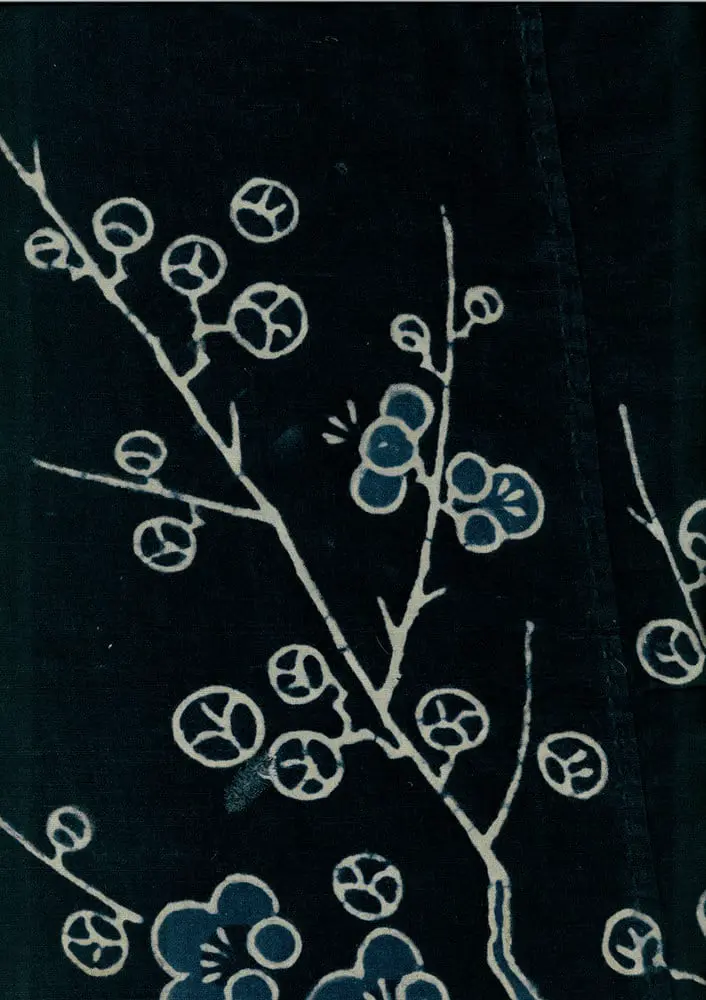
This evocative cotton textile from Japan dates to the Taisho period (1912–1926). Measuring 51 inches by 60 inches (130 cm x 152 cm), it is crafted from hand-spun and hand-woven cotton dyed with natural indigo. The elaborate design is achieved through tsutsugaki, a traditional hand-drawn rice paste resist technique that allows for fluid, expressive lines.
The composition centers on a large, circular family crest (mon) containing a stylized crossed-feather motif. Surrounding the crest are the iconic sho-chiku-bai symbols—the "Three Friends of Winter". A resilient pine branch dominates the upper right, while a thick stalk of bamboo rises from the lower left, and flowering plum blossoms with blue-accented petals frame the sides. These motifs collectively represent longevity, flexibility, and perseverance through hardship. The piece is in very good condition, showing only minor signs of its history, including two small 1-inch tears and a slight stain.

Payment Options: We primarily accept PayPal for all transactions. Credit and debit cards are not accepted. If you prefer to pay by personal check instead of PayPal, please note this preference in the "Additional comments" field when placing your order.Ordering Process
To receive your PayPal invoice, simply fill out the form.
Shipping Details: We ship all orders to the address associated with your PayPal payment. Please ensure your PayPal shipping address is current and accurate.A phone number is required during checkout, as our shipping carrier may need to contact you regarding delivery questions.Shipping RatesUnited States and Canada: $20International destinations (air mail): $40
