Copyright © 2026 Yorke Antique Textiles
.avif)

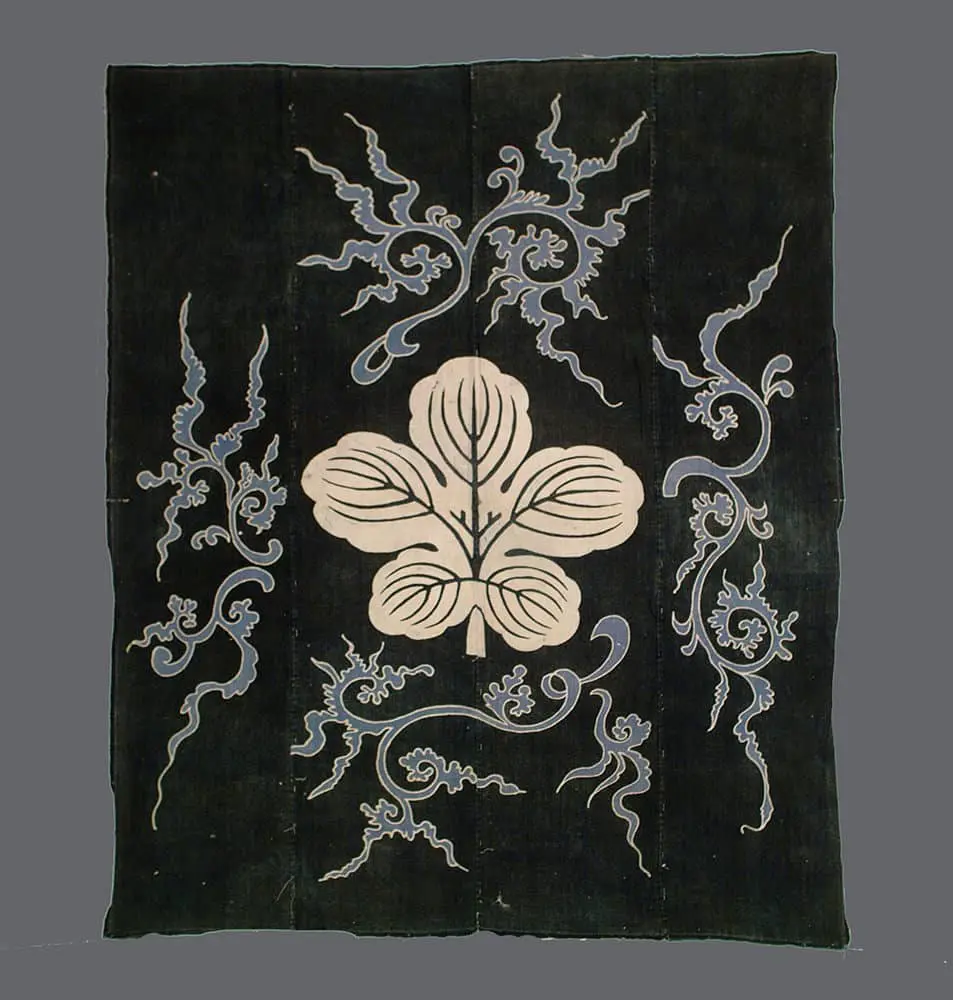
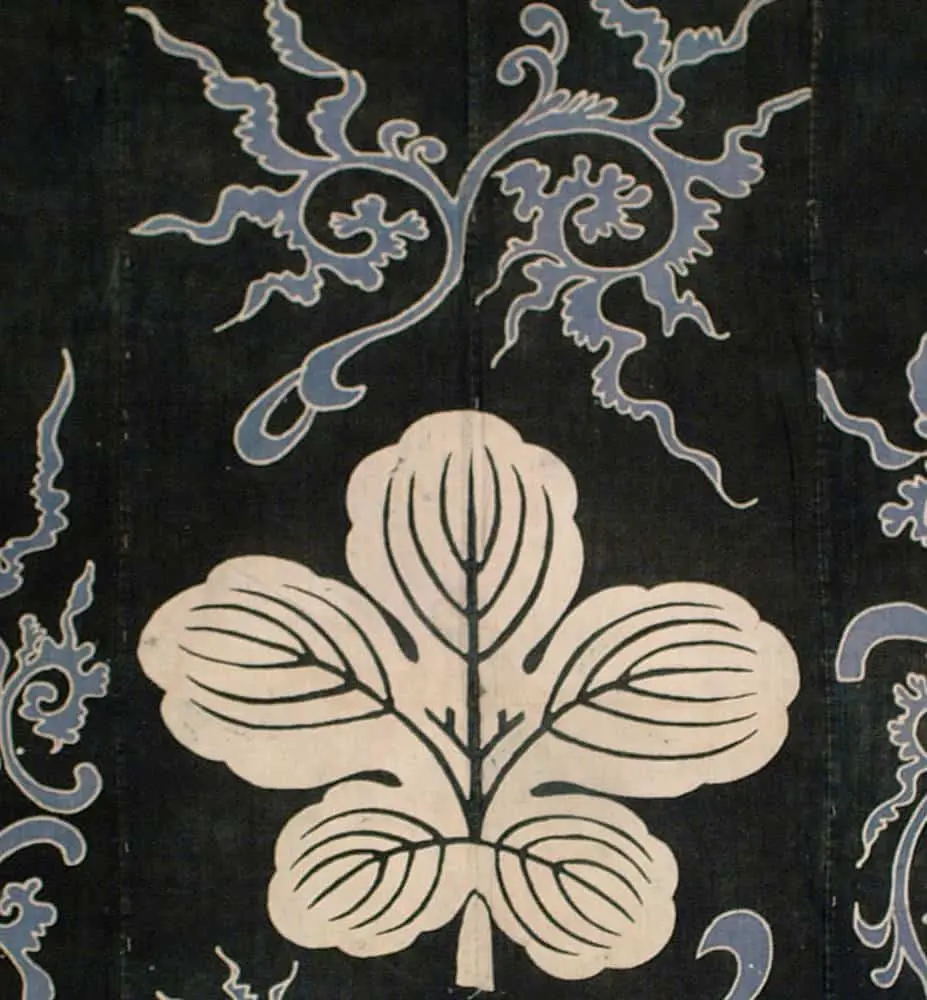

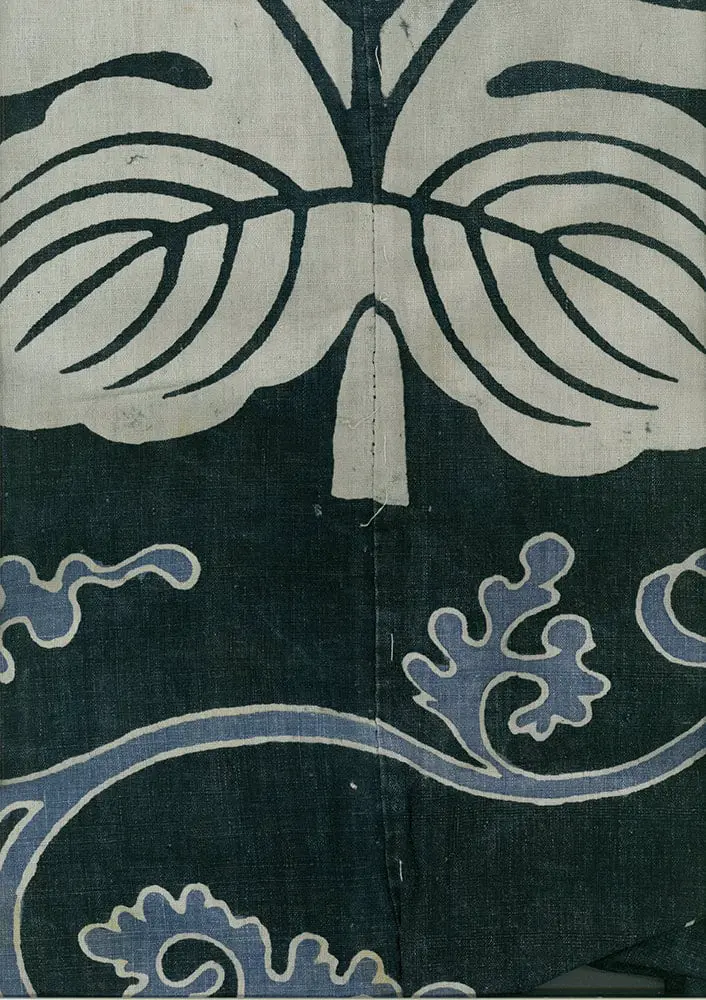
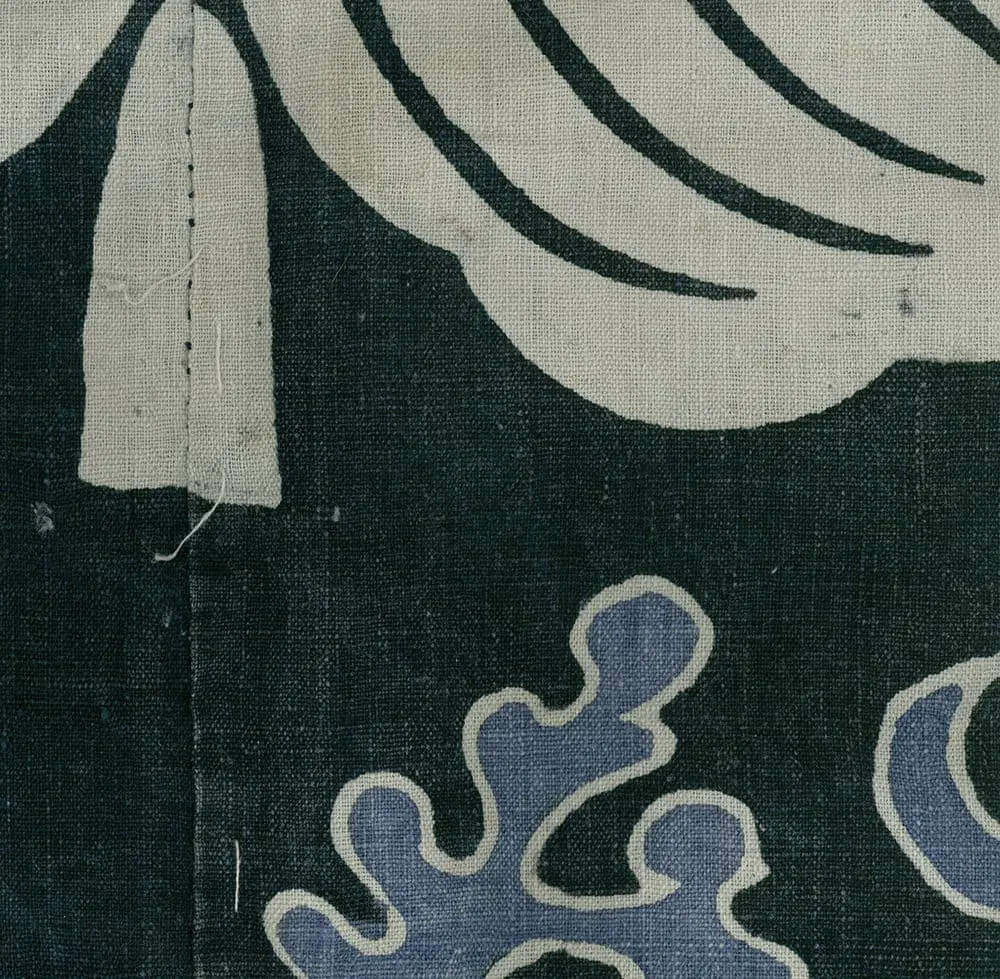
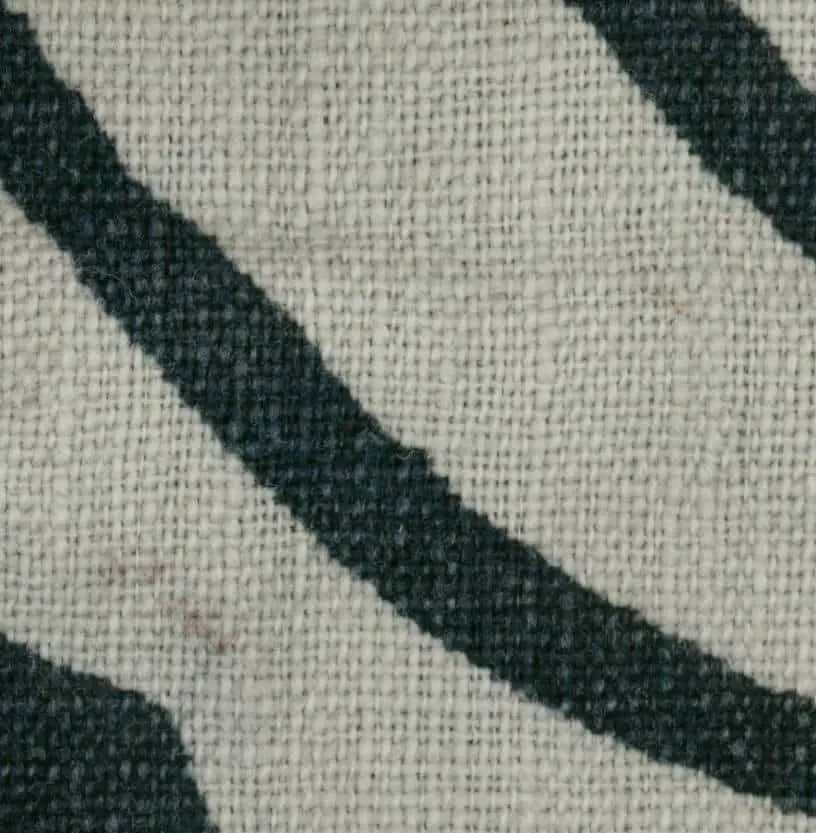

This striking futonji (bedding cover), dating to the late Meiji period (1880–1912), is a masterful example of tsutsugaki, a traditional Japanese rice-paste resist dyeing technique. Measuring 51 inches by 63 inches (130 cm x 160 cm), the textile is composed of four panels of hand-spun and hand-woven cotton, dyed a deep, saturated indigo.
The central motif is a large, bold mulberry leaf crest (kaji-mon), rendered in the natural white of the cotton. In ancient Japan, the mulberry held profound sacred significance; its leaves were used to hold offerings at Shinto shrines, and its bark was woven into ritual clothing. Surrounding the central crest are dynamic, flowing karakusa (scrolling vine) patterns, which symbolize eternity and the prosperity of a family lineage. These vines are accented with light blue, achieved through a careful secondary dyeing process. The piece is in very good condition, though it bears several tiny holes and minor stains that attest to its history and utilitarian origins.

Payment Options: We primarily accept PayPal for all transactions. Credit and debit cards are not accepted. If you prefer to pay by personal check instead of PayPal, please note this preference in the "Additional comments" field when placing your order.Ordering Process
To receive your PayPal invoice, simply fill out the form.
Shipping Details: We ship all orders to the address associated with your PayPal payment. Please ensure your PayPal shipping address is current and accurate.A phone number is required during checkout, as our shipping carrier may need to contact you regarding delivery questions.Shipping RatesUnited States and Canada: $20International destinations (air mail): $40
