Copyright © 2026 Yorke Antique Textiles
.avif)

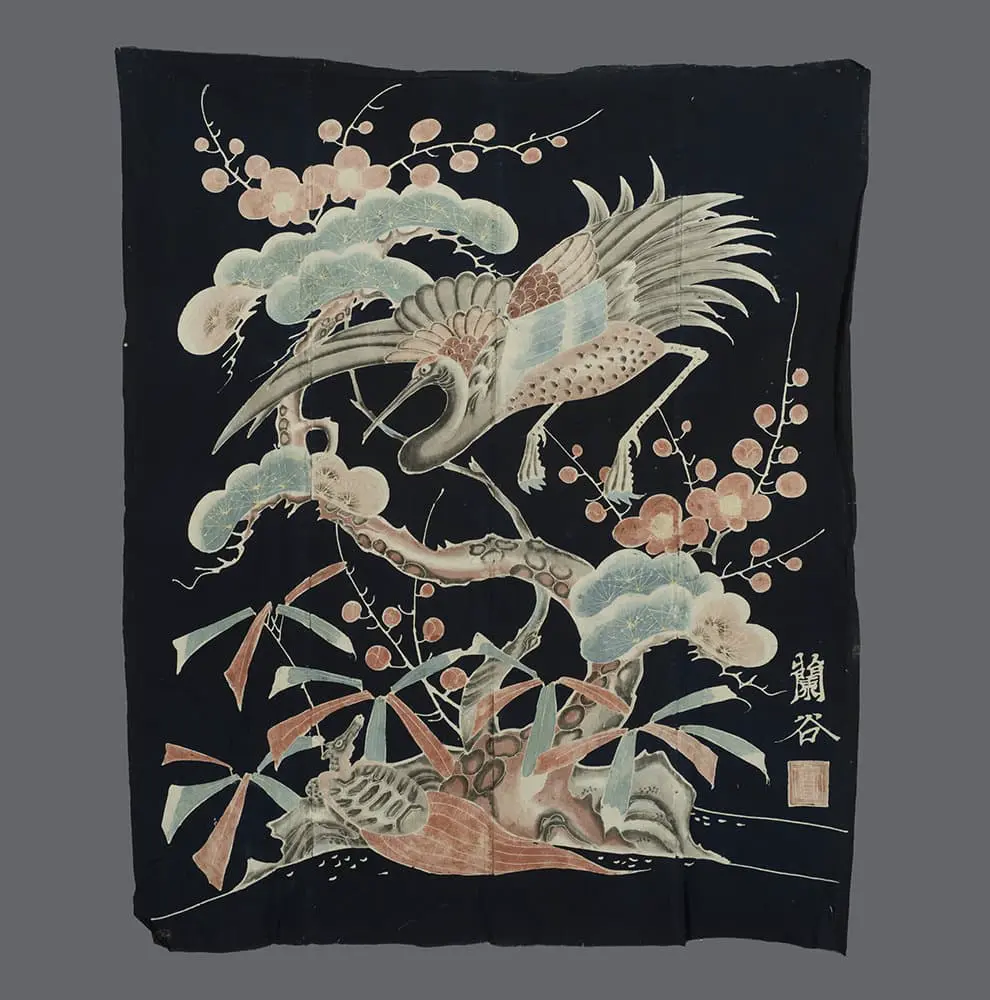


This striking futonji (bedding cover), dating to the Meiji period (1868–1900), is a masterful example of Japanese folk textile art. Measuring 52 inches by 62 inches (132 cm x 157 cm), the piece is composed of four panels of hand-woven cotton. It was created using the tsutsugaki technique, where a free-hand rice-paste resist is applied to the fabric before it is submerged in an indigo dye bath, followed by the application of painted pigments to the resisted areas.
The composition is rich with auspicious symbolism:
The textile features a deep indigo ground that serves as a dramatic backdrop for the pink, white, and teal-green pigments used for the plum blossoms and pine needles. A calligraphic signature and red seal appear in the lower right corner, marking it as a work of significant craftsmanship.

Payment Options: We primarily accept PayPal for all transactions. Credit and debit cards are not accepted. If you prefer to pay by personal check instead of PayPal, please note this preference in the "Additional comments" field when placing your order.Ordering Process
To receive your PayPal invoice, simply fill out the form.
Shipping Details: We ship all orders to the address associated with your PayPal payment. Please ensure your PayPal shipping address is current and accurate.A phone number is required during checkout, as our shipping carrier may need to contact you regarding delivery questions.Shipping RatesUnited States and Canada: $20International destinations (air mail): $40
