Copyright © 2026 Yorke Antique Textiles
.avif)

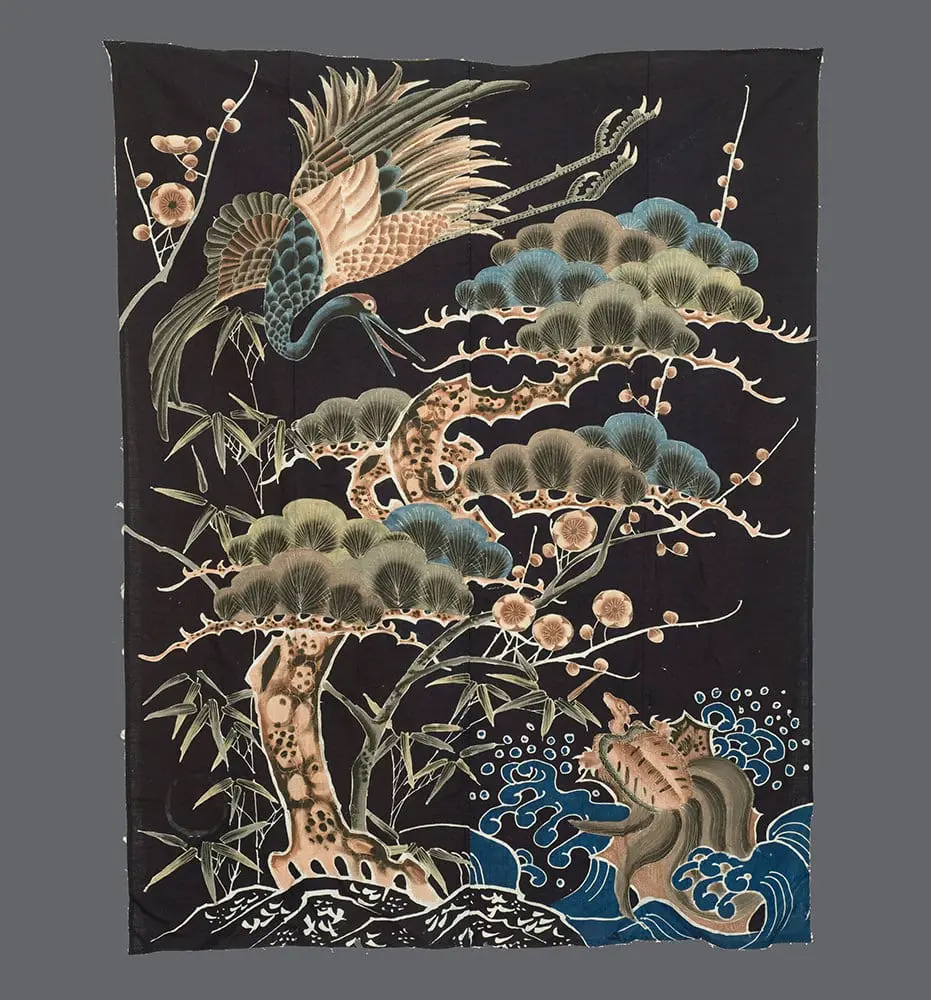

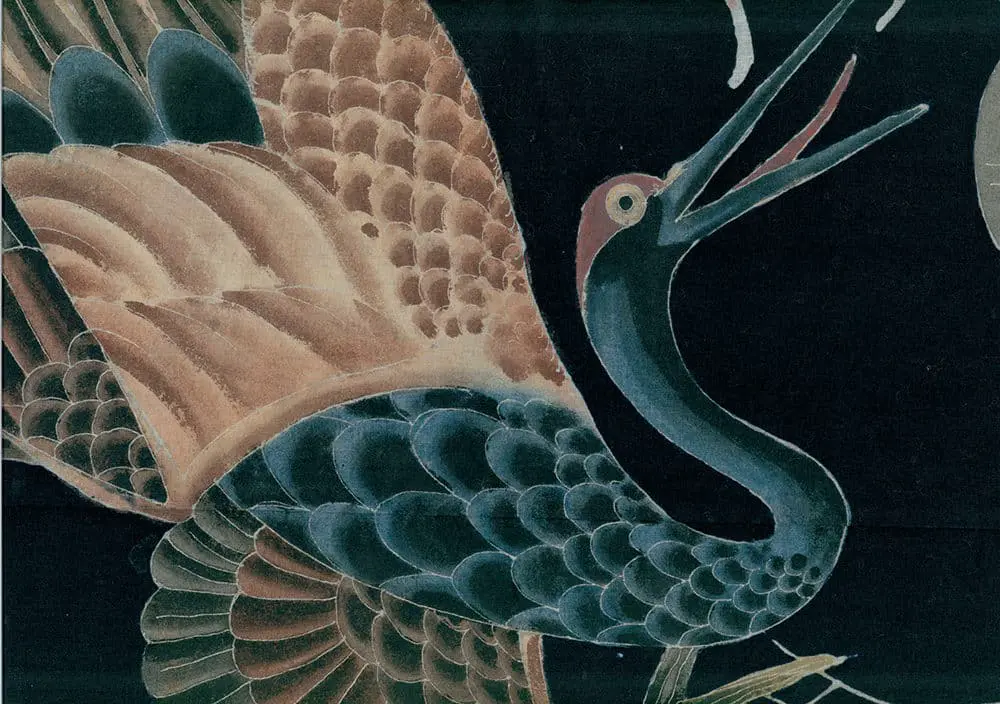
This monumental tsutsugaki futonji (bedding cover), dating to the Meiji period (1868–1912), is a vibrant example of Japanese folk textile art. Measuring 51 inches by 64 inches (130 cm x 163 cm), the cover is composed of four joined panels of hand-woven cotton. The design is meticulously rendered using the tsutsugaki technique, where a free-hand rice-paste resist is applied through a paper cone before the fabric is immersed in indigo dye.
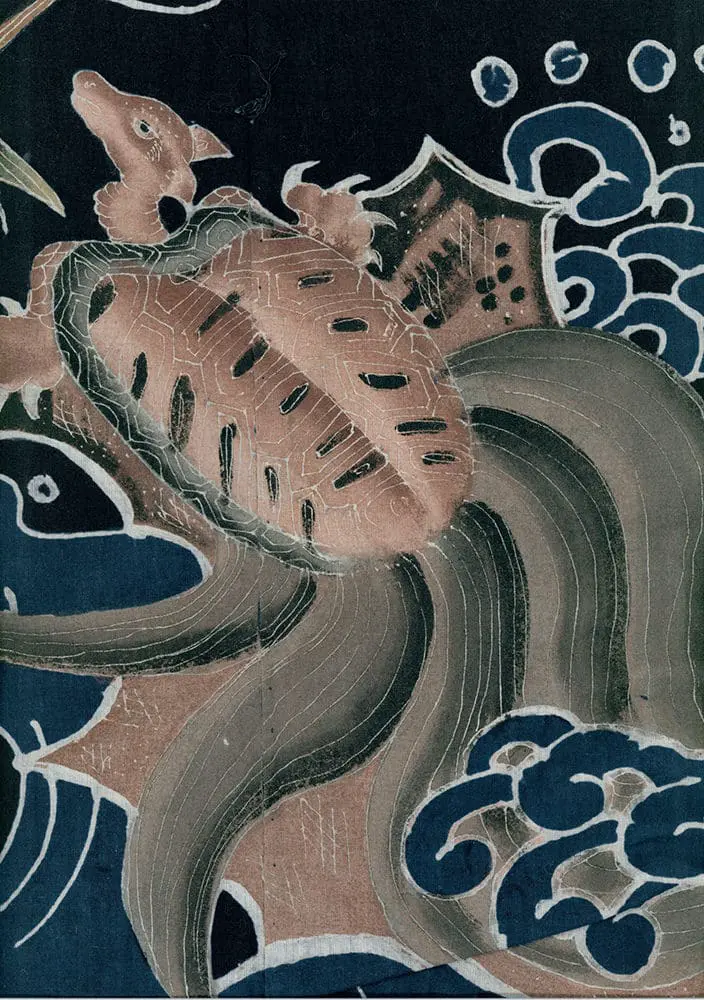
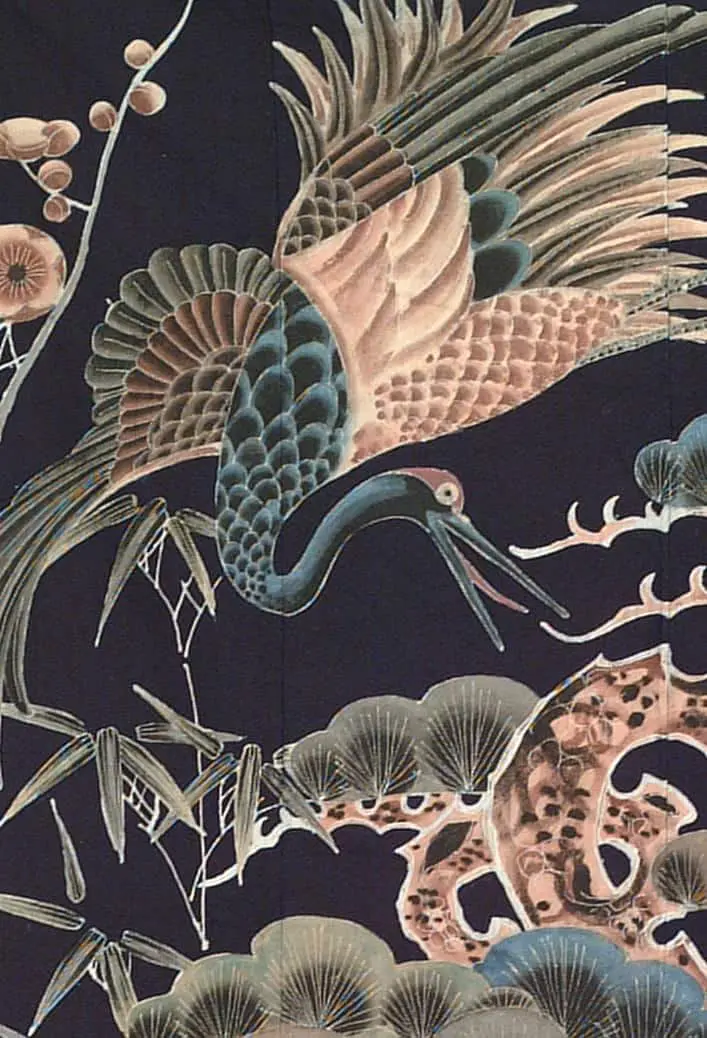
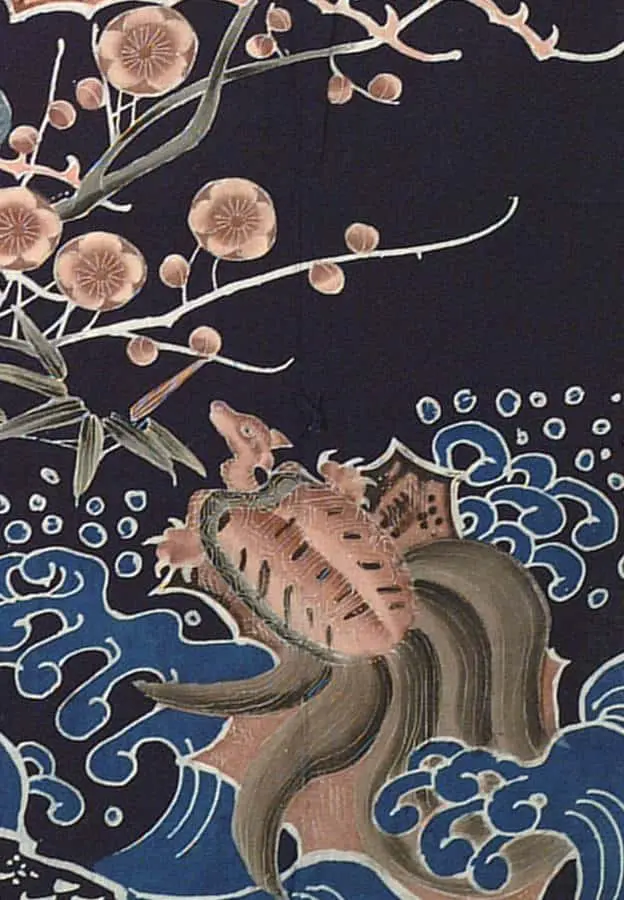
The iconography features a classic "Three Friends of Winter" variant tailored for auspiciousness: a sprawling, gnarled pine tree, a soaring crane, and a minogame (long-tailed tortoise) emerging from crashing waves. The pine represents longevity and the dwelling of the gods, while the crane—distinguished by its striking red crown—symbolizes beauty and serenity. The minogame, or "caped tortoise," is depicted with its signature trailing tail of seaweed, an image of exceptional prosperity and ten thousand years of life. The piece remains in excellent condition, showcasing the bold, painterly lines and deep indigo saturation characteristic of late 19th-century folk textiles.
This artwork is featured on pages 414-415 of Ceremonial Textiles of Japan, 18th to 20th Centuries. This book, published by Yorke Antique Textiles, can be previewed or purchased on our website here.

Payment Options: We primarily accept PayPal for all transactions. Credit and debit cards are not accepted. If you prefer to pay by personal check instead of PayPal, please note this preference in the "Additional comments" field when placing your order.Ordering Process
To receive your PayPal invoice, simply fill out the form.
Shipping Details: We ship all orders to the address associated with your PayPal payment. Please ensure your PayPal shipping address is current and accurate.A phone number is required during checkout, as our shipping carrier may need to contact you regarding delivery questions.Shipping RatesUnited States and Canada: $20International destinations (air mail): $40
