Copyright © 2026 Yorke Antique Textiles
.avif)

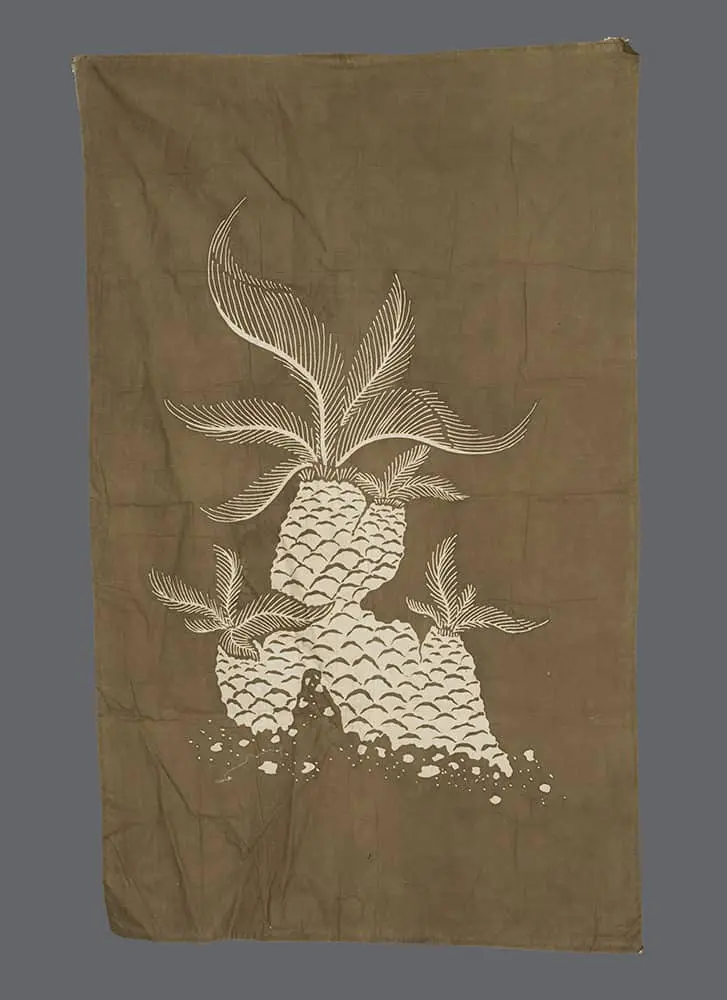

This distinctive cotton panel from Japan dates to the early Showa period (1926–1940). Measuring 35 inches by 58 inches (89 cm x 147 cm), this textile was once part of a larger futon cover and remains in excellent condition. It features a striking design created using the tsutsugaki technique, where a rice-paste resist is applied by hand to the fabric before dyeing.
The central composition showcases an unusual cycad (sotetsu) motif, rendered in crisp white against a muted, earthy olive-drab ground. In Japanese culture, the cycad is a cherished symbol of longevity and resilience, known for its ability to thrive for centuries even in harsh conditions. The design captures the unique texture of the cycad’s trunk with rhythmic, scale-like patterns, while the fronds are depicted with elegant, sweeping lines that radiate outward from the crown. Small white dots at the base of the plant represent the soil or rocky terrain from which the ancient plant emerges.

Payment Options: We primarily accept PayPal for all transactions. Credit and debit cards are not accepted. If you prefer to pay by personal check instead of PayPal, please note this preference in the "Additional comments" field when placing your order.Ordering Process
To receive your PayPal invoice, simply fill out the form.
Shipping Details: We ship all orders to the address associated with your PayPal payment. Please ensure your PayPal shipping address is current and accurate.A phone number is required during checkout, as our shipping carrier may need to contact you regarding delivery questions.Shipping RatesUnited States and Canada: $20International destinations (air mail): $40
