Copyright © 2026 Yorke Antique Textiles
.avif)


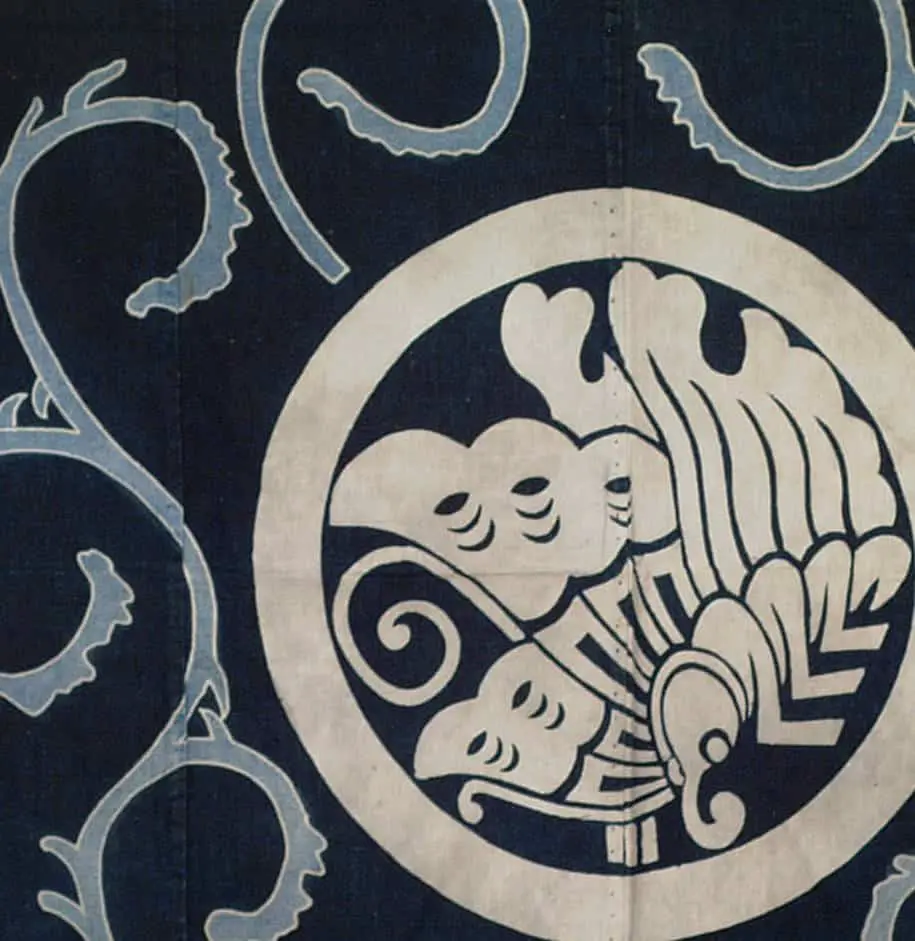
This distinctive futon cover (bed covering) from Japan dates to the Taisho period (1912–1926). Measuring approximately 49 inches by 57 inches (124 cm x 145 cm), it is constructed from four joined vertical panels of heavy-duty cotton. The cover features a bold, large-scale central design executed in the tsutsugaki technique, a traditional hand-drawn rice-paste resist dyeing method.
The central focus is a circular mon (family crest) depicting a stylized butterfly, a motif traditionally associated with the Taira clan and later adopted by various samurai families to symbolize rebirth and transformation. This crest is encircled by a dynamic ring of scrolling, thorny vines, all rendered in a crisp, creamy white against a deep, saturated indigo ground. A small calligraphic mark or signature is visible in the lower right corner. The textile remains in very good condition, with only one tiny hole noted.

Payment Options: We primarily accept PayPal for all transactions. Credit and debit cards are not accepted. If you prefer to pay by personal check instead of PayPal, please note this preference in the "Additional comments" field when placing your order.Ordering Process
To receive your PayPal invoice, simply fill out the form.
Shipping Details: We ship all orders to the address associated with your PayPal payment. Please ensure your PayPal shipping address is current and accurate.A phone number is required during checkout, as our shipping carrier may need to contact you regarding delivery questions.Shipping RatesUnited States and Canada: $20International destinations (air mail): $40
