Copyright © 2026 Yorke Antique Textiles
.avif)


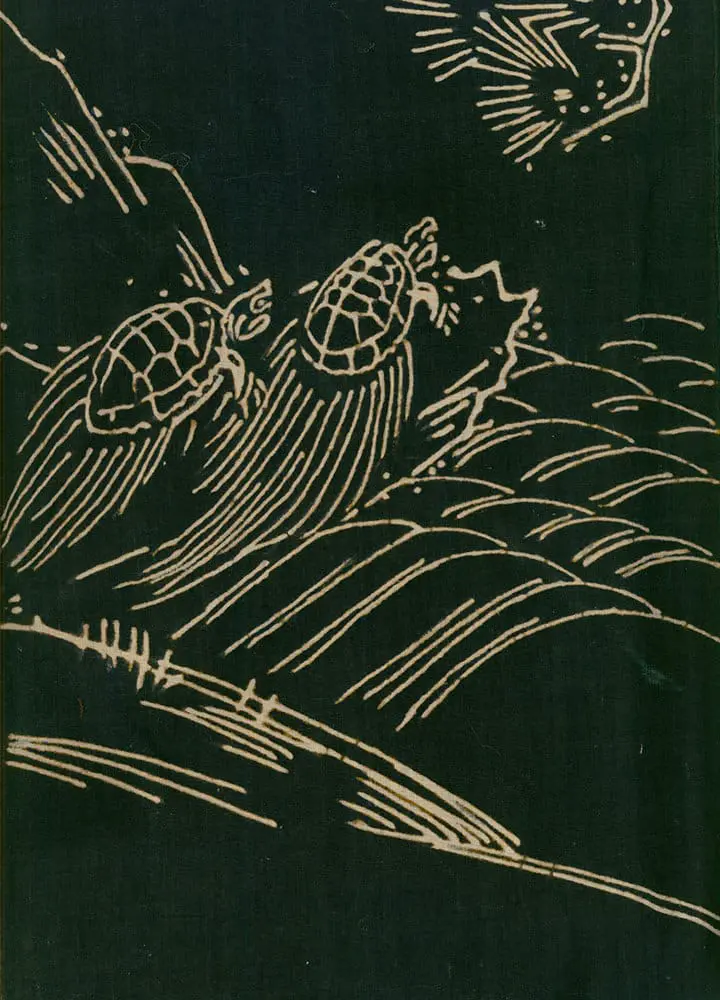
This expansive cotton furoshiki (carrying cloth) from Japan dates to the mid-Showa period (1940–1960). Measuring 54 inches by 62 inches (137 cm x 157 cm), the textile is a masterwork of the tsutsugaki technique, a freehand resist-dyeing method where artisans apply rice paste through a paper cone to create intricate designs. The cloth is dyed a saturated, deep forest green, providing a sophisticated backdrop for the crisp, white resist motifs.
The composition features a serene landscape of auspicious symbols, including a gnarled pine tree (matsu) and bamboo (take), which represent longevity and flexibility. A soaring crane and two turtles (minogame) near a rocky outcropping further emphasize the theme of a long and prosperous life. Adding a vibrant focal point to the monochromatic design is a red-dyed sun or seal motif. A small, circular family crest (mon) depicting a stylized floral design is positioned in the lower right corner. The piece is maintained in excellent condition.

Payment Options: We primarily accept PayPal for all transactions. Credit and debit cards are not accepted. If you prefer to pay by personal check instead of PayPal, please note this preference in the "Additional comments" field when placing your order.Ordering Process
To receive your PayPal invoice, simply fill out the form.
Shipping Details: We ship all orders to the address associated with your PayPal payment. Please ensure your PayPal shipping address is current and accurate.A phone number is required during checkout, as our shipping carrier may need to contact you regarding delivery questions.Shipping RatesUnited States and Canada: $20International destinations (air mail): $40
