Copyright © 2026 Yorke Antique Textiles
.avif)


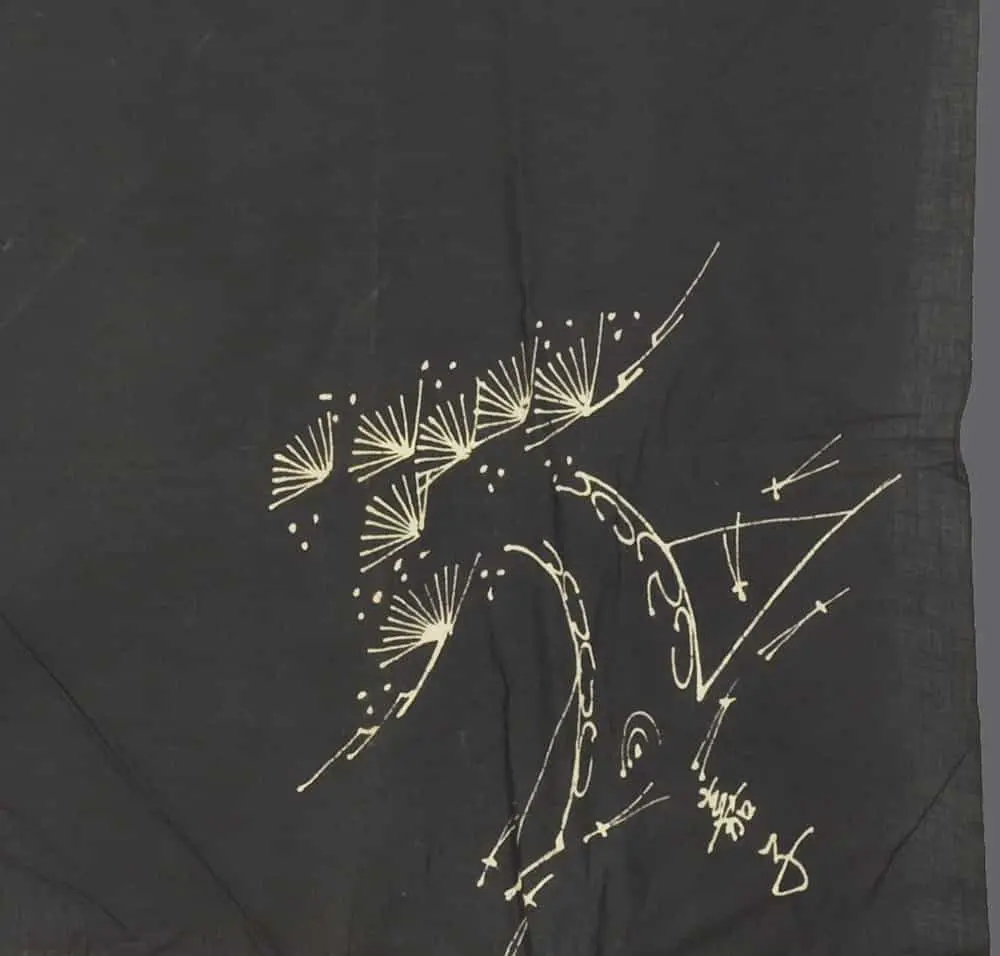
This expansive cotton furoshiki (carrying cloth) from Japan dates to the early Showa period (1926–1940). Measuring 63 inches by 57 inches (160 cm x 145 cm), the textile is a masterwork of the tsutsugaki technique, a freehand resist-dyeing method using a paper cone to apply rice paste. The cloth is dyed a saturated, deep indigo that provides a stark, dramatic background for the white resist motifs.
The composition features the "Three Friends of Winter" (Sho-Chiku-Bai)—pine (matsu), bamboo (take), and plum (ume)—which collectively symbolize perseverance, integrity, and renewal. A large central medallion contains a family crest (mon) depicting crossed hawk feathers (takanoha) within a plum blossom border, a motif often associated with samurai heritage and discipline. Surrounding this central crest are large-scale, expressive renderings of pine needles in the upper right, a sturdy bamboo stalk with sharp leaves in the lower left, and blossoming plum branches in the remaining corners. The piece is in very good condition.

Payment Options: We primarily accept PayPal for all transactions. Credit and debit cards are not accepted. If you prefer to pay by personal check instead of PayPal, please note this preference in the "Additional comments" field when placing your order.Ordering Process
To receive your PayPal invoice, simply fill out the form.
Shipping Details: We ship all orders to the address associated with your PayPal payment. Please ensure your PayPal shipping address is current and accurate.A phone number is required during checkout, as our shipping carrier may need to contact you regarding delivery questions.Shipping RatesUnited States and Canada: $20International destinations (air mail): $40
