Copyright © 2026 Yorke Antique Textiles
.avif)

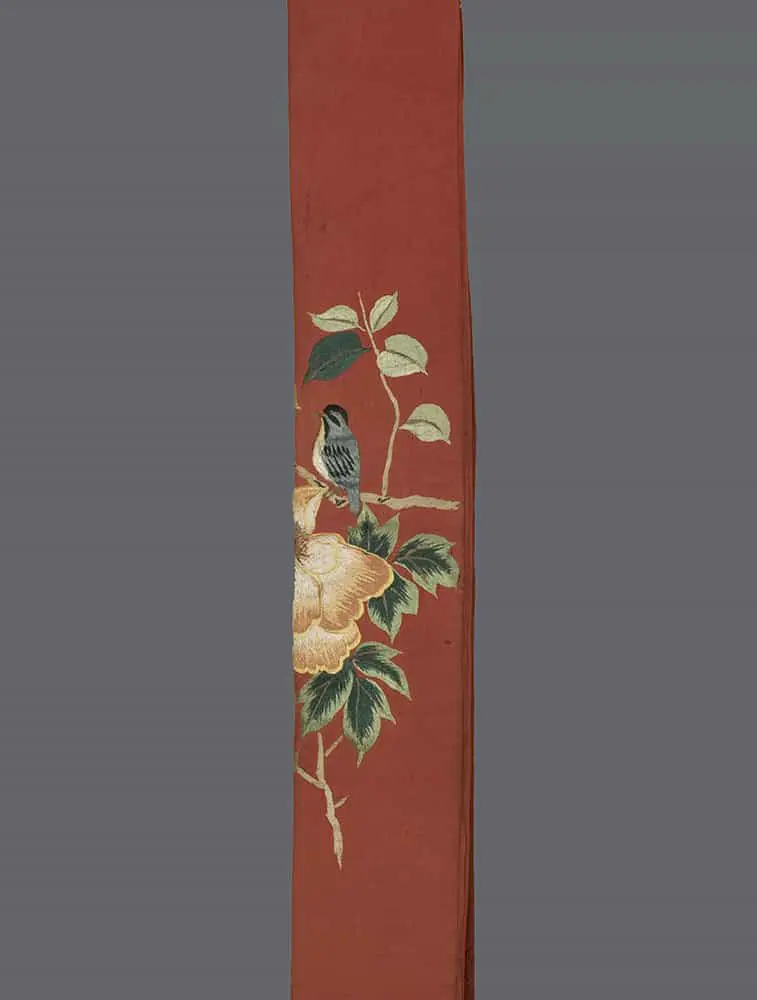

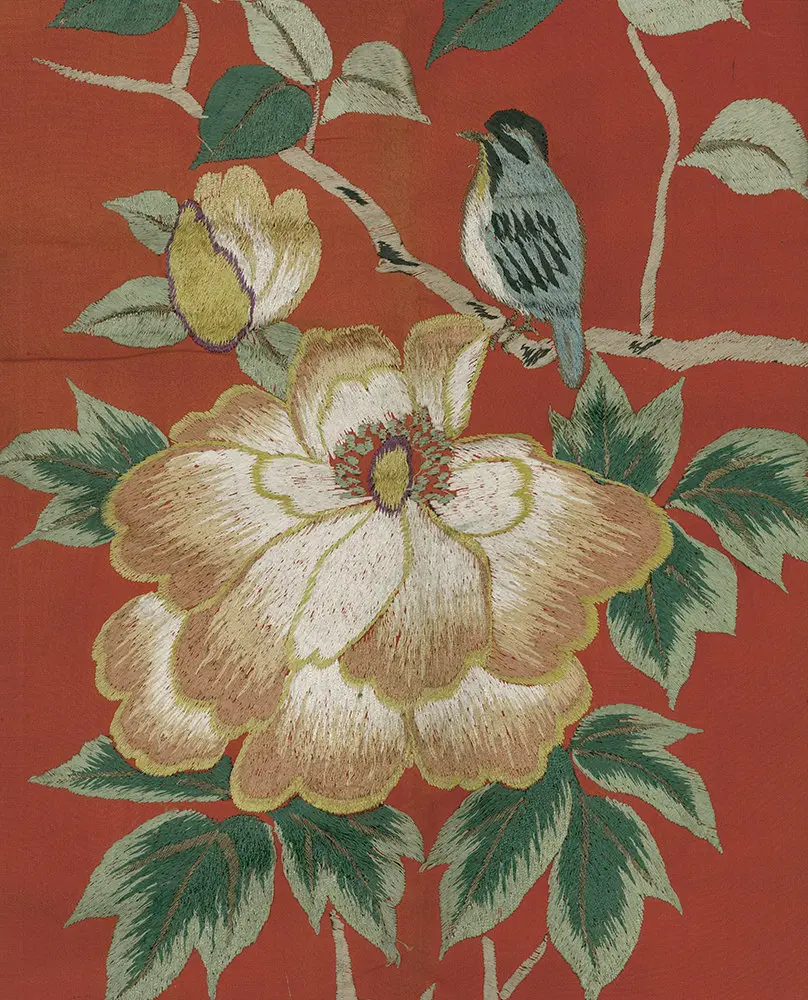
This rare and exceptionally long silk theatrical obi, dating to the late Edo period (1825–1868), is a vibrant example of high-level Japanese needlework. Measuring 12 inches in width (when opened) and spanning an impressive 124 inches in length, this garment was likely designed for the stage, where its scale and brilliant colors would be visible to an audience. The textile features a deep terracotta-red silk ground, providing a dramatic backdrop for the finely detailed floral and avian motifs.
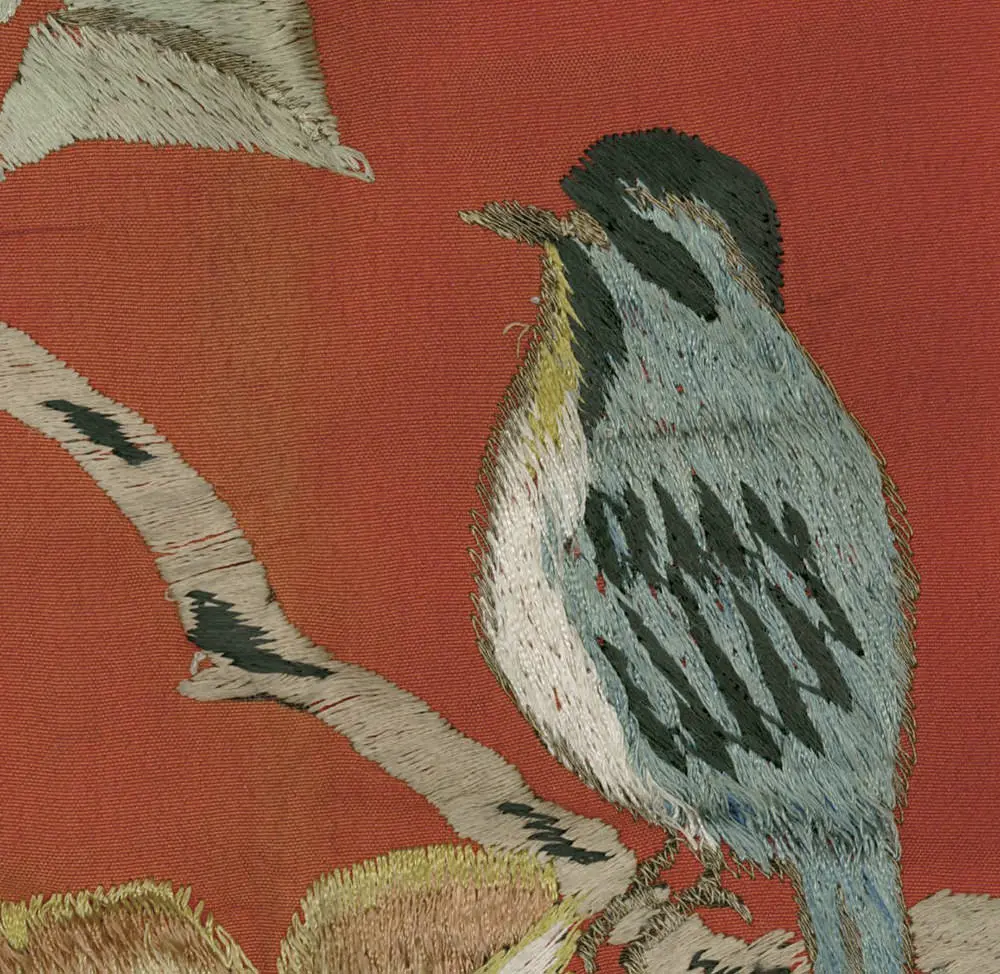
The central artistry consists of an intricately embroidered peony (botan) in shades of cream and gold, accompanied by lush green leaves with dark veining. Perched delicately on a branch above the blossom is a small, realistic songbird, rendered with precise stitches that capture the texture of its grey and yellow plumage. The peony, a symbol of nobility and beauty, paired with the vitality of the bird, creates a classic "bird-and-flower" (kachō-ga) composition. Despite its age, the obi remains in very good condition, exhibiting only minor imperfections consistent with its history as a functional theatrical piece.

Payment Options: We primarily accept PayPal for all transactions. Credit and debit cards are not accepted. If you prefer to pay by personal check instead of PayPal, please note this preference in the "Additional comments" field when placing your order.Ordering Process
To receive your PayPal invoice, simply fill out the form.
Shipping Details: We ship all orders to the address associated with your PayPal payment. Please ensure your PayPal shipping address is current and accurate.A phone number is required during checkout, as our shipping carrier may need to contact you regarding delivery questions.Shipping RatesUnited States and Canada: $20International destinations (air mail): $40
