Copyright © 2026 Yorke Antique Textiles
.avif)

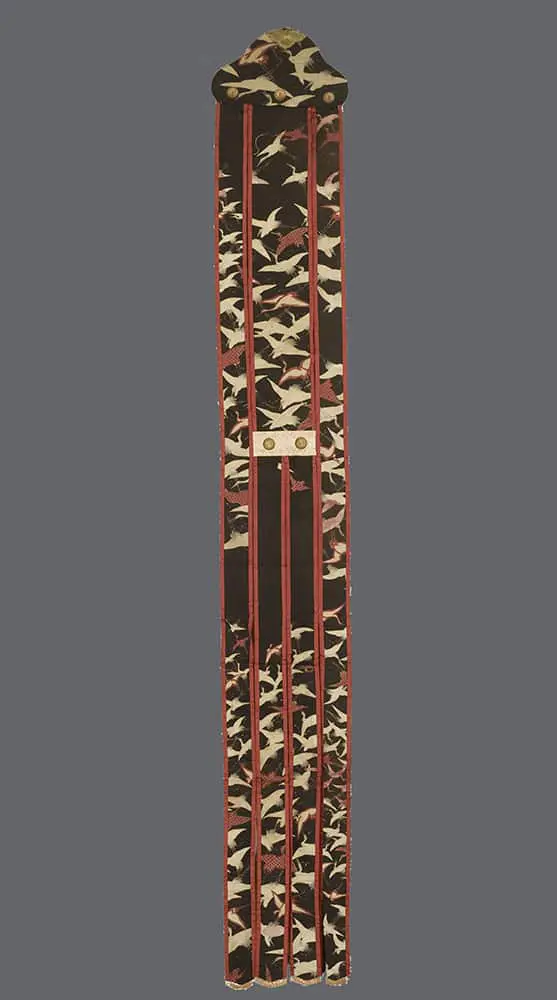
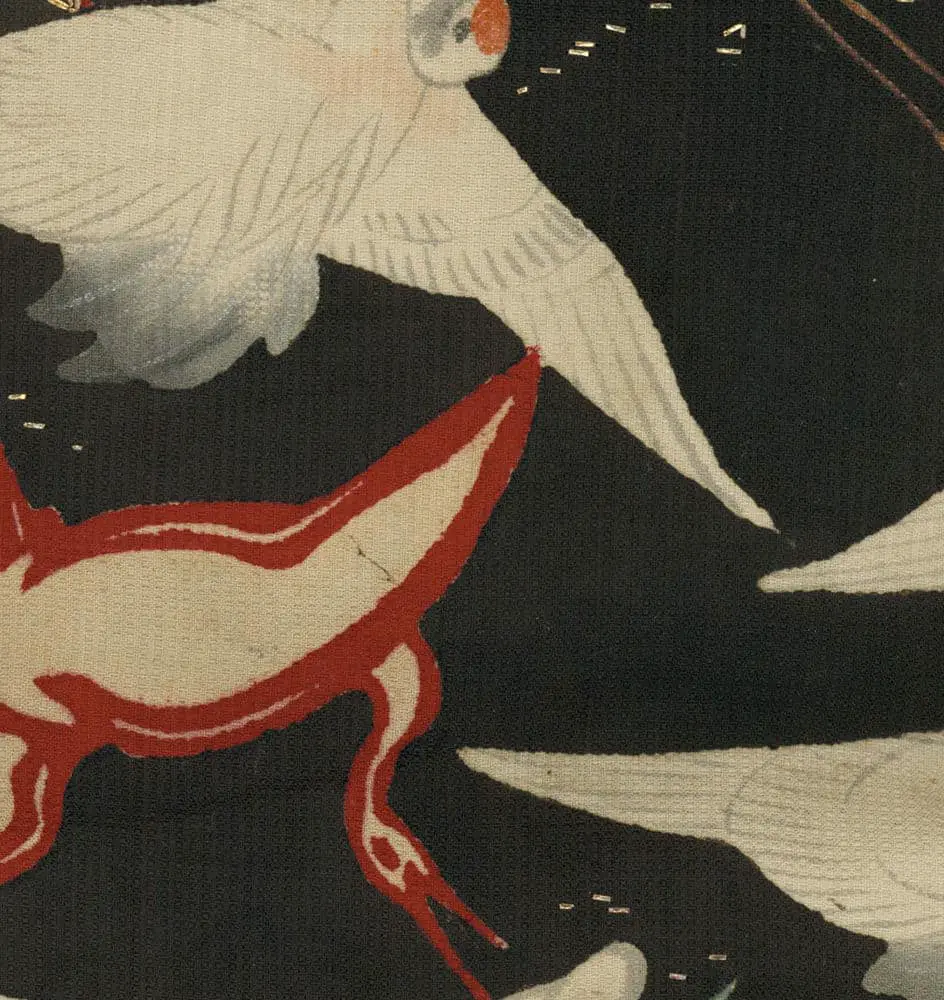
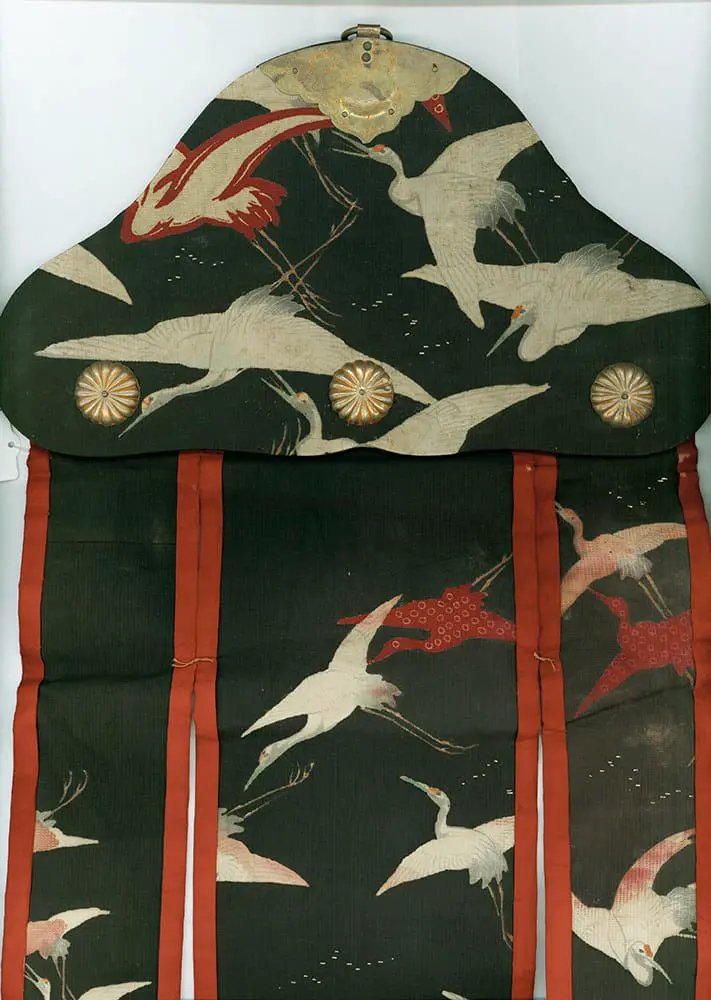
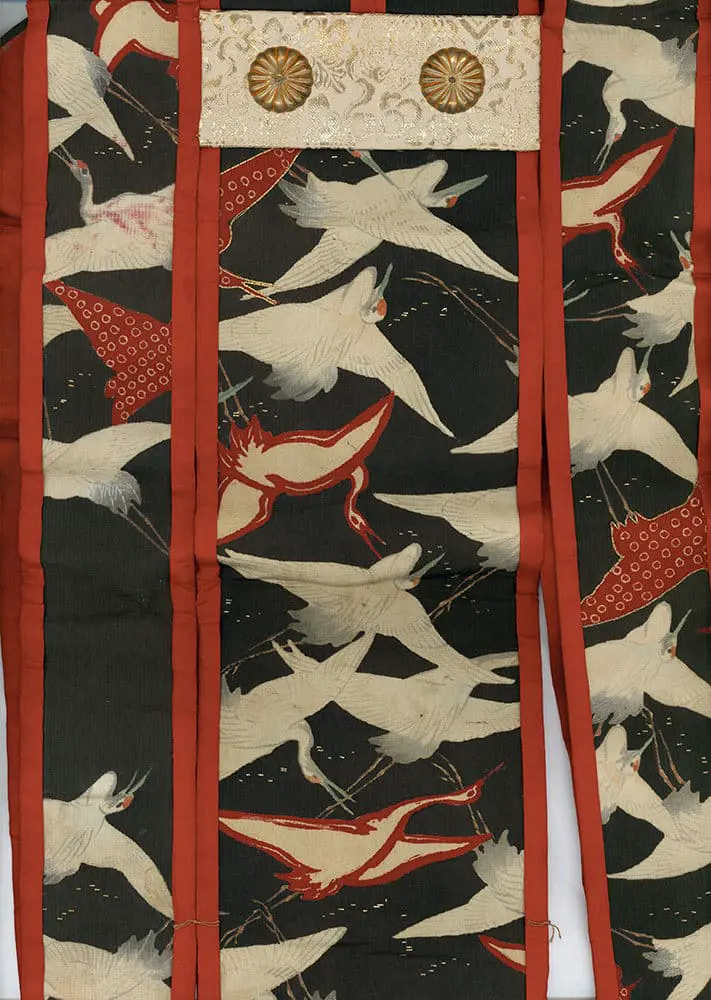
This striking temple ban (hanging banner) from Japan is precisely dated to the Taisho period, 1913, as confirmed by the kanji inscription on its reverse side. Measuring 12 inches by 70 inches (30 cm x 178 cm), this ritual textile is a composite piece that showcases the creative reuse of older, high-quality materials. The central panels are repurposed from a 19th-century kimono, featuring a dense and dynamic pattern of hundreds of white and red flying cranes against a midnight black ground.
The banner is structured with vertical red silk edgings that divide the crane-patterned fabric into three distinct columns. It is finished with early 20th-century brass hardware, including decorative circular bosses at the top and midpoint, which served both as functional weights and ornamental accents. The crane, a symbol of longevity and 1,000 years of life, makes this banner an auspicious addition to a sacred space. The piece remains in a state that reflects its over 100-year history of temple use.

Payment Options: We primarily accept PayPal for all transactions. Credit and debit cards are not accepted. If you prefer to pay by personal check instead of PayPal, please note this preference in the "Additional comments" field when placing your order.Ordering Process
To receive your PayPal invoice, simply fill out the form.
Shipping Details: We ship all orders to the address associated with your PayPal payment. Please ensure your PayPal shipping address is current and accurate.A phone number is required during checkout, as our shipping carrier may need to contact you regarding delivery questions.Shipping RatesUnited States and Canada: $20International destinations (air mail): $40
