Copyright © 2026 Yorke Antique Textiles
.avif)

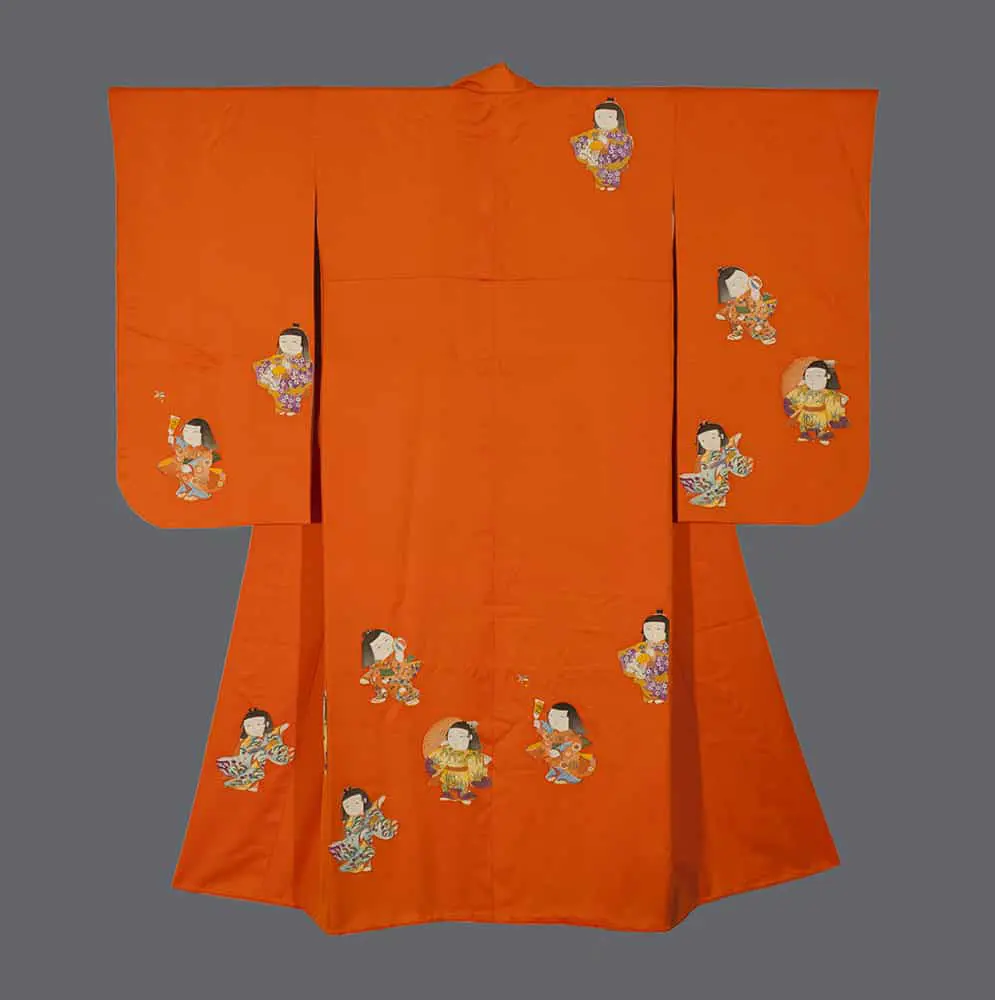

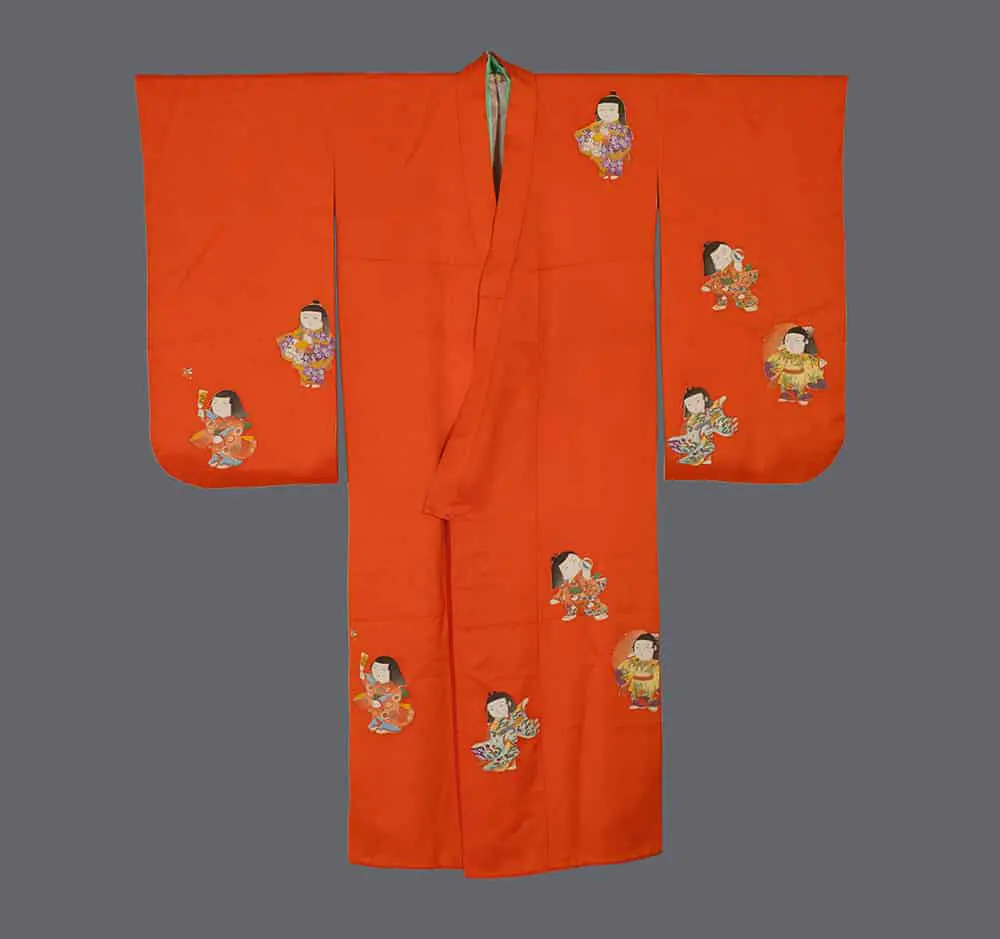
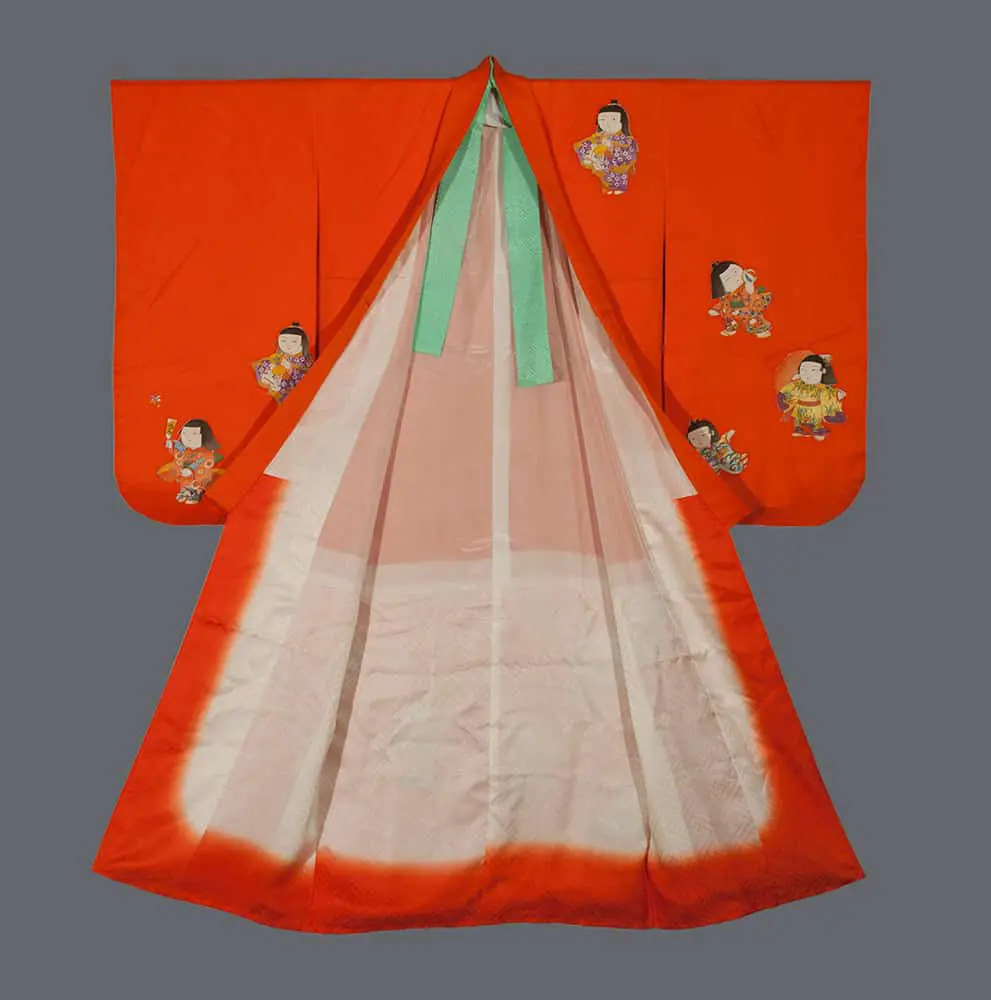
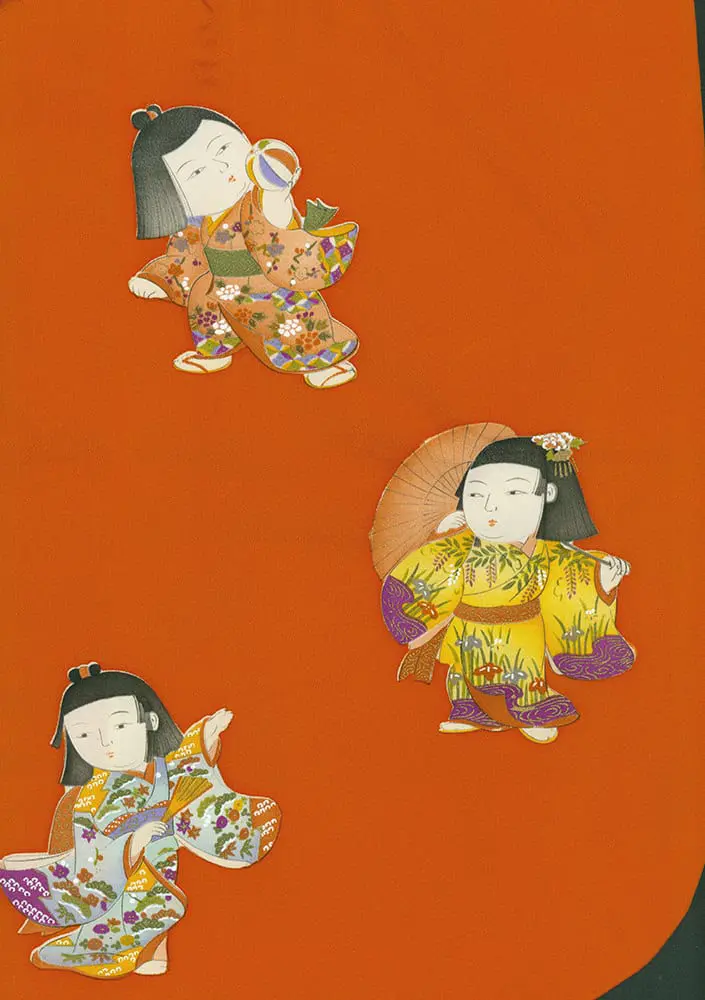

This striking kimono features a vibrant vermillion-orange ground in rinzu (damask) silk, a weave characterized by subtle patterns woven into the fabric itself that become visible as the light catches the surface. Against this luminous backdrop, delicate silk-screened motifs depict karako (Chinese-style children) girls in elaborate, colorful garments. The figures are shown in various playful poses, some holding fans, toys, or other objects associated with childhood games and celebrations.
The motif of children at play carries deep symbolic meaning in Japanese textiles. Such imagery represents wishes for health, prosperity, and happiness, and was traditionally considered auspicious. The Heian-period styling of the figures—with their round faces, black hair, and layered robes—evokes classical Japanese aesthetics and courtly refinement.
The kimono's construction includes front sash ties, a distinctive feature typically found on certain ceremonial garments. This structural detail, combined with the formal orange color (associated with vitality and celebration in Japanese culture), suggests the piece may have been intended for Shinto ritual use or as a costume for an important stage performance, such as traditional dance or theater. The careful placement of the scattered figures creates visual balance while leaving ample negative space, allowing the rich orange silk to command attention. This thoughtful composition exemplifies the Japanese principle of "ma"—the meaningful use of empty space as an essential design element.
It's in very good condition overall, with only minor imperfections. Its measurements span 46 inches (117 cm) from sleeve-end to sleeve-end and stand at 51 inches (130 cm) in height.

Payment Options: We primarily accept PayPal for all transactions. Credit and debit cards are not accepted. If you prefer to pay by personal check instead of PayPal, please note this preference in the "Additional comments" field when placing your order.Ordering Process
To receive your PayPal invoice, simply fill out the form.
Shipping Details: We ship all orders to the address associated with your PayPal payment. Please ensure your PayPal shipping address is current and accurate.A phone number is required during checkout, as our shipping carrier may need to contact you regarding delivery questions.Shipping RatesUnited States and Canada: $20International destinations (air mail): $40
