Copyright © 2026 Yorke Antique Textiles
.avif)


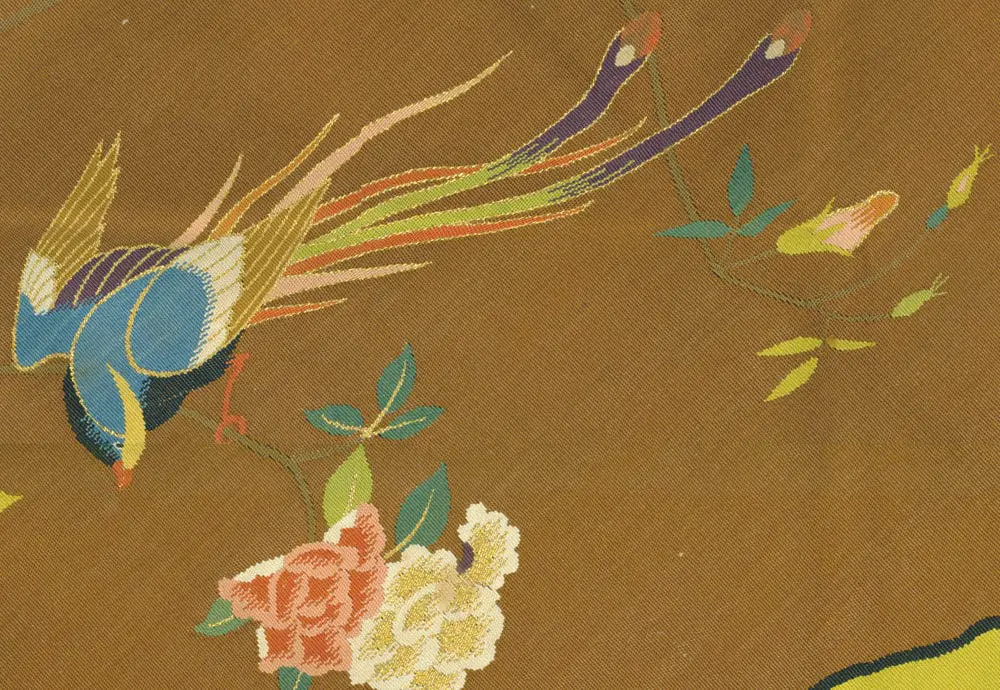


This exquisite triangular uchishiki (Buddhist altar cloth), originating from the Meiji period (1868–1912), serves as a masterful example of specialized Japanese weaving. Measuring 27 inches in width by 20 inches in height (69 cm x 51 cm), the textile is crafted from silk using the physically demanding tsume tsuzure (fingernail-woven) tapestry technique. This laborious process involves the weaver using their own serrated fingernails to press the weft threads into place, allowing for highly detailed and painterly transitions directly within the structure of the fabric. The composition features a vibrant blue-bodied phoenix soaring through a landscape of blossoming camellias and stylized clouds, all set against a warm, earthen-brown silk ground.
In the cultural context of Japan and China, the mythical phoenix is a high-prestige symbol associated with the imperial household and specifically the empress. It is a revered creature that embodies the qualities of fire, the sun, justice, and fidelity. Within the Buddhist tradition, the phoenix is often equated with Garuda, the "Bird of Life," making it a fitting motif for a sacred altar covering. The piece features a broad white silk band along the top edge and remains in very good condition, though it displays slight staining and several tiny holes that attest to its age and ritual history.

Payment Options: We primarily accept PayPal for all transactions. Credit and debit cards are not accepted. If you prefer to pay by personal check instead of PayPal, please note this preference in the "Additional comments" field when placing your order.Ordering Process
To receive your PayPal invoice, simply fill out the form.
Shipping Details: We ship all orders to the address associated with your PayPal payment. Please ensure your PayPal shipping address is current and accurate.A phone number is required during checkout, as our shipping carrier may need to contact you regarding delivery questions.Shipping RatesUnited States and Canada: $20International destinations (air mail): $40
