Copyright © 2026 Yorke Antique Textiles
.avif)

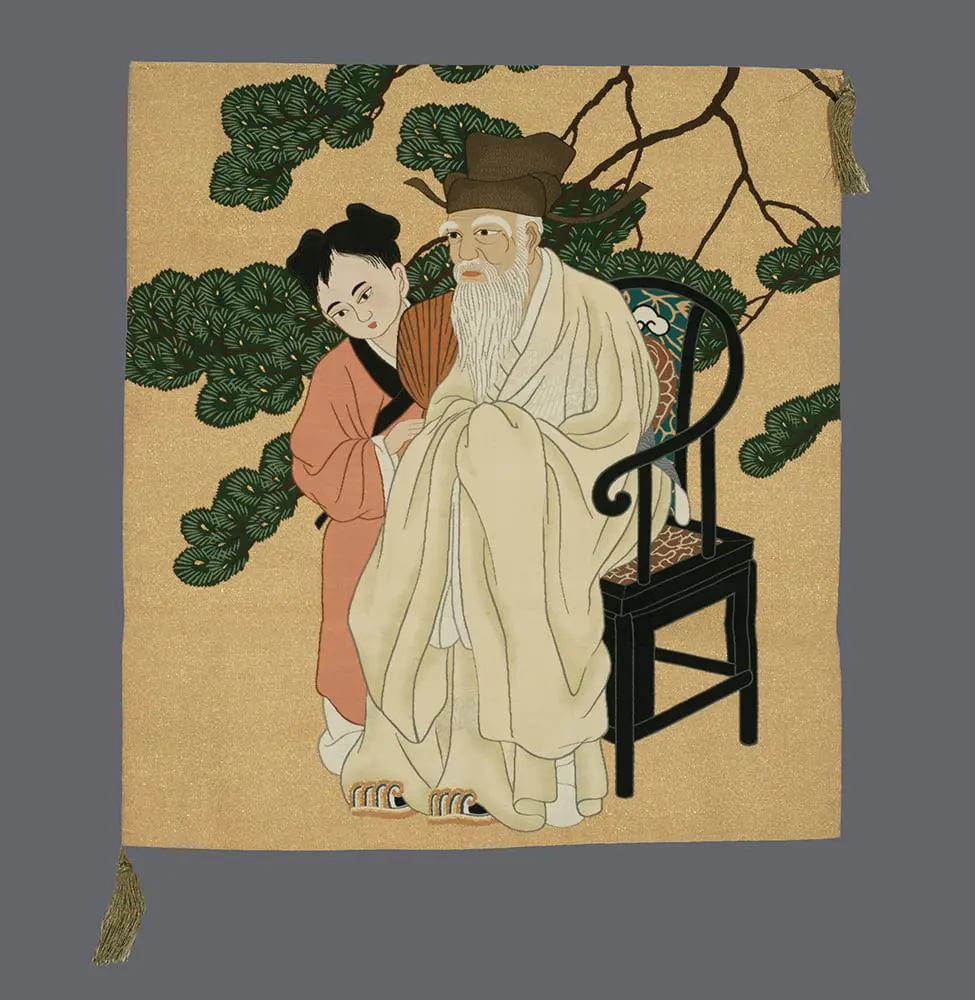



This masterful silk fukusa (ceremonial gift-wrapping cloth) from Japan dates to the Taisho period (1912–1926). Measuring 27 inches by 29 inches (68.6 cm x 73.7 cm), the textile is meticulously crafted using the slit tapestry-weave (tsuzure-ori) technique and remains in very good condition.
The imagery depicts a scholarly nature scene featuring a wise man and his assistant. The elderly sage, characterized by a long white beard and traditional headwear, is seated in a high-backed black chair, draped in voluminous cream-colored robes. Behind him, a young assistant in a coral-toned garment gazes over his shoulder. The figures are set against a background of ancient, gnarled pine branches (matsu), a venerable symbol of longevity and wisdom. The gold-toned ground is woven with shimmering metallic threads, a hallmark of high-status tsuzure-ori textiles produced for formal gift exchanges. Two original tassels remain attached at the upper and lower corners, adding to its ceremonial character.
This artwork is featured on pages 126-127 of Ceremonial Textiles of Japan, 18th to 20th Centuries. This book, published by Yorke Antique Textiles, can be previewed or purchased on our website here.
The piece is also featured on page 90 of the autumn 2019 edition of HALI magazine.

Payment Options: We primarily accept PayPal for all transactions. Credit and debit cards are not accepted. If you prefer to pay by personal check instead of PayPal, please note this preference in the "Additional comments" field when placing your order.Ordering Process
To receive your PayPal invoice, simply fill out the form.
Shipping Details: We ship all orders to the address associated with your PayPal payment. Please ensure your PayPal shipping address is current and accurate.A phone number is required during checkout, as our shipping carrier may need to contact you regarding delivery questions.Shipping RatesUnited States and Canada: $20International destinations (air mail): $40
