Copyright © 2026 Yorke Antique Textiles
.avif)

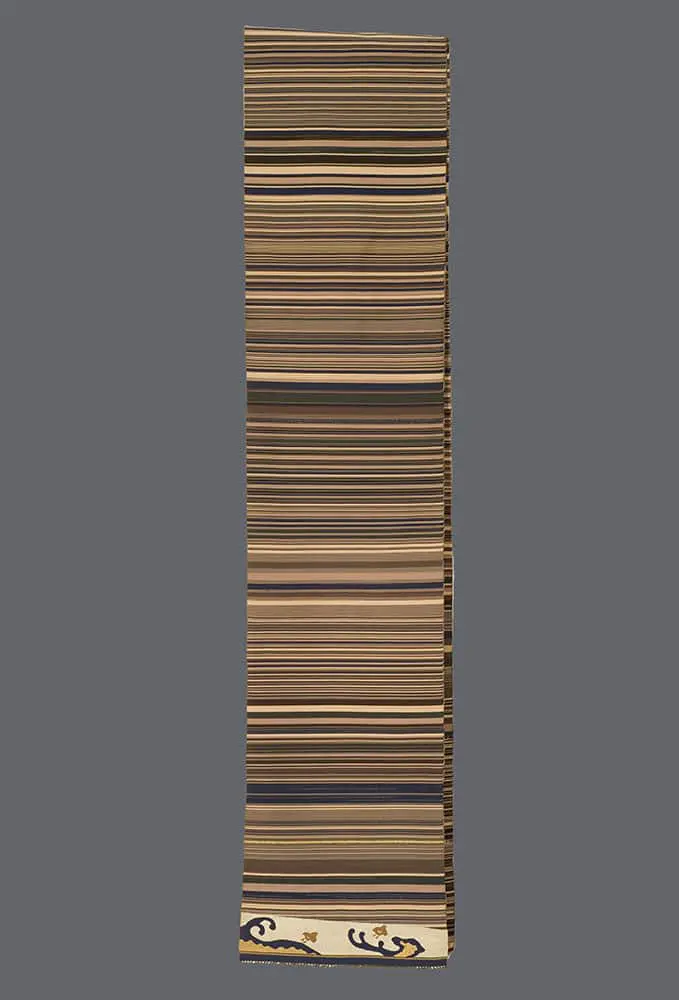
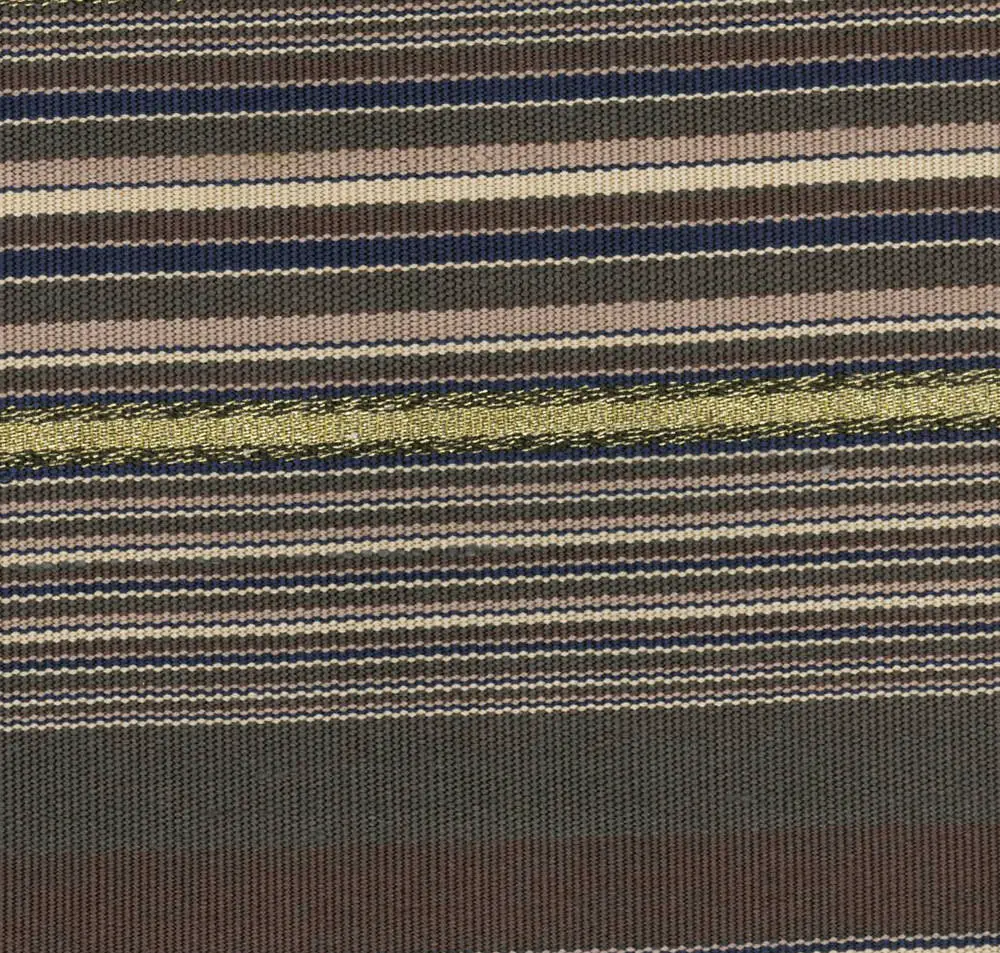
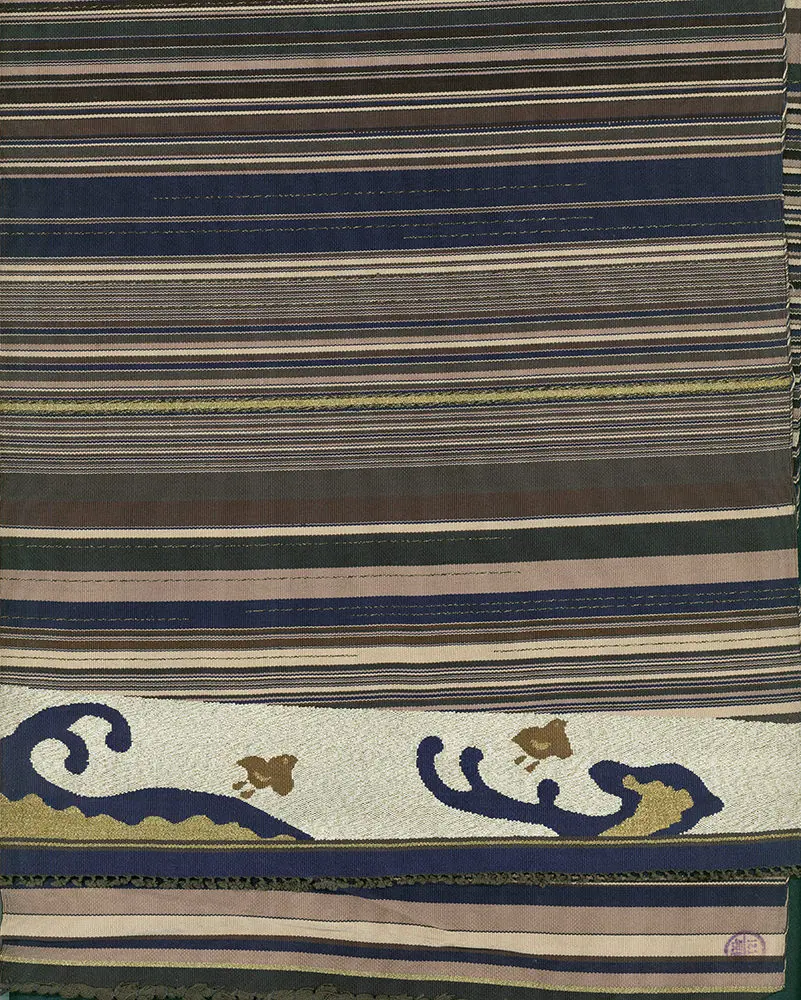
This extraordinary maru obi, dating to the mid to late Meiji period (circa 1880), is a tour de force of technical weaving. Measuring 12 inches by 162 inches (30 cm x 411 cm), the belt is characterized by approximately 1000 tapestry-woven stripes of varying widths that run the length of the silk. These stripes are executed in a palette of sophisticated neutrals—ochre, charcoal, and cream—accented with expensive gold metallic thread inserts. The precision required for this tsume tzure (fingernail tapestry) technique suggests a highly time-consuming and costly production, likely intended for an elite formal function.
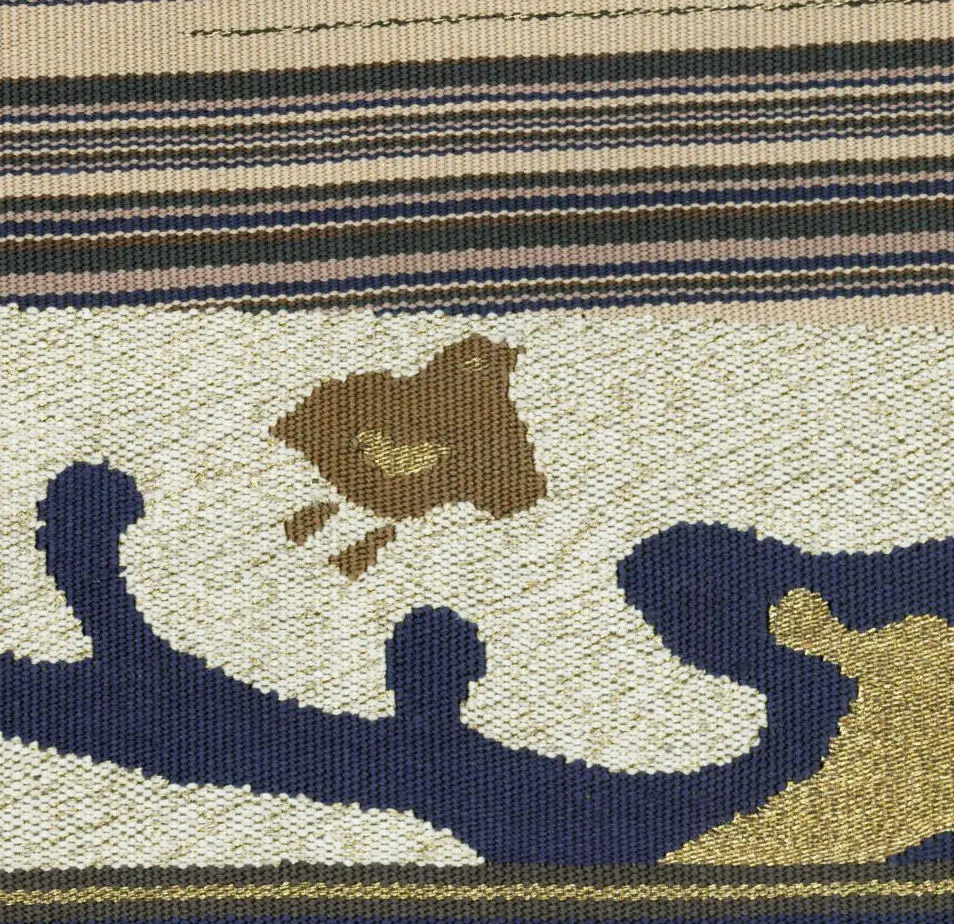
The geometric rhythm of the stripes culminates in a delicate pictorial scene at the end of the obi depicting several chidori (plovers) hovering over stylized waves. Interestingly, the asymmetry of this bird-and-wave section necessitated the intentional cutting and shifting of the stripes immediately above it, showcasing the bespoke nature of the design. In Japanese culture, the chidori signifies perseverance and the ability to overcome waves of hardship. Despite its significant age and the complexity of its construction, the obi remains in very good condition with only minor imperfections.

Payment Options: We primarily accept PayPal for all transactions. Credit and debit cards are not accepted. If you prefer to pay by personal check instead of PayPal, please note this preference in the "Additional comments" field when placing your order.Ordering Process
To receive your PayPal invoice, simply fill out the form.
Shipping Details: We ship all orders to the address associated with your PayPal payment. Please ensure your PayPal shipping address is current and accurate.A phone number is required during checkout, as our shipping carrier may need to contact you regarding delivery questions.Shipping RatesUnited States and Canada: $20International destinations (air mail): $40
