Copyright © 2026 Yorke Antique Textiles
.avif)


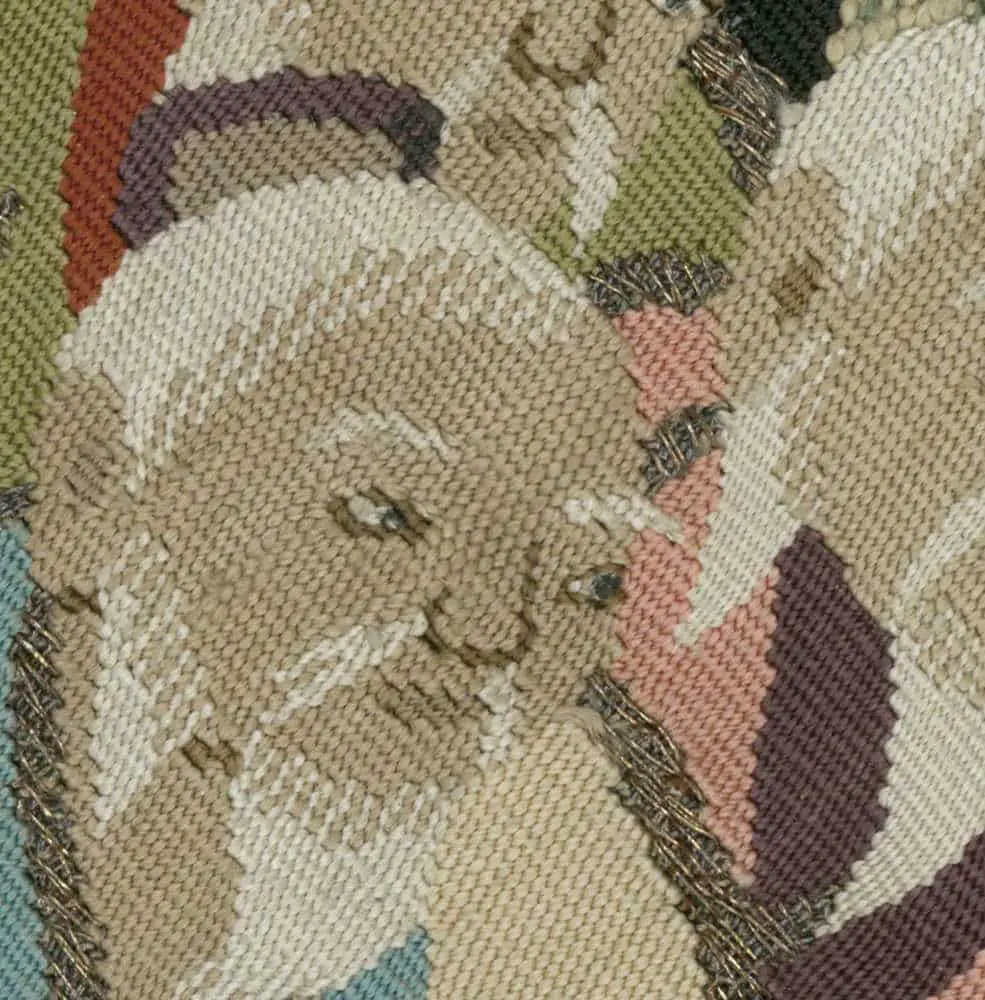

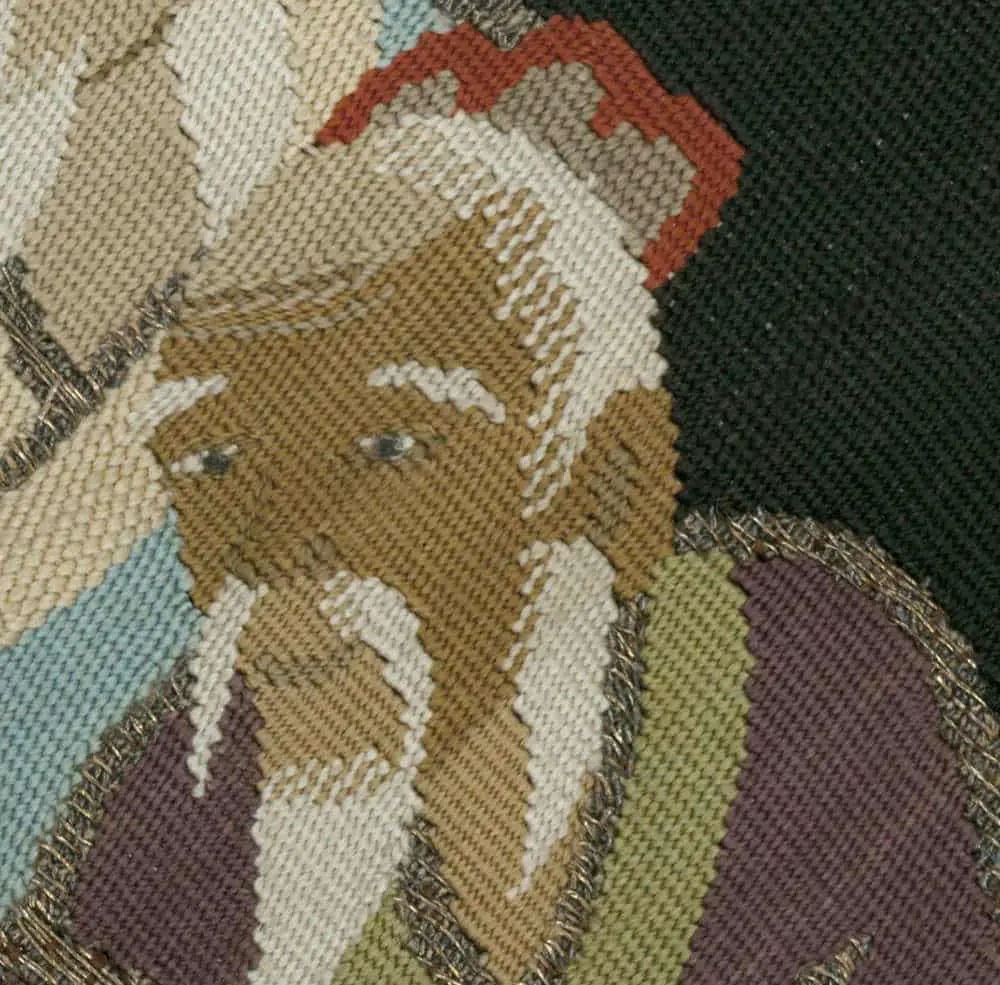
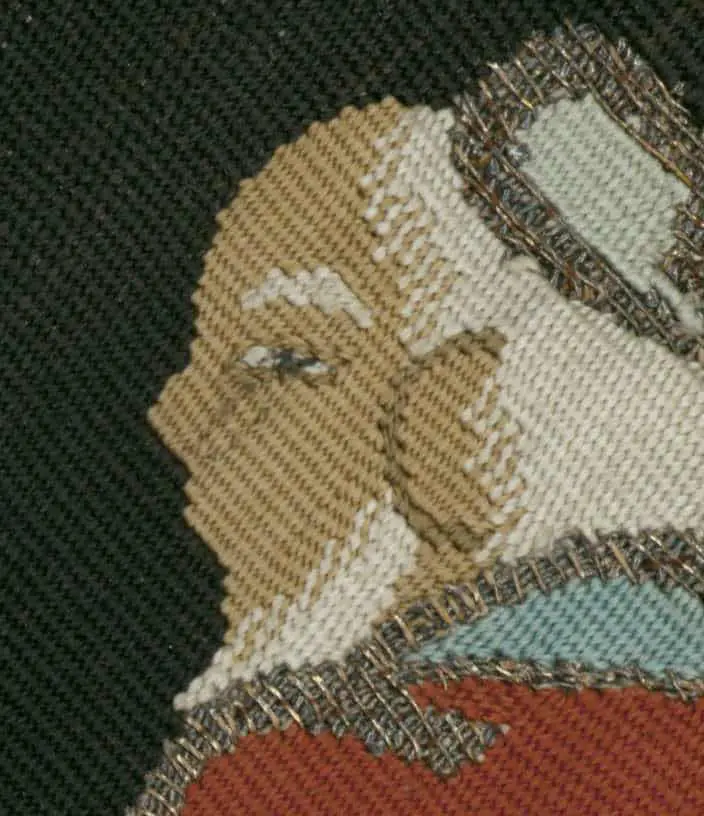
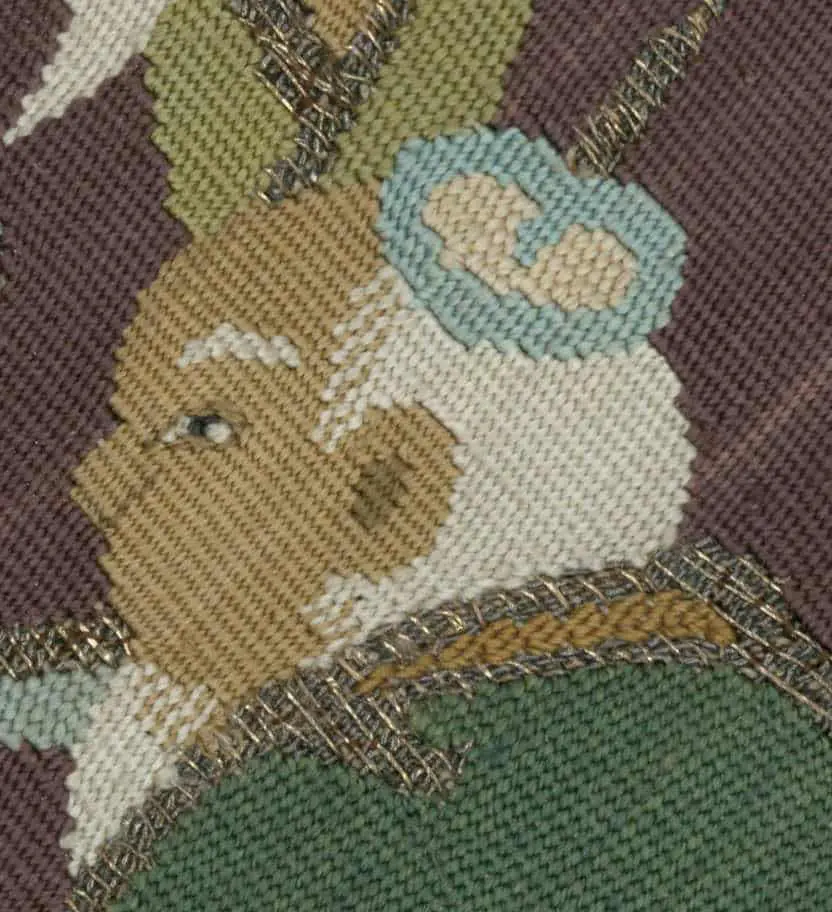
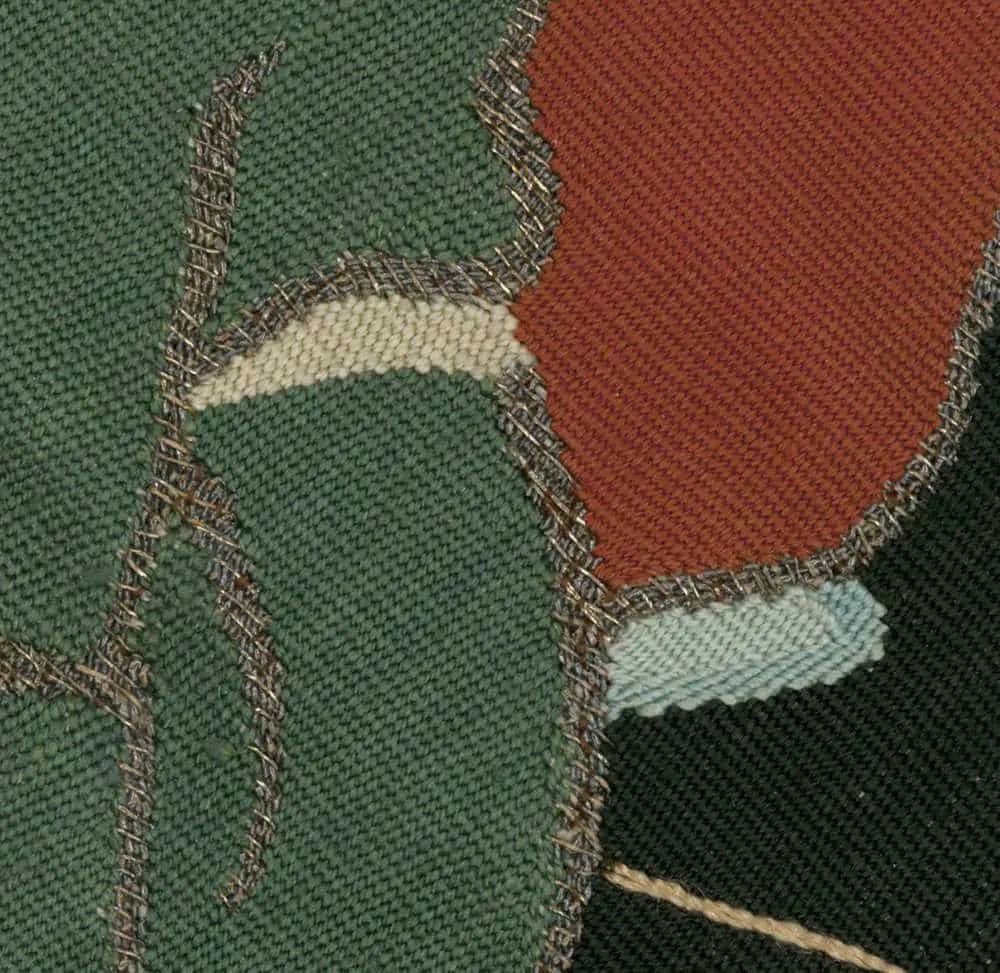
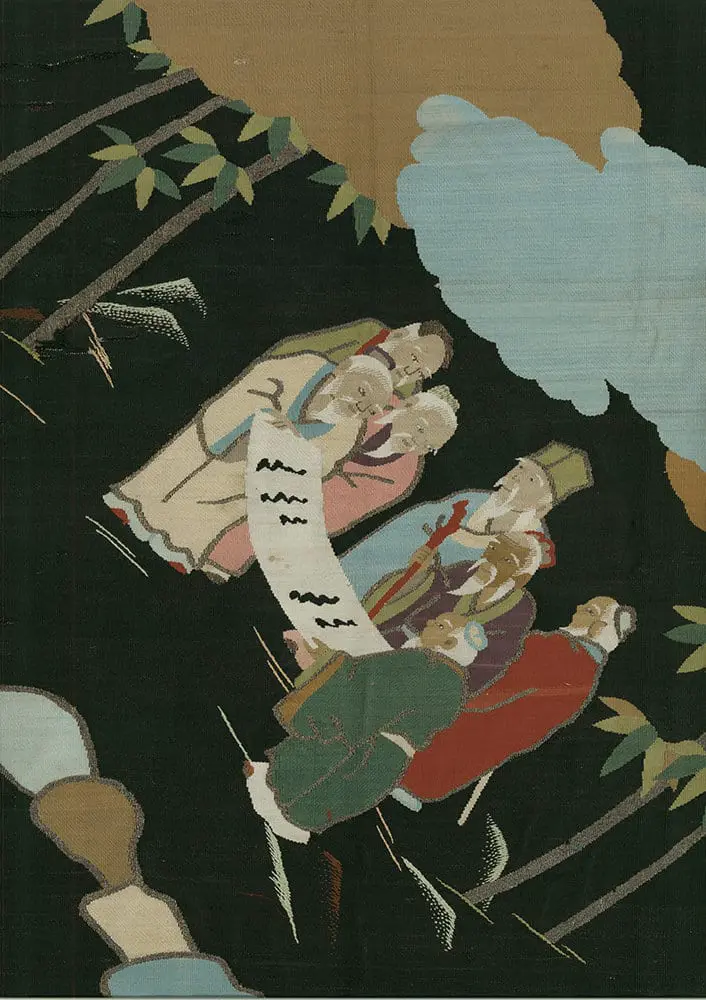

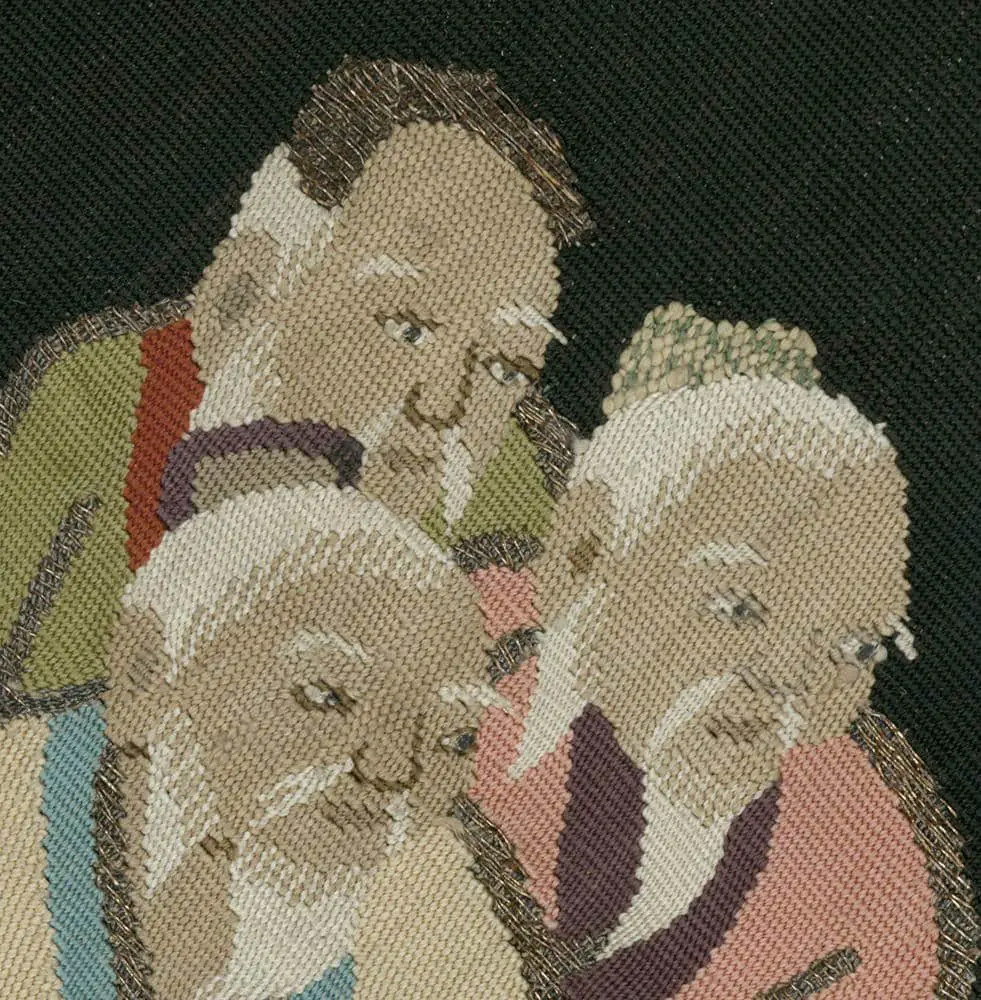
This fascinating silk uchishiki (altar cloth), dating from the late 18th to mid-19th century (1775–1850), represents a profound intersection of spiritual traditions in Edo-period Japan. Measuring 25 inches (63.5 cm) along its diamond-oriented sides, the cloth is rendered in tsuzure-ori (slit tapestry-weave).
The central composition depicts the "Seven Sages of the Bamboo Grove," a classic Taoist theme illustrating scholars and poets who sought spiritual transcendence through nature and intellectual freedom. The sages are shown gathered around a calligraphic scroll beneath stylized multi-colored clouds and slender bamboo stalks. Positioned prominently above them is a large, white circular family crest (mon). The inclusion of this Taoist subject on a Buddhist altar cloth highlights the unique syncretism of Japanese faith, where elements of Buddhism, Taoism, and Shintoism were often woven together. The piece is in fair condition, with visible structural damage in the black silk field—a common occurrence in antique textiles where iron-based mordants have caused the fibers to become brittle over time.
This artwork is featured on pages 82-83 of Ceremonial Textiles of Japan, 18th to 20th Centuries. This book, published by Yorke Antique Textiles, can be previewed or purchased on our website here.

Payment Options: We primarily accept PayPal for all transactions. Credit and debit cards are not accepted. If you prefer to pay by personal check instead of PayPal, please note this preference in the "Additional comments" field when placing your order.Ordering Process
To receive your PayPal invoice, simply fill out the form.
Shipping Details: We ship all orders to the address associated with your PayPal payment. Please ensure your PayPal shipping address is current and accurate.A phone number is required during checkout, as our shipping carrier may need to contact you regarding delivery questions.Shipping RatesUnited States and Canada: $20International destinations (air mail): $40
