Copyright © 2026 Yorke Antique Textiles
.avif)


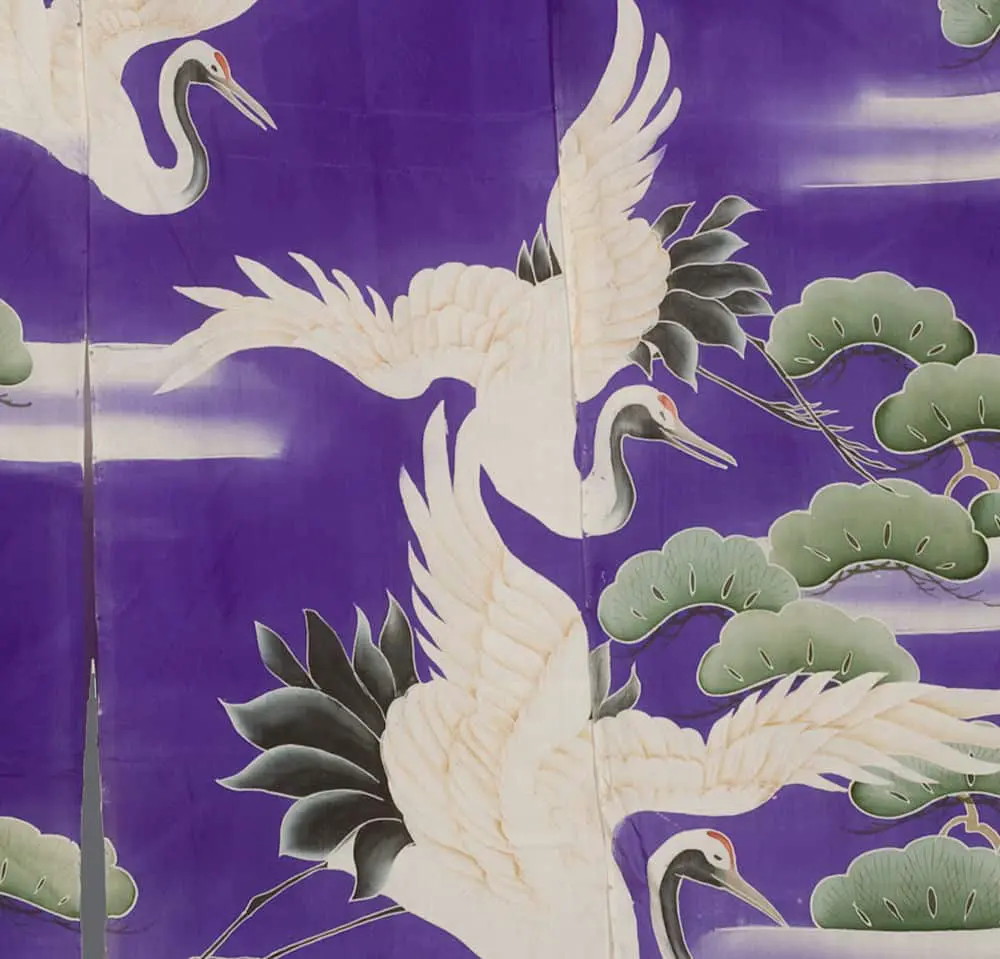
This exceptionally fine silk Kaga noren (ceremonial wedding curtain) from Japan dates to the Taisho period (1912–1926). Measuring 55 inches by 67 inches (140 cm x 170 cm), the textile is in very good condition and features a vibrant purple silk ground. This specific type of curtain is a central element in traditional marriage rituals from the Kaga region (modern-day Ishikawa Prefecture).
The imagery is rich with auspicious symbolism: three mandarin cranes (tsuru) are shown in flight, representing good fortune and a long life, while green pine trees (matsu) symbolize longevity and steadfastness. The composition is divided by horizontal white mist bands, creating a sense of ethereal depth. At the top of the curtain are two large, white paulownia crests (kiri mon), which represent the groom's family. Traditionally, the bride would bow as she passed through this noren to enter the groom’s family Buddhist room, signifying her respect and pledge of obedience to her new family and their faith.

Payment Options: We primarily accept PayPal for all transactions. Credit and debit cards are not accepted. If you prefer to pay by personal check instead of PayPal, please note this preference in the "Additional comments" field when placing your order.Ordering Process
To receive your PayPal invoice, simply fill out the form.
Shipping Details: We ship all orders to the address associated with your PayPal payment. Please ensure your PayPal shipping address is current and accurate.A phone number is required during checkout, as our shipping carrier may need to contact you regarding delivery questions.Shipping RatesUnited States and Canada: $20International destinations (air mail): $40
