Copyright © 2026 Yorke Antique Textiles
.avif)

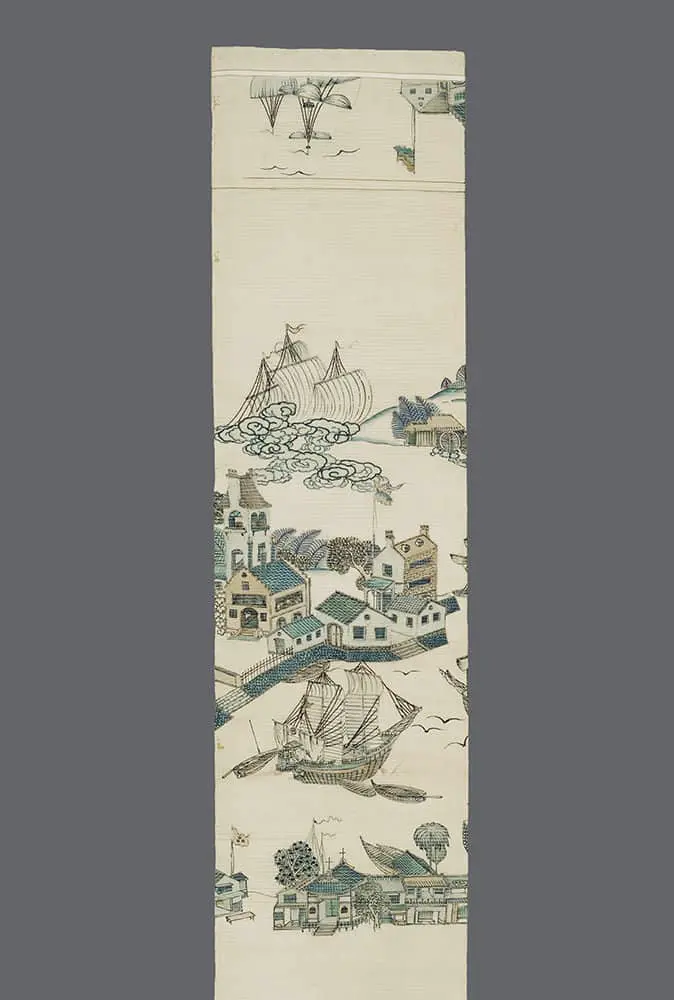
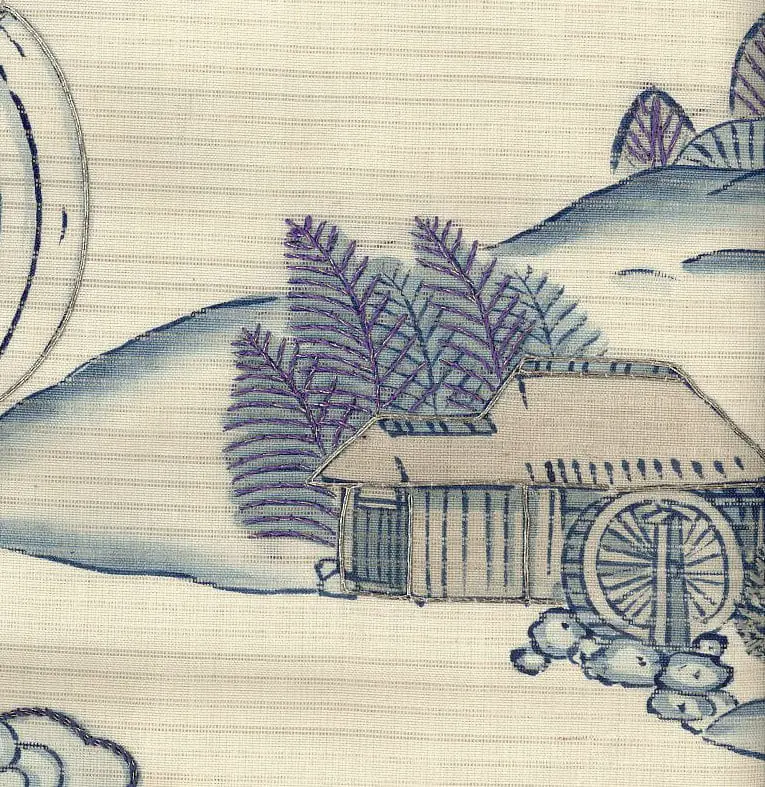


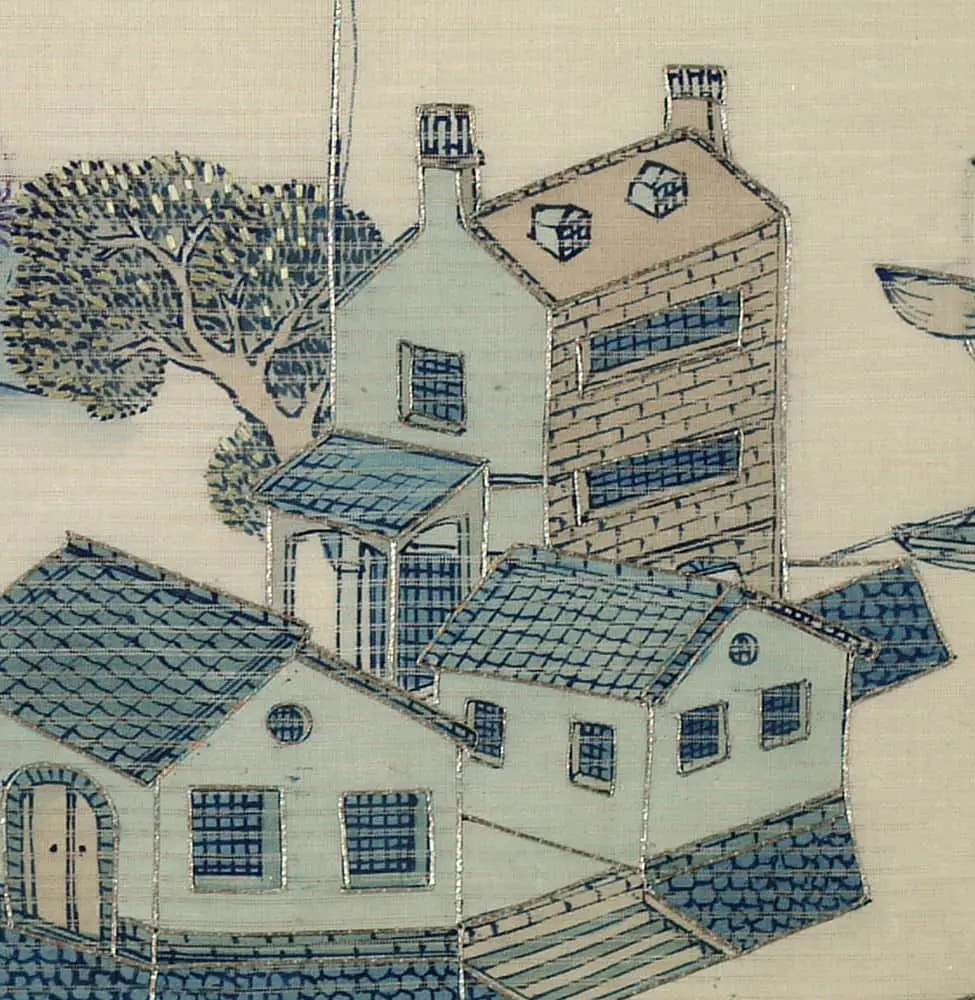

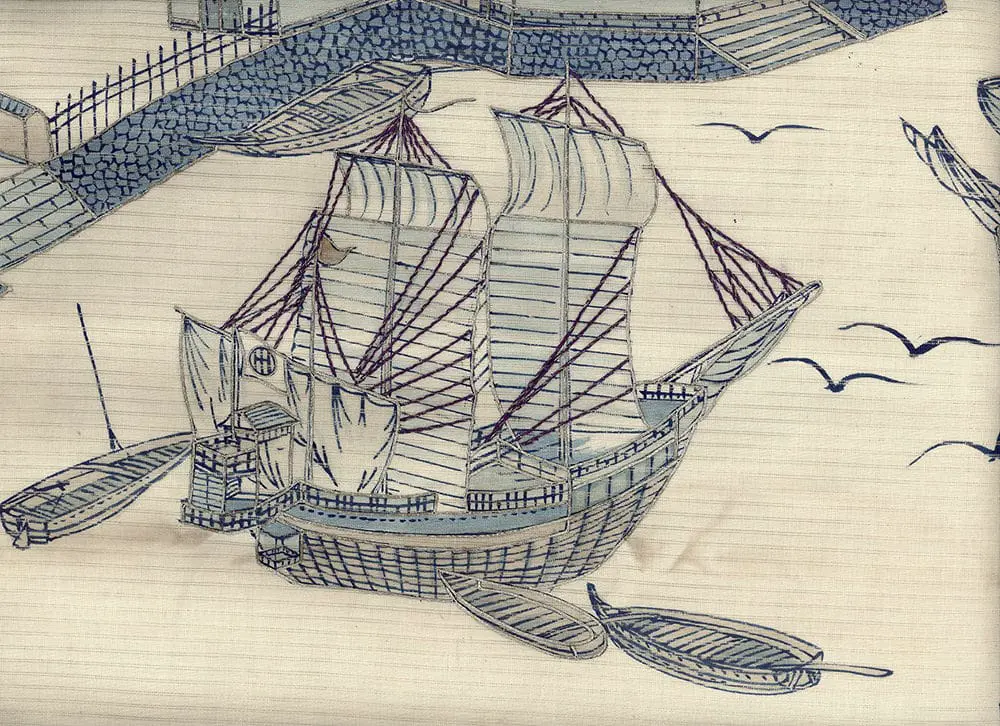
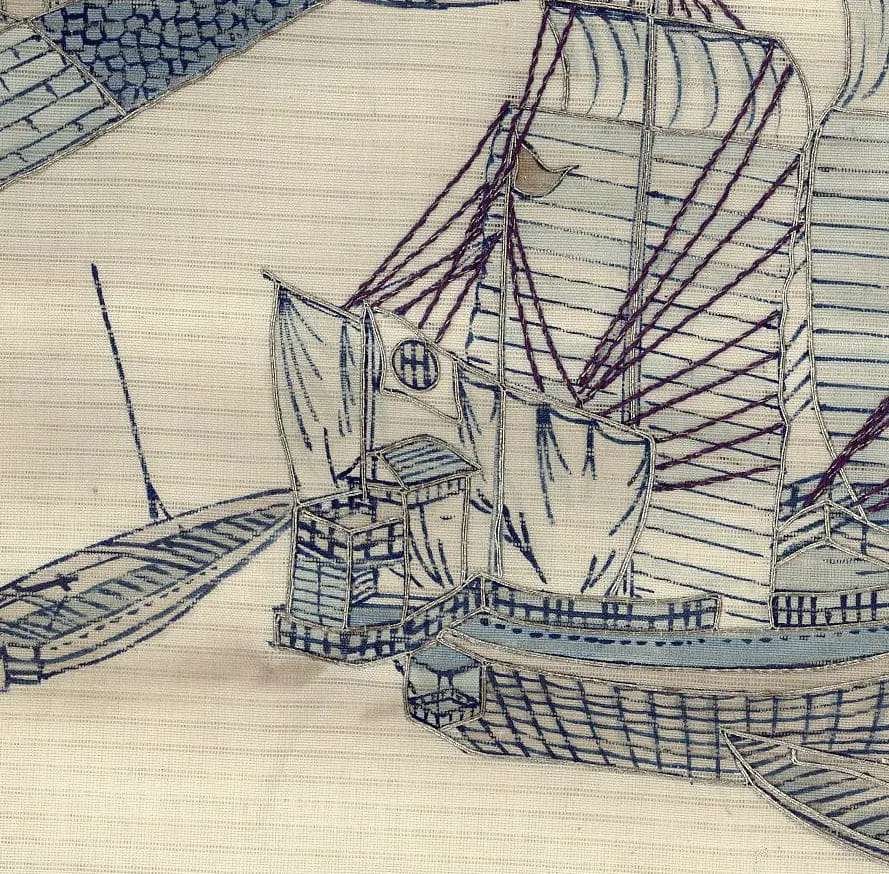
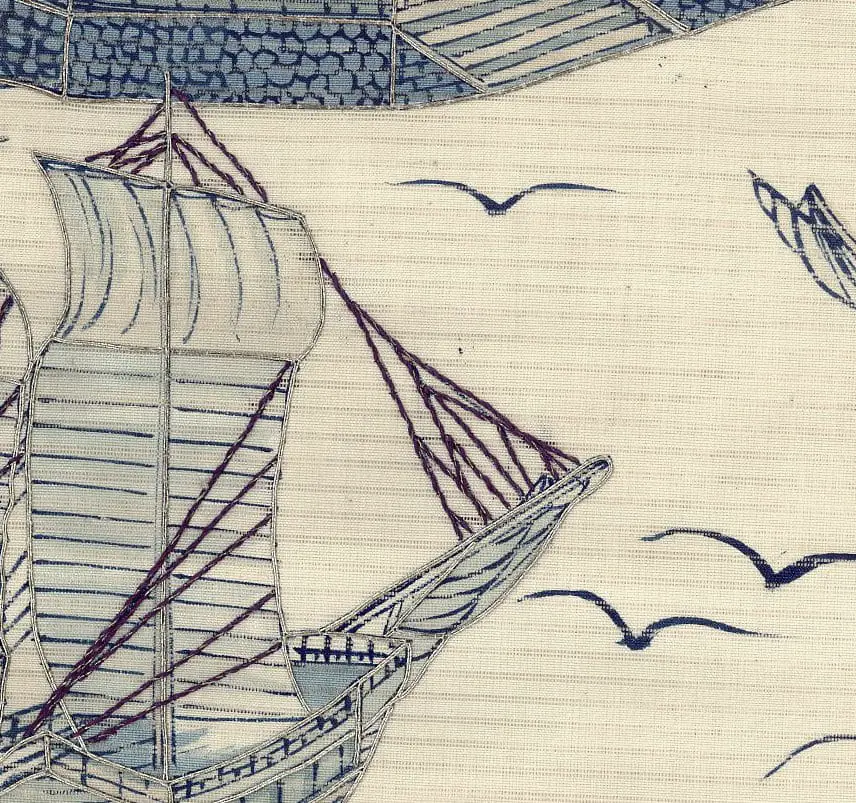


This striking and highly unusual obi dates to the Taisho period (1912–1926) and reflects the innovative spirit of that era. Measuring 13 inches by 140 inches (33 cm x 356 cm), the textile features a rare combination of hand-painting and metallic-thread couching. The base material is an early form of rayon, a revolutionary fiber at the time that was often used as a sophisticated alternative to silk for luxurious, experimental textiles. The condition of the piece is excellent, preserving both the delicate pigments and the structural integrity of the weave.
The visual narrative is a fascinating example of Yokohama-e or Western-influenced design, depicting a coastal landscape with European-style architecture and sailing vessels. The scenes are rendered in varied shades of blue ink and further defined by delicate embroidery. Silver metallic threads are applied using the couching technique—where the thread is laid upon the surface and stitched down—to highlight the rigging of the ships, the crests of the waves, and the architectural details of the houses. This specific imagery suggests the piece may have been created for a client with cosmopolitan tastes or for use in a theatrical context during the height of the "Taisho Roman" cultural movement.

Payment Options: We primarily accept PayPal for all transactions. Credit and debit cards are not accepted. If you prefer to pay by personal check instead of PayPal, please note this preference in the "Additional comments" field when placing your order.Ordering Process
To receive your PayPal invoice, simply fill out the form.
Shipping Details: We ship all orders to the address associated with your PayPal payment. Please ensure your PayPal shipping address is current and accurate.A phone number is required during checkout, as our shipping carrier may need to contact you regarding delivery questions.Shipping RatesUnited States and Canada: $20International destinations (air mail): $40
