Copyright © 2026 Yorke Antique Textiles
.avif)

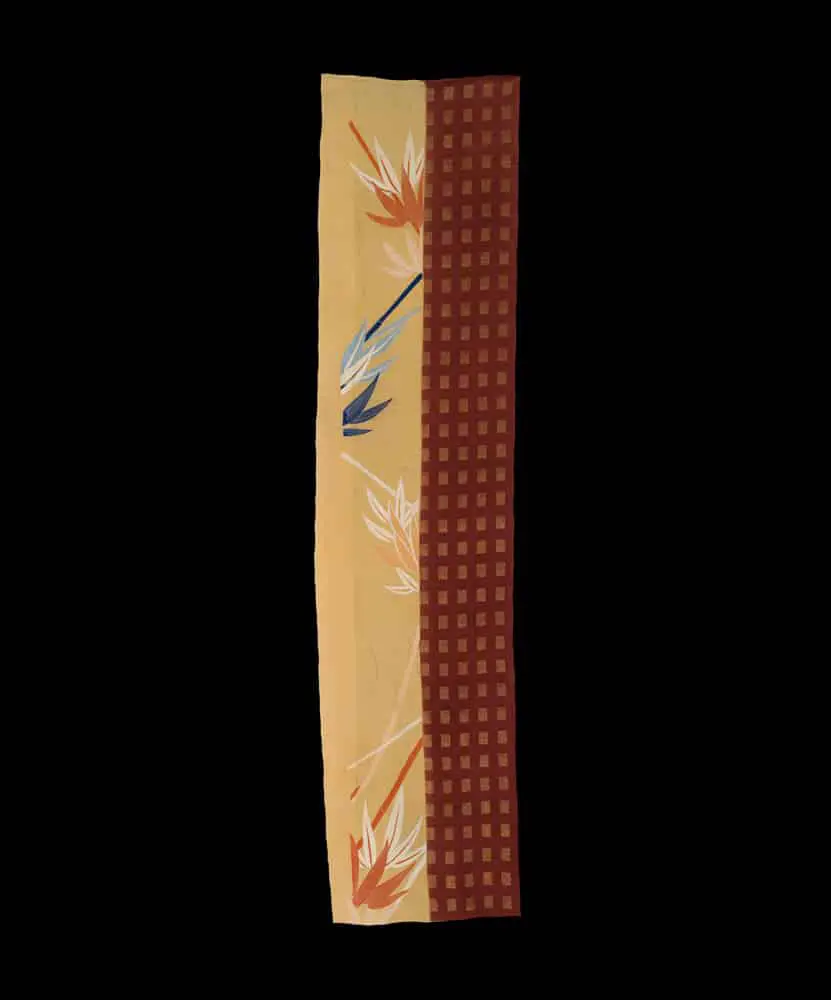
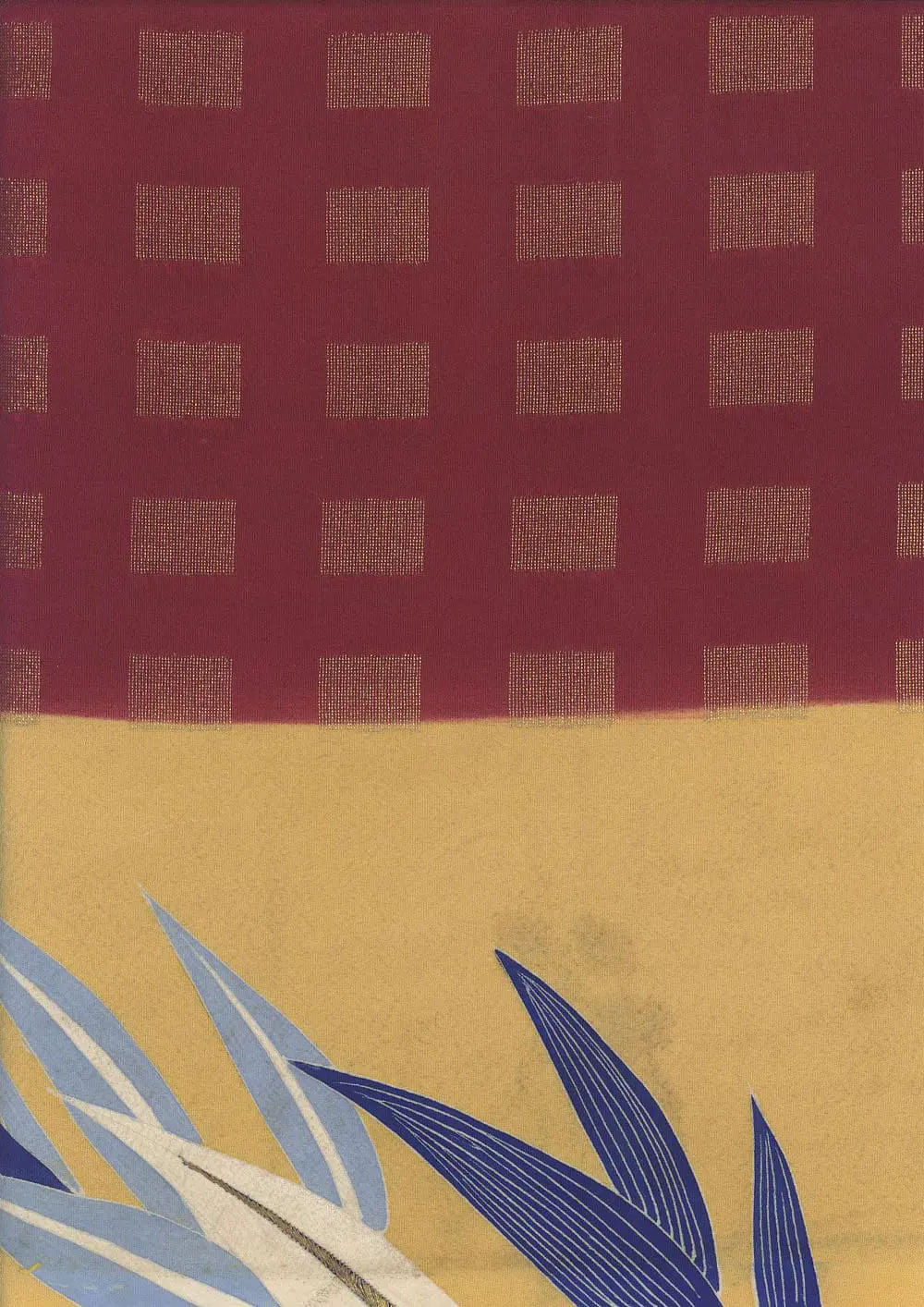
This distinctive textile originates from Japan’s Taisho period (1912–1926), an era celebrated for its romanticism and the bold integration of Western avant-garde styles with traditional Japanese craftsmanship. Measuring 13.5 inches by 56 inches (34 cm x 142 cm), this silk panel is a scholarly example of the experimental dyeing and weaving techniques that flourished during this transformative decade. The piece remains in good condition, with some age-related surface dirt factored into its pricing, which adds a layer of authentic patina to its century-old history.
The visual narrative is divided into two striking vertical sections that reflect the era's fascination with geometric abstraction. One half of the panel features a warm, golden-ochre ground adorned with stylized, sharp-edged leaf or grass motifs in shades of burnt orange, cream, and deep indigo. The adjacent half showcases a rigorous brown and tan checkerboard pattern, a modern interpretation of the classical ichimatsu motif. A fascinating technical detail of this specific piece is that the geometric patterns partially peek through from the reverse side, suggesting a sophisticated dyeing process where pigments have saturated the silk fibers to create a nearly double-sided effect.

Payment Options: We primarily accept PayPal for all transactions. Credit and debit cards are not accepted. If you prefer to pay by personal check instead of PayPal, please note this preference in the "Additional comments" field when placing your order.Ordering Process
To receive your PayPal invoice, simply fill out the form.
Shipping Details: We ship all orders to the address associated with your PayPal payment. Please ensure your PayPal shipping address is current and accurate.A phone number is required during checkout, as our shipping carrier may need to contact you regarding delivery questions.Shipping RatesUnited States and Canada: $20International destinations (air mail): $40
