Copyright © 2026 Yorke Antique Textiles
.avif)

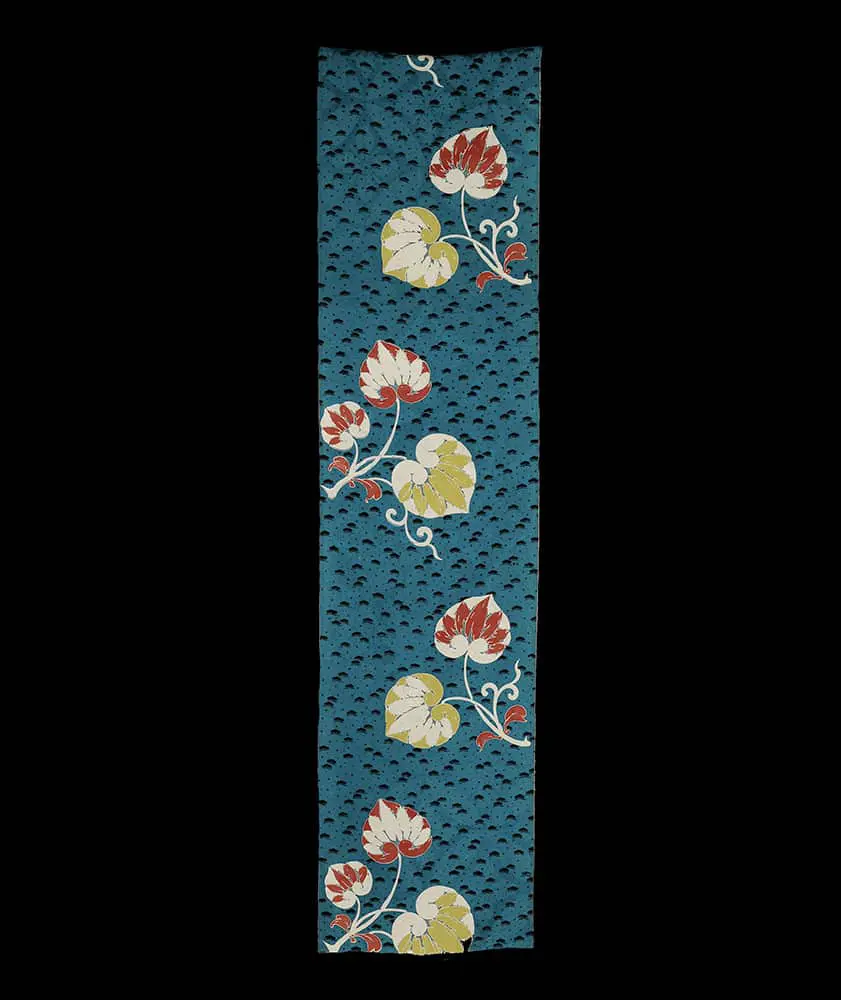
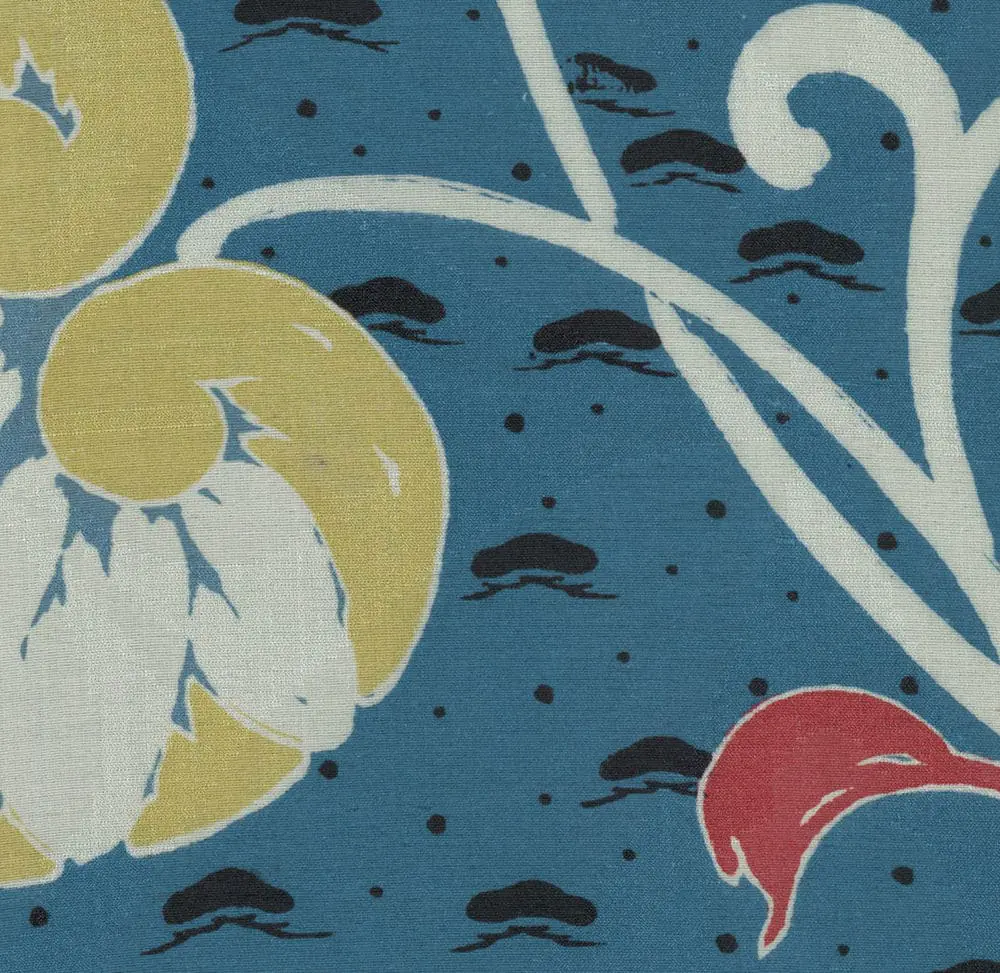
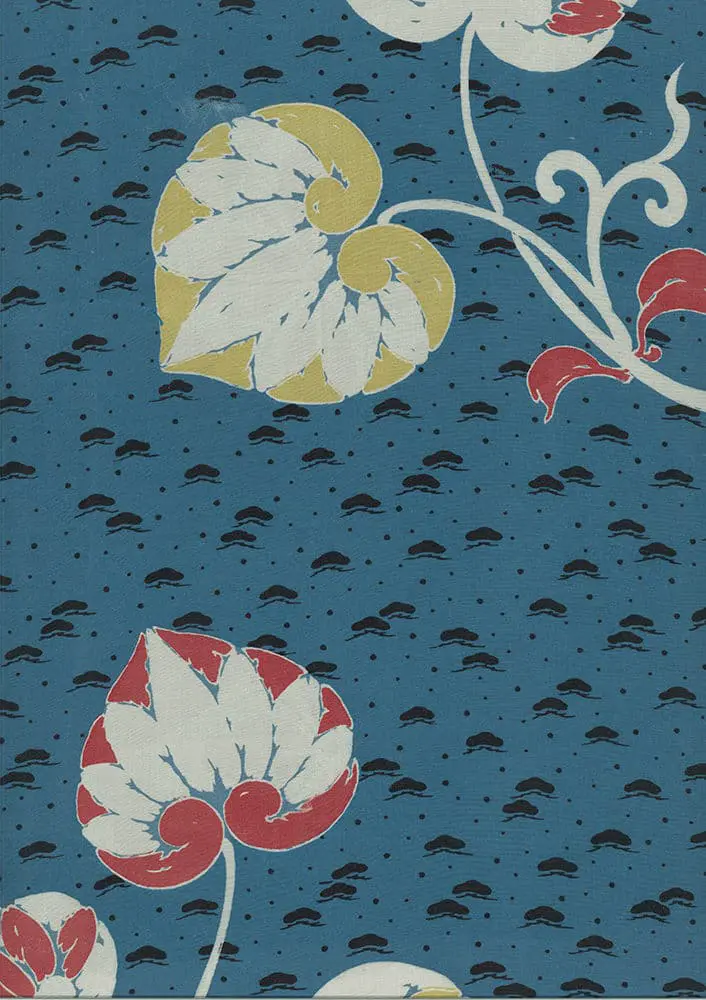
This exceptional textile originates from the Taisho period (1912–1926) and is a scholarly example of the bold, graphic sensibilities that defined the early 20th-century romantic aesthetic. Measuring 15 inches by 61 inches (38 cm x 155 cm), the piece represents a complete panel from a disassembled kimono, preserved in excellent condition. The substrate is a high-quality rinzu (silk damask) dyed in a vibrant teal blue, providing a lustrous and textured foundation for the over-dyed motifs.
The visual narrative is dominated by large-scale aoi (hollyhock) leaves, rendered in a sophisticated palette of cream, vermilion red, and olive green. These leaves are staggered vertically across the panel, connected by elegant, swirling ivory vines. Set against the teal background is a secondary motif of small, stylized black matsu (pine) clusters, which create a rhythmic, speckled effect across the field. As the hollyhock is the historical crest of the Tokugawa shogunate and the pine symbolizes longevity and steadfastness, this composition combines auspicious traditional symbols with the daring, non-traditional color-play characteristic of the "Taisho Roman" era.

Payment Options: We primarily accept PayPal for all transactions. Credit and debit cards are not accepted. If you prefer to pay by personal check instead of PayPal, please note this preference in the "Additional comments" field when placing your order.Ordering Process
To receive your PayPal invoice, simply fill out the form.
Shipping Details: We ship all orders to the address associated with your PayPal payment. Please ensure your PayPal shipping address is current and accurate.A phone number is required during checkout, as our shipping carrier may need to contact you regarding delivery questions.Shipping RatesUnited States and Canada: $20International destinations (air mail): $40
