Copyright © 2026 Yorke Antique Textiles
.avif)

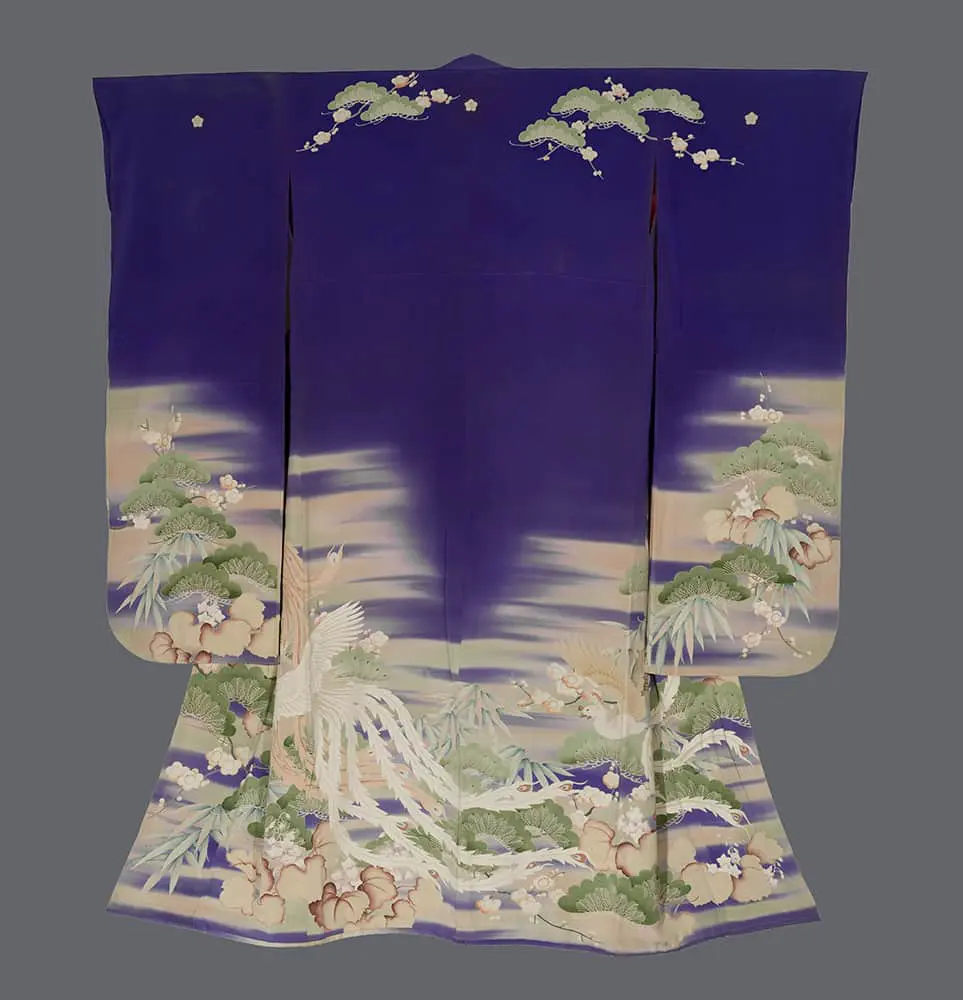
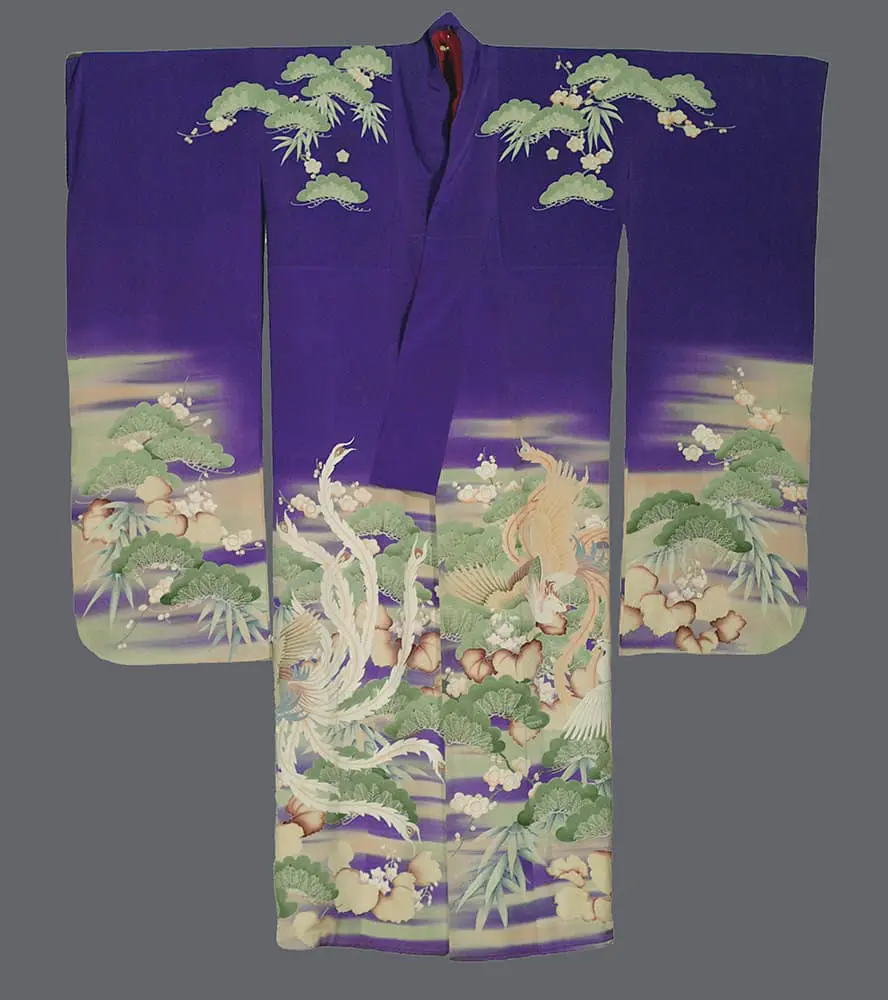
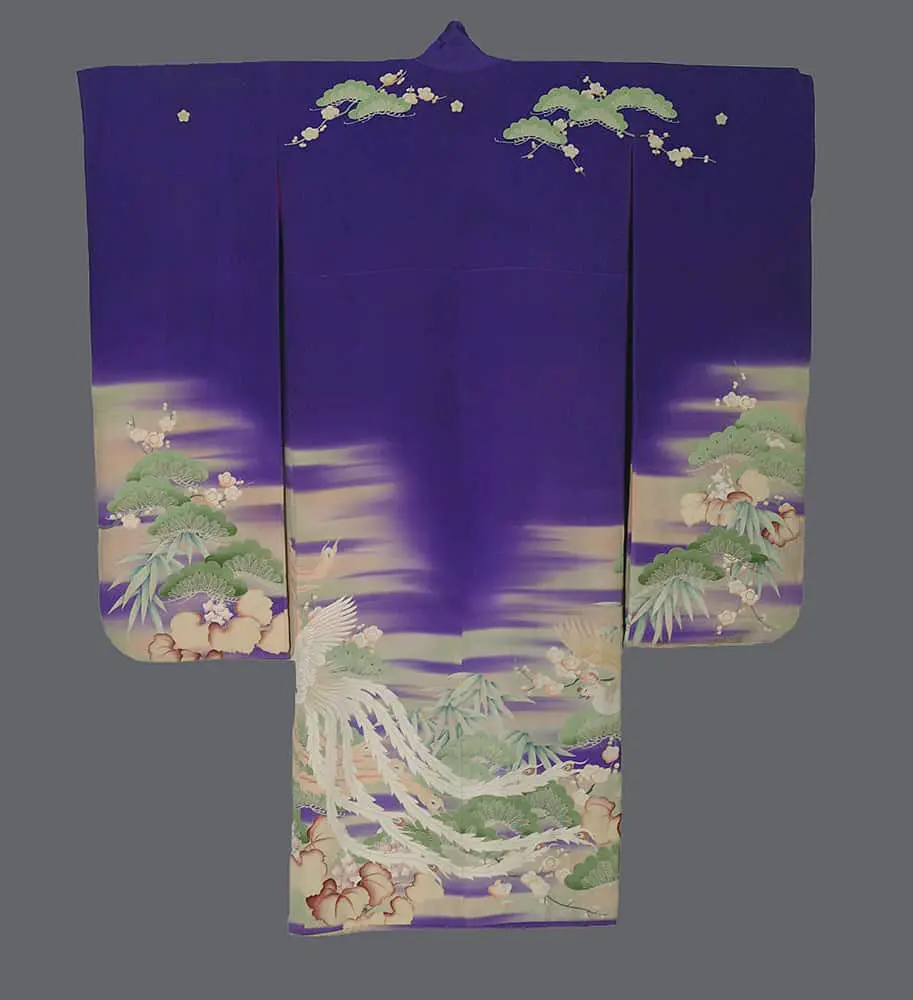
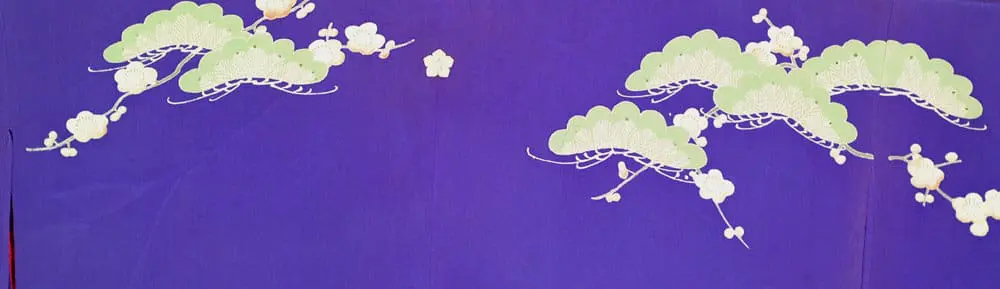
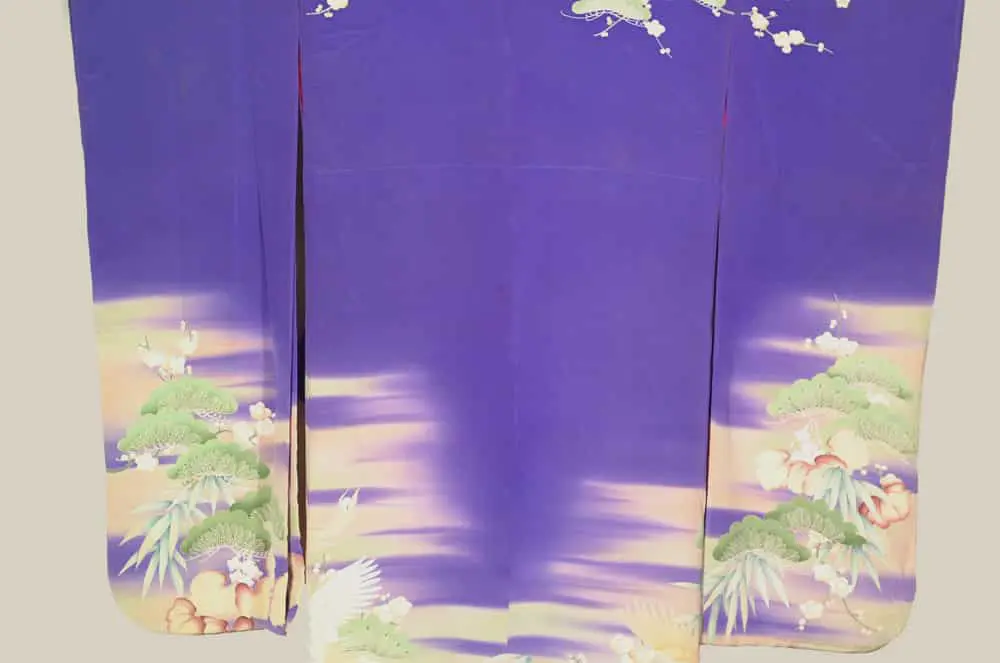
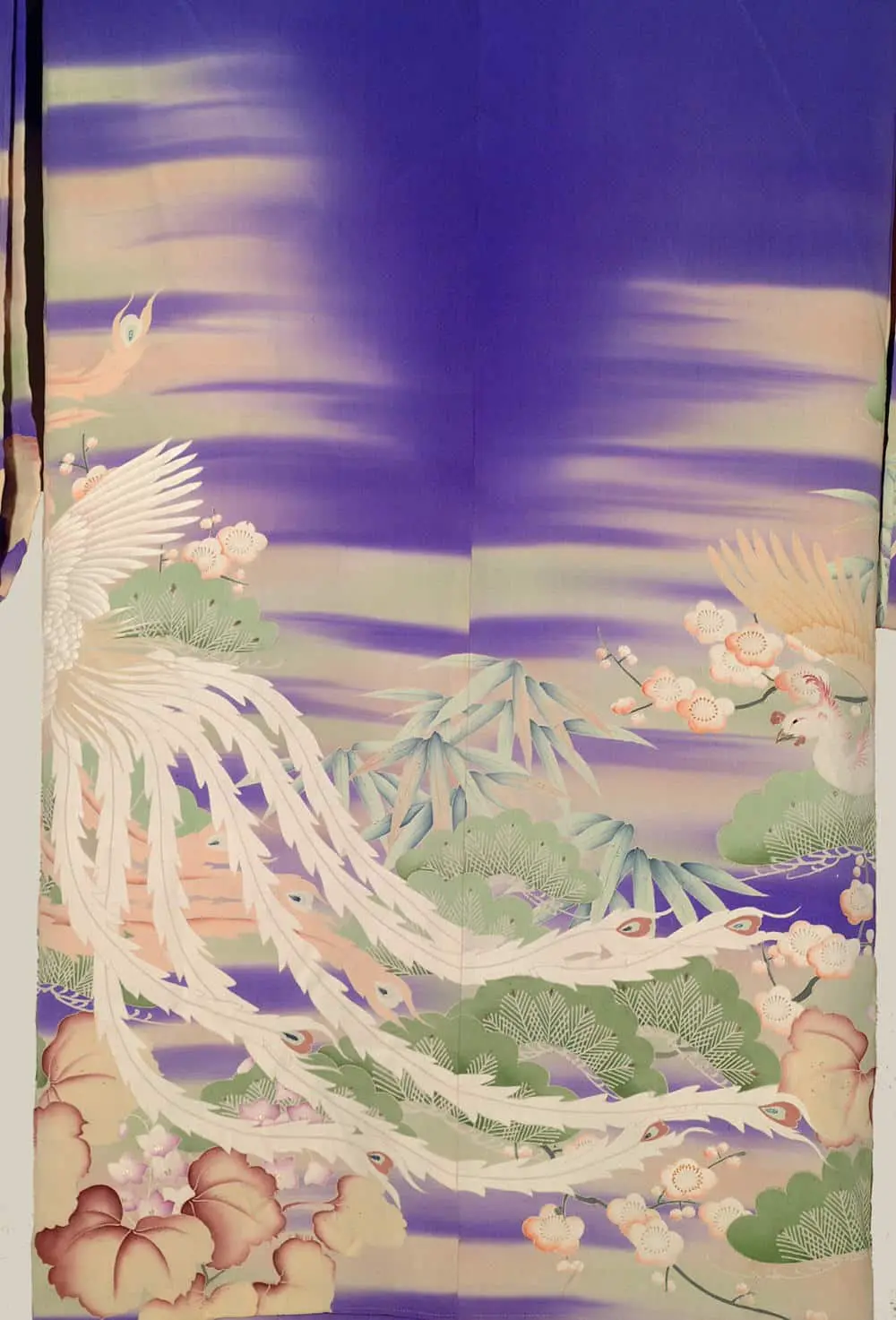

This silk furisode features a rich purple ground that serves as a regal foundation for a dense, auspicious landscape. The garment showcases a vast composition of mythical and natural elements created primarily through the silkscreening technique, which allows for complex layering of color and form.
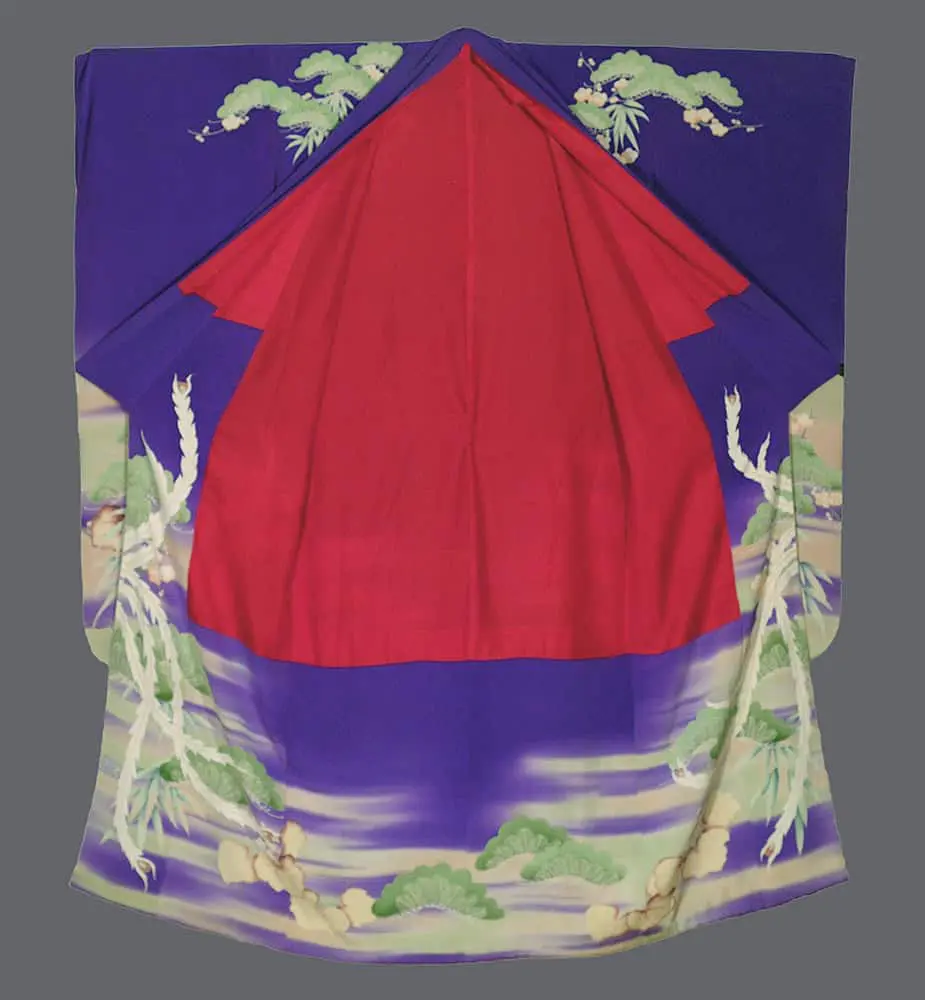
The lower hem and sleeves are populated with a vibrant scene of phoenixes (hou-ou)—symbolizing high virtue and grace—emerging from a lush grove of pine trees (matsu), bamboo (take), and plum blossoms (ume). These "Three Friends of Winter" represent resilience and longevity. The artistic depth is further enhanced by traditional needlework; the elegant cranes and specific floral motifs are highlighted with textured satin stitch and granular sagara (French knot) embroidery, adding a three-dimensional, tactile quality to the garment. Horizontal "mist" bands in shades of cream and soft green drift across the purple field, providing a rhythmic sense of depth and atmospheric perspective characteristic of the Showa era's sophisticated aesthetic.
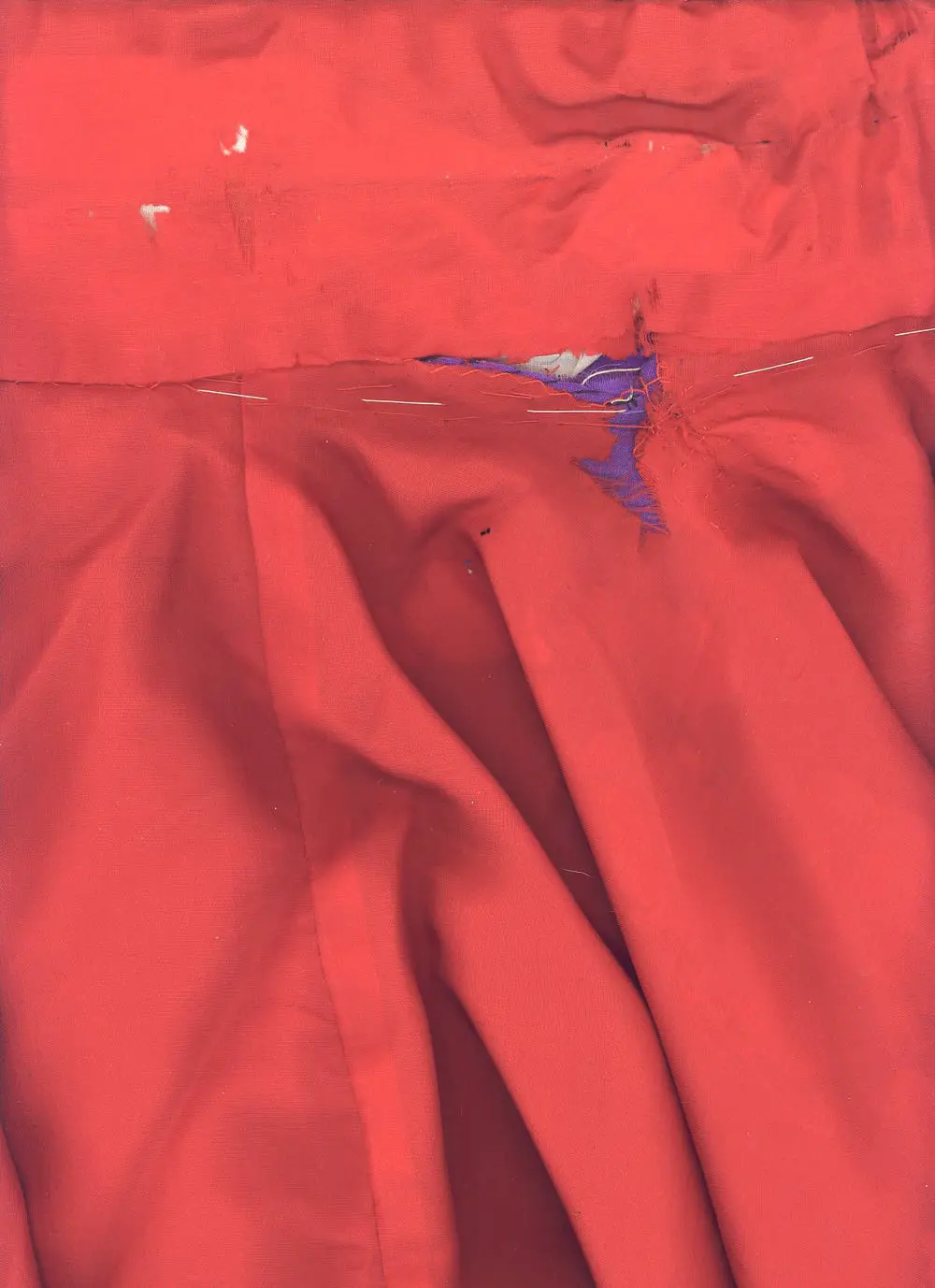
The inner linings continue the design, with the lower inner lining displaying the pattern and the upper inner lining in red silk. Both this kimono and #1463 were reportedly brought to the United States in the 1940s by a US Military Governor and diplomat who resided in Japan with his wife post-WWII to aid in restoration efforts. While in excellent condition, there are some minor tears along the neck lining. Its measurements are 52 inches across the sleeves and 72 inches tall.

Payment Options: We primarily accept PayPal for all transactions. Credit and debit cards are not accepted. If you prefer to pay by personal check instead of PayPal, please note this preference in the "Additional comments" field when placing your order.Ordering Process
To receive your PayPal invoice, simply fill out the form.
Shipping Details: We ship all orders to the address associated with your PayPal payment. Please ensure your PayPal shipping address is current and accurate.A phone number is required during checkout, as our shipping carrier may need to contact you regarding delivery questions.Shipping RatesUnited States and Canada: $20International destinations (air mail): $40
