Copyright © 2026 Yorke Antique Textiles
.avif)

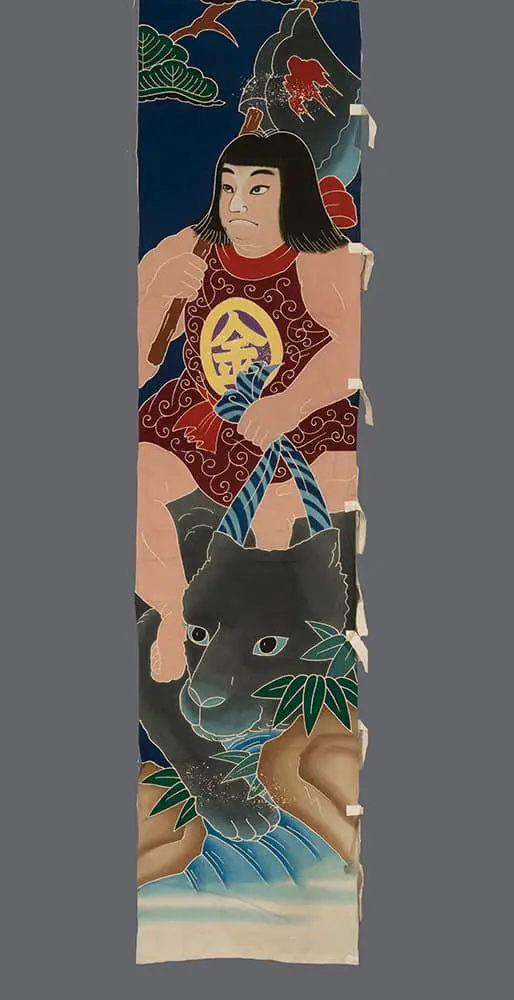
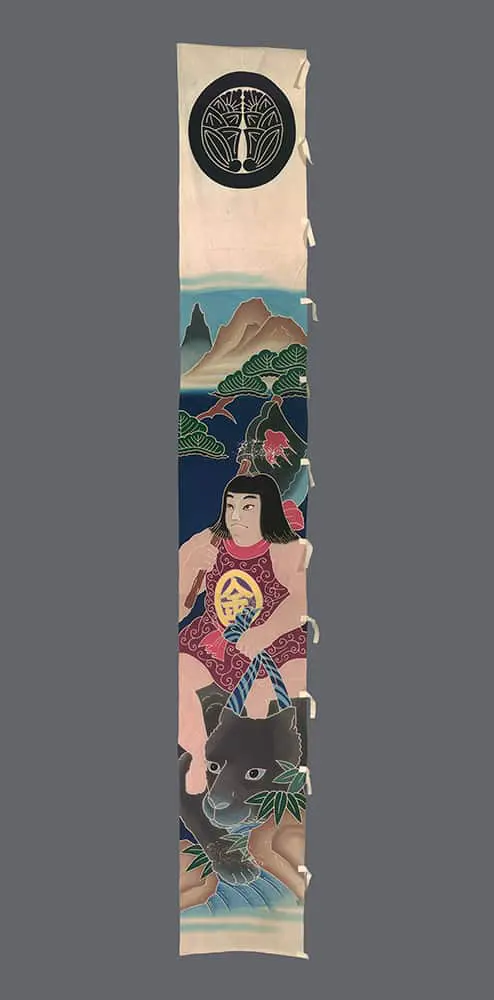
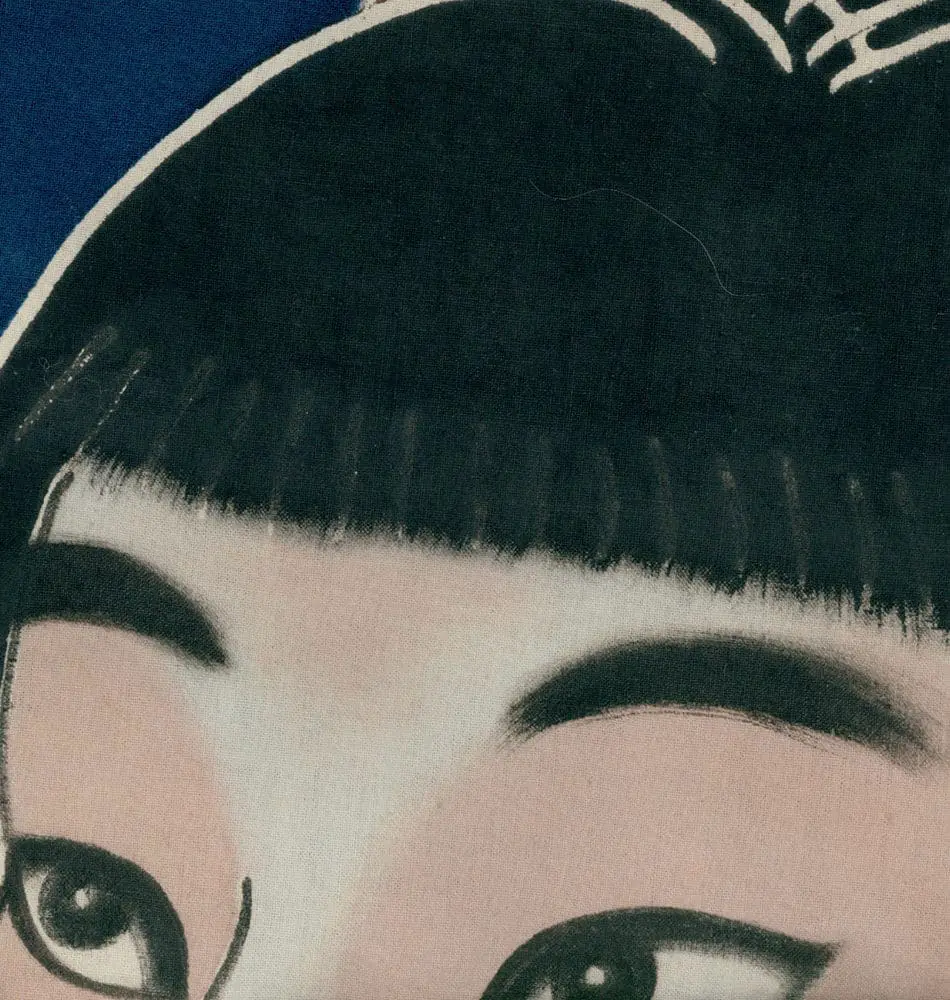
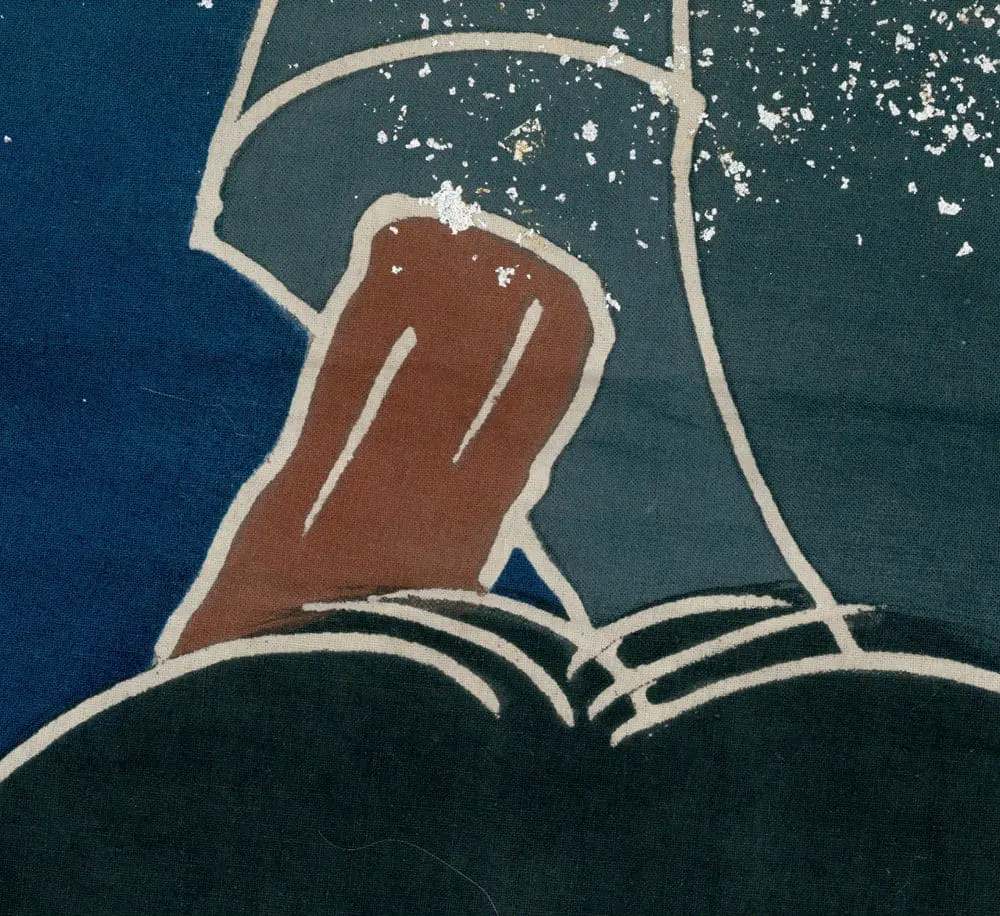
This monumental nobori (vertical banner) from Japan dates to the late Meiji to early Taisho period (1900–1915). Measuring an expansive 211 inches in height and 27 inches in width (536 cm x 69 cm), the textile is crafted from sturdy hand-painted cotton and remains in very good condition. Such banners were traditionally flown outside homes for the Boys' Day festival (Tango no Sekku) to celebrate the strength and future success of sons.
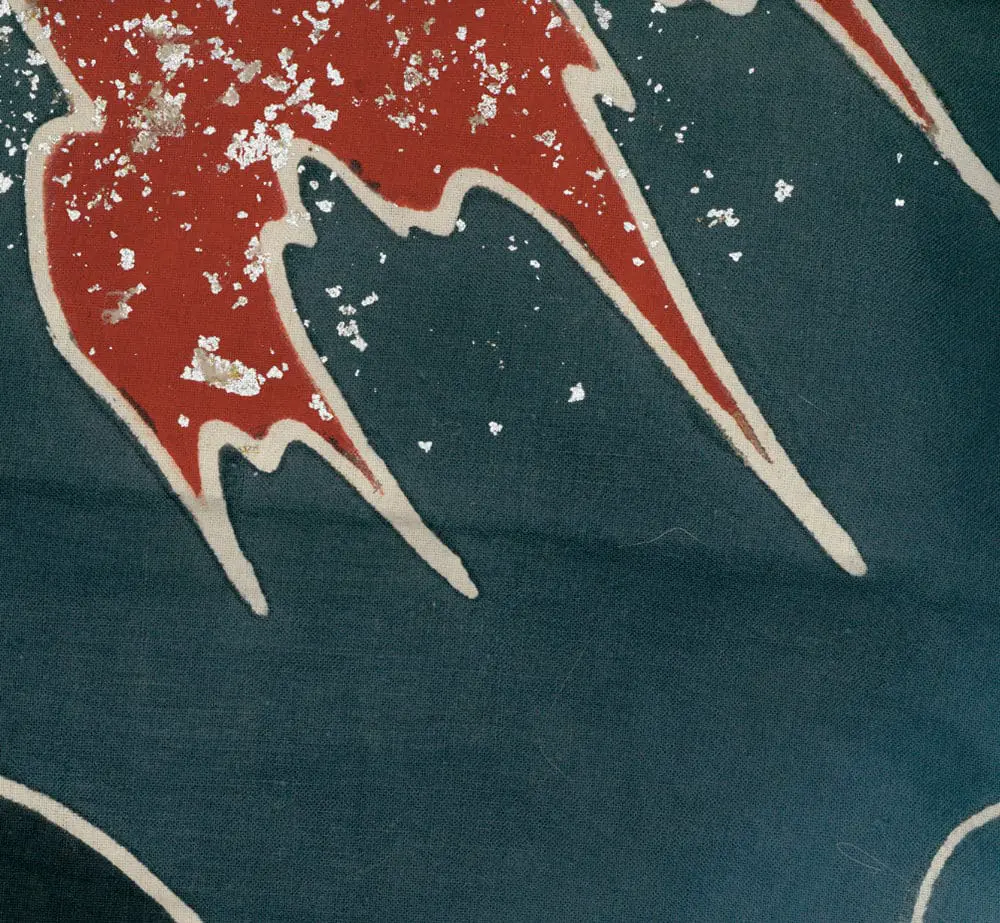
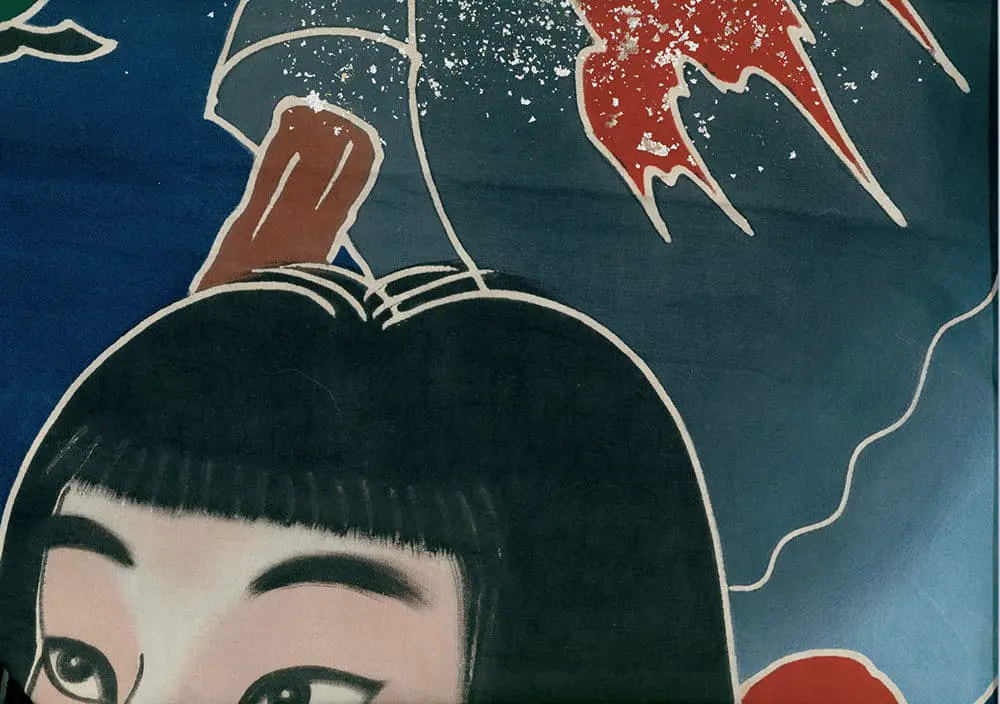
The banner depicts the legendary Kintaro (Golden Boy), a child of superhuman strength raised by a mountain hag on Mount Ashigara. He is shown wearing his iconic red haragake (bib) emblazoned with the character for gold (kin), riding a large black bear near a rushing blue waterfall. In his hands, he wields a massive axe (masakari), while pine branches and bamboo—symbols of longevity and resilience—frame the scene against a deep blue sky. The bold, graphic style and vibrant pigments are characteristic of early 20th-century festival art.

Payment Options: We primarily accept PayPal for all transactions. Credit and debit cards are not accepted. If you prefer to pay by personal check instead of PayPal, please note this preference in the "Additional comments" field when placing your order.Ordering Process
To receive your PayPal invoice, simply fill out the form.
Shipping Details: We ship all orders to the address associated with your PayPal payment. Please ensure your PayPal shipping address is current and accurate.A phone number is required during checkout, as our shipping carrier may need to contact you regarding delivery questions.Shipping RatesUnited States and Canada: $20International destinations (air mail): $40
