Copyright © 2026 Yorke Antique Textiles
.avif)

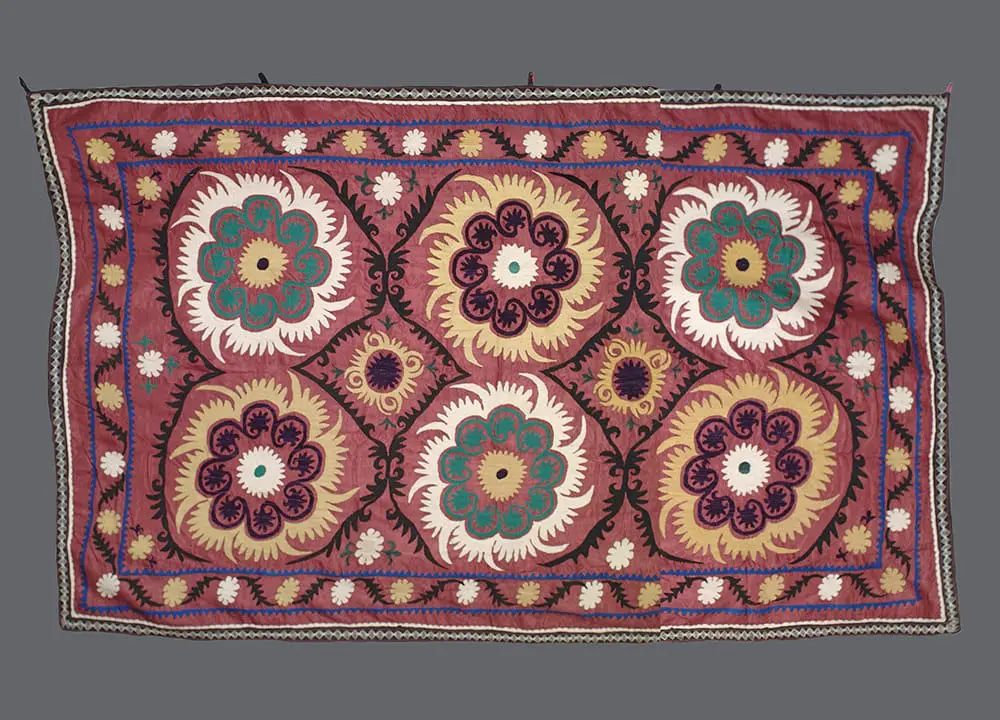
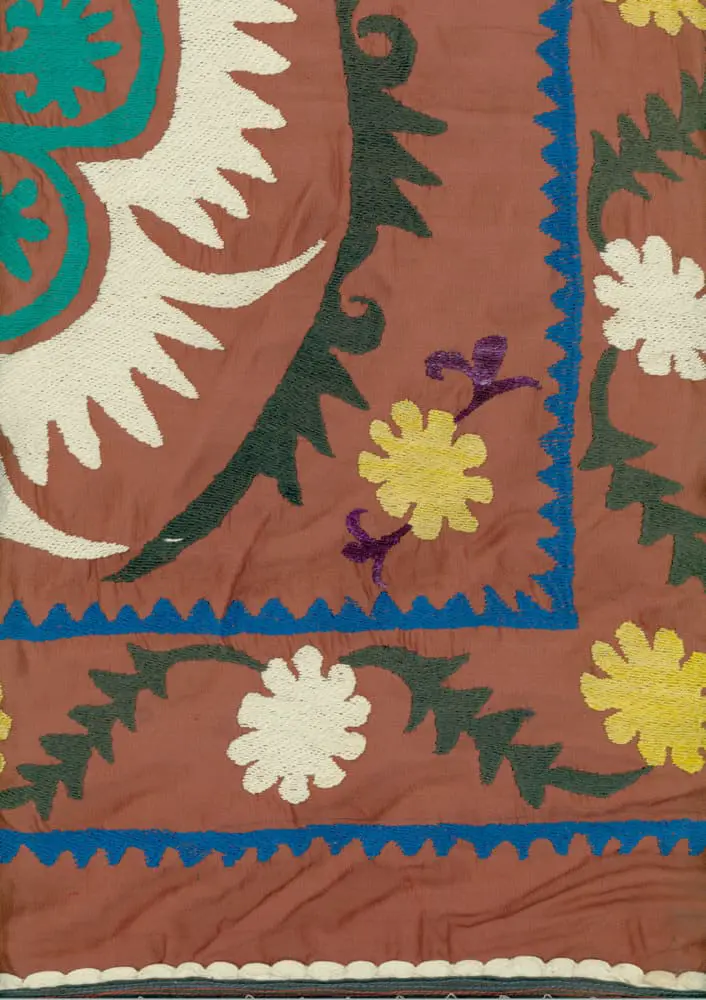
This suzani originates from the Surkhandarya region of Uzbekistan and dates to the late Soviet era, specifically 1980–1990. Measuring 54 inches by 86 inches (137 cm x 218 cm), the textile is in excellent condition and serves as a vibrant example of Central Asian needlework traditions. The piece features dense cotton embroidery on a lustrous red satin base, a combination that provides a rich, reflective ground for the traditional motifs.
The composition is dominated by six large, swirling rosettes (paliak) arranged in two horizontal rows. These solar symbols are rendered with high contrast: three feature teal and cream centers with white "hooked" outer petals, while the alternating three feature deep violet and cream centers with yellow petals. In Uzbek culture, these rosettes represent the sun and moon, serving as talismans for fertility and protection. The central field is interspersed with smaller floral medallions and black vine-like scrollwork, all enclosed within a multi-layered border of smaller rosettes and a distinctive black-and-white geometric "zigzag" outer edge.

Payment Options: We primarily accept PayPal for all transactions. Credit and debit cards are not accepted. If you prefer to pay by personal check instead of PayPal, please note this preference in the "Additional comments" field when placing your order.Ordering Process
To receive your PayPal invoice, simply fill out the form.
Shipping Details: We ship all orders to the address associated with your PayPal payment. Please ensure your PayPal shipping address is current and accurate.A phone number is required during checkout, as our shipping carrier may need to contact you regarding delivery questions.Shipping RatesUnited States and Canada: $20International destinations (air mail): $40
