Copyright © 2026 Yorke Antique Textiles
.avif)

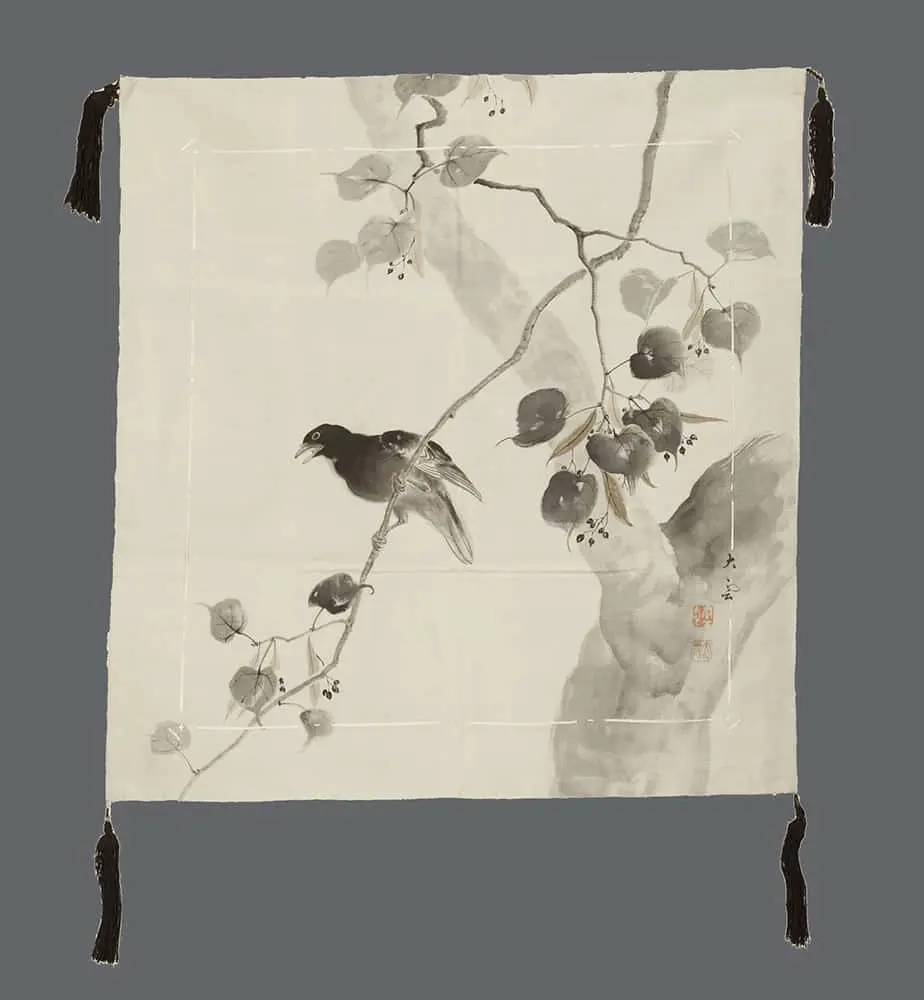



This elegant silk fukusa (gift cover), dating to the Meiji period (1868–1912), is a sophisticated example of the intersection between Japanese painting and textile arts. The central motif is a crow rendered in the expressive sumi-e (ink wash) style. Unlike Western interpretations that often view the crow as an ill omen, in Japanese culture, the bird is revered as a symbol of divine guidance, wisdom, and rebirth. Specifically, the mythical three-legged crow, Yatagarasu, is considered a messenger of the sun goddess Amaterasu and a guide who leads the lost toward enlightenment or a successful path.
The artwork's minimalist aesthetic is beautifully contrasted by its opulent kinran brocade lining. Kinran is a luxurious gold-woven fabric, traditionally produced in the Nishijin district of Kyoto, featuring silk interwoven with flat strips of gilded paper or gold-covered thread. Measuring 26 inches by 27 inches (66 cm x 69 cm), this fukusa remains in very good condition. While the primary gallery images are desaturated for structural clarity, the "detail" views showcase the true depth of the sumi-e ink and the richness of the metallic brocade.
This artwork is featured on page 133 of Ceremonial Textiles of Japan, 18th to 20th Centuries. This book, published by Yorke Antique Textiles, can be previewed or purchased on our website here.

Payment Options: We primarily accept PayPal for all transactions. Credit and debit cards are not accepted. If you prefer to pay by personal check instead of PayPal, please note this preference in the "Additional comments" field when placing your order.Ordering Process
To receive your PayPal invoice, simply fill out the form.
Shipping Details: We ship all orders to the address associated with your PayPal payment. Please ensure your PayPal shipping address is current and accurate.A phone number is required during checkout, as our shipping carrier may need to contact you regarding delivery questions.Shipping RatesUnited States and Canada: $20International destinations (air mail): $40
