Copyright © 2026 Yorke Antique Textiles
.avif)


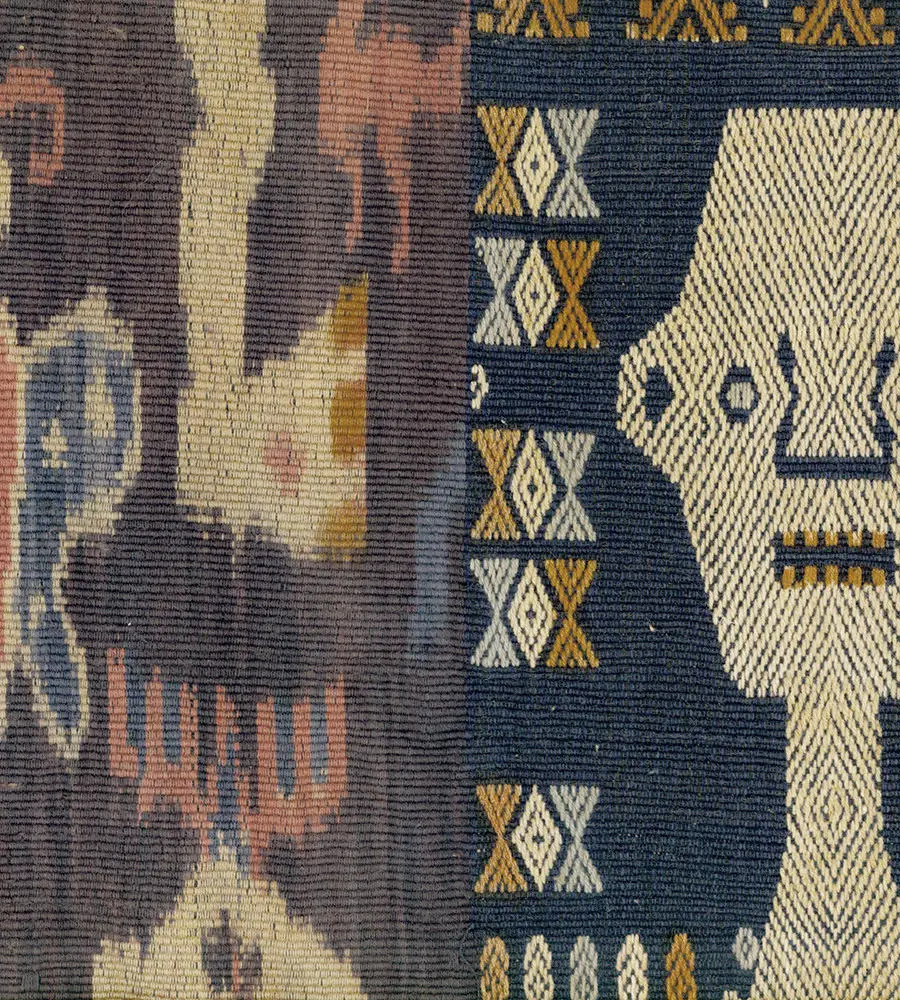
This handwoven cotton cloth originates from Sumba, Indonesia, and was crafted between 1975 and 1990. Measuring 35 inches by 86 inches (89 cm x 218 cm), the textile is a superb example of the warp-ikat technique, where the warp threads are tie-dyed before weaving to create intricate patterns. The composition is organized into three distinct vertical panels: a complex central pictorial band flanked by two narrower bands of repetitive geometric and anthropomorphic motifs.
The iconography is rich with traditional Sumbanese spiritual symbols, including large ancestor figures (penji) with upraised arms, representing ancestral protection and mediation with the spirit world. The central panel features a vertical progression of zoomorphic imagery, including confronted lions (inspired by colonial Dutch heraldry), serpents or dragons, and birds. These motifs are rendered in a warm, earthy palette of cream, ochre, and rust-red against a deep indigo-black ground. The side panels contrast these fluid figures with sharp, diamond-shaped warp patterns that mimic the structure of basketry or woven mats. The textile remains in excellent condition.

Payment Options: We primarily accept PayPal for all transactions. Credit and debit cards are not accepted. If you prefer to pay by personal check instead of PayPal, please note this preference in the "Additional comments" field when placing your order.Ordering Process
To receive your PayPal invoice, simply fill out the form.
Shipping Details: We ship all orders to the address associated with your PayPal payment. Please ensure your PayPal shipping address is current and accurate.A phone number is required during checkout, as our shipping carrier may need to contact you regarding delivery questions.Shipping RatesUnited States and Canada: $20International destinations (air mail): $40
