Copyright © 2026 Yorke Antique Textiles
.avif)

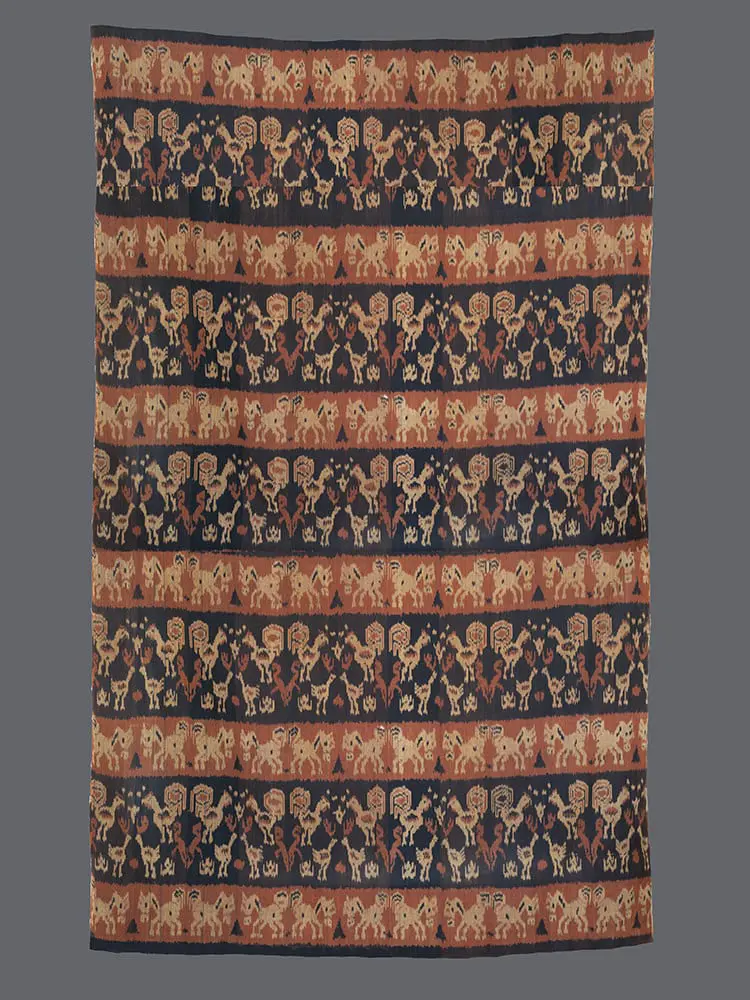
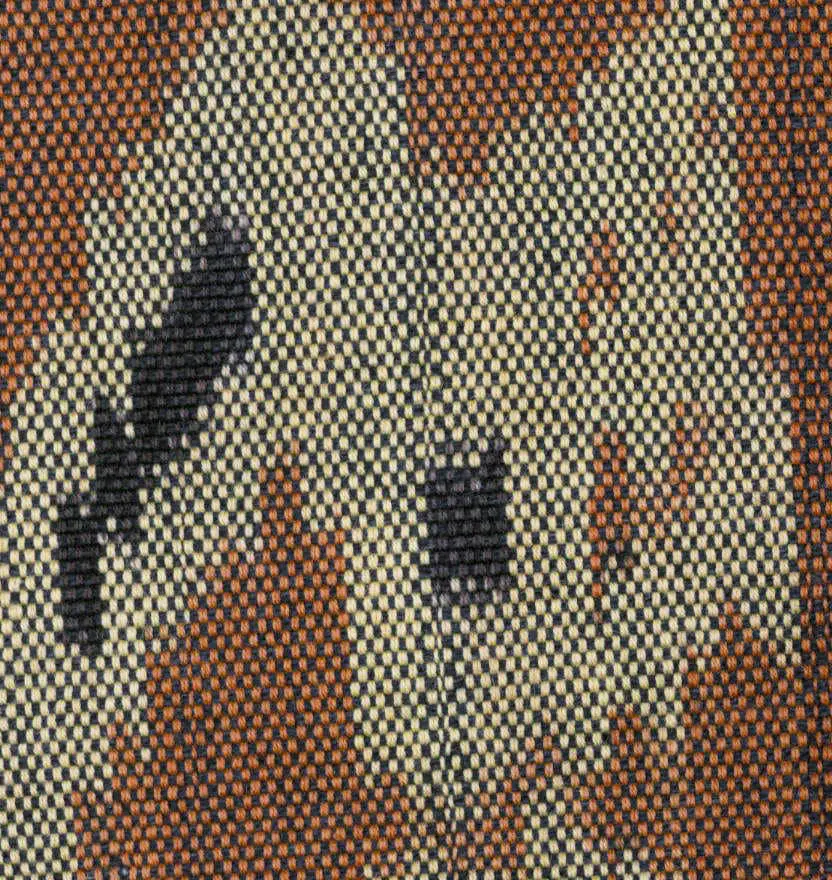
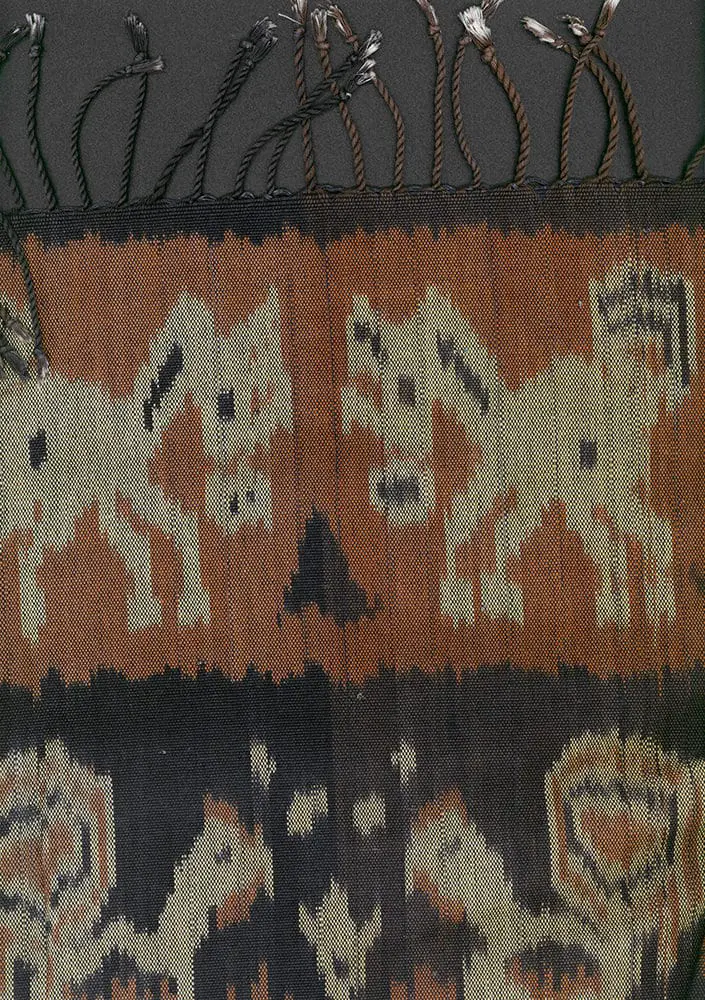
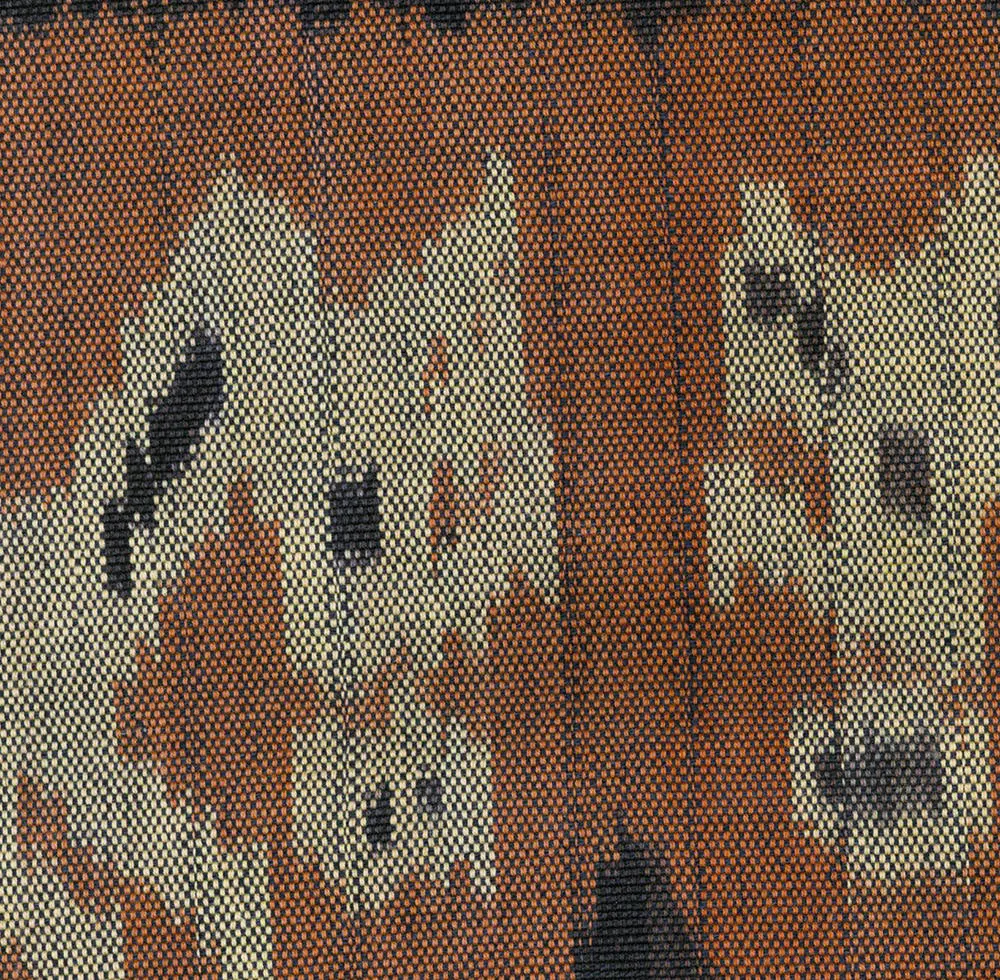
This immense cotton ikat ceremonial mantle (hinggi), originating from Rende, East Sumba, dates to the early 20th century. Acquired in the 1960s during fieldwork by anthropologist Wilhelmina Shumacker PhD, this textile features a relatively thick and uniform weave characteristic of high-quality Sumba cotton. Measuring 120 inches by 75 inches (305 cm x 190 cm), excluding the 3-inch end fringes, it is an exceptionally large example of a traditional man’s garment.
The iconography is organized into multiple horizontal bands of alternating rust-red and deep indigo grounds. The motifs—primarily horses and chickens—are rendered in a warm cream and rust palette. In Sumba culture, horses symbolize strength and wealth, while chickens represent animals of sacrifice and messengers to the spirit world. The rhythmic repetition of these zoomorphic figures, set against the dark indigo "shadow" fields, creates a powerful visual narrative of status and ancestral veneration. The piece remains in very good condition, displaying only very minor imperfections consistent with its age.

Payment Options: We primarily accept PayPal for all transactions. Credit and debit cards are not accepted. If you prefer to pay by personal check instead of PayPal, please note this preference in the "Additional comments" field when placing your order.Ordering Process
To receive your PayPal invoice, simply fill out the form.
Shipping Details: We ship all orders to the address associated with your PayPal payment. Please ensure your PayPal shipping address is current and accurate.A phone number is required during checkout, as our shipping carrier may need to contact you regarding delivery questions.Shipping RatesUnited States and Canada: $20International destinations (air mail): $40
