Copyright © 2026 Yorke Antique Textiles
.avif)

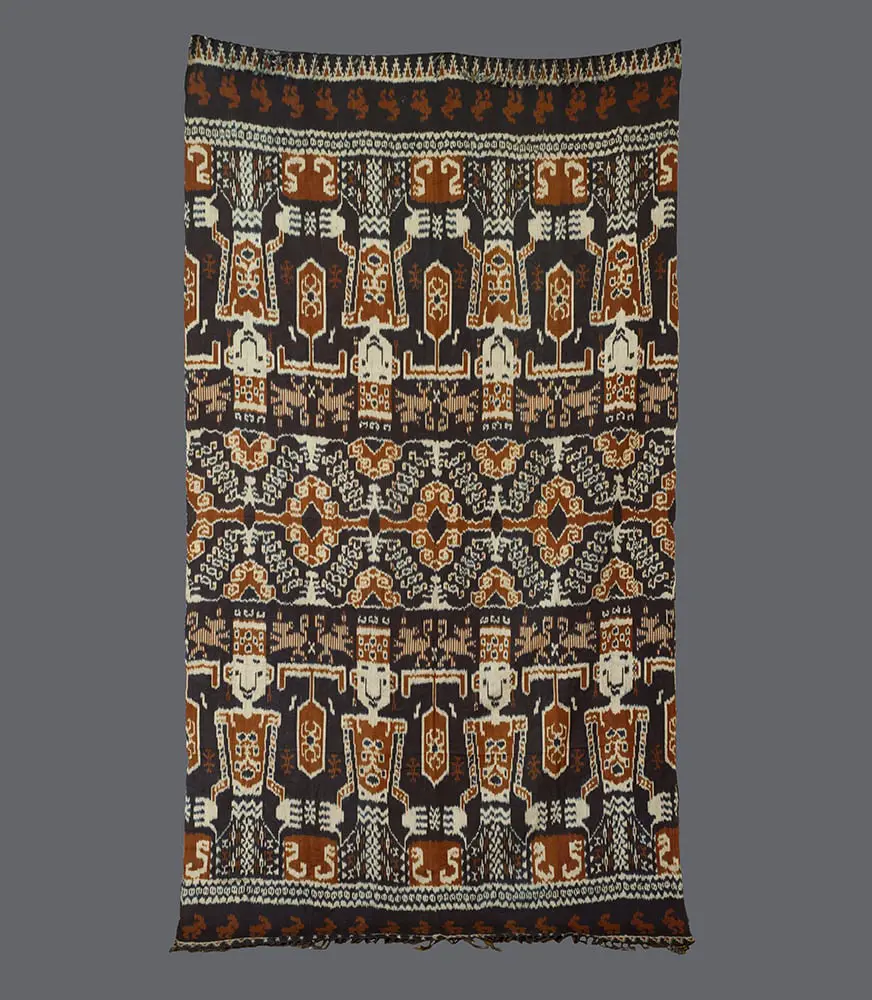
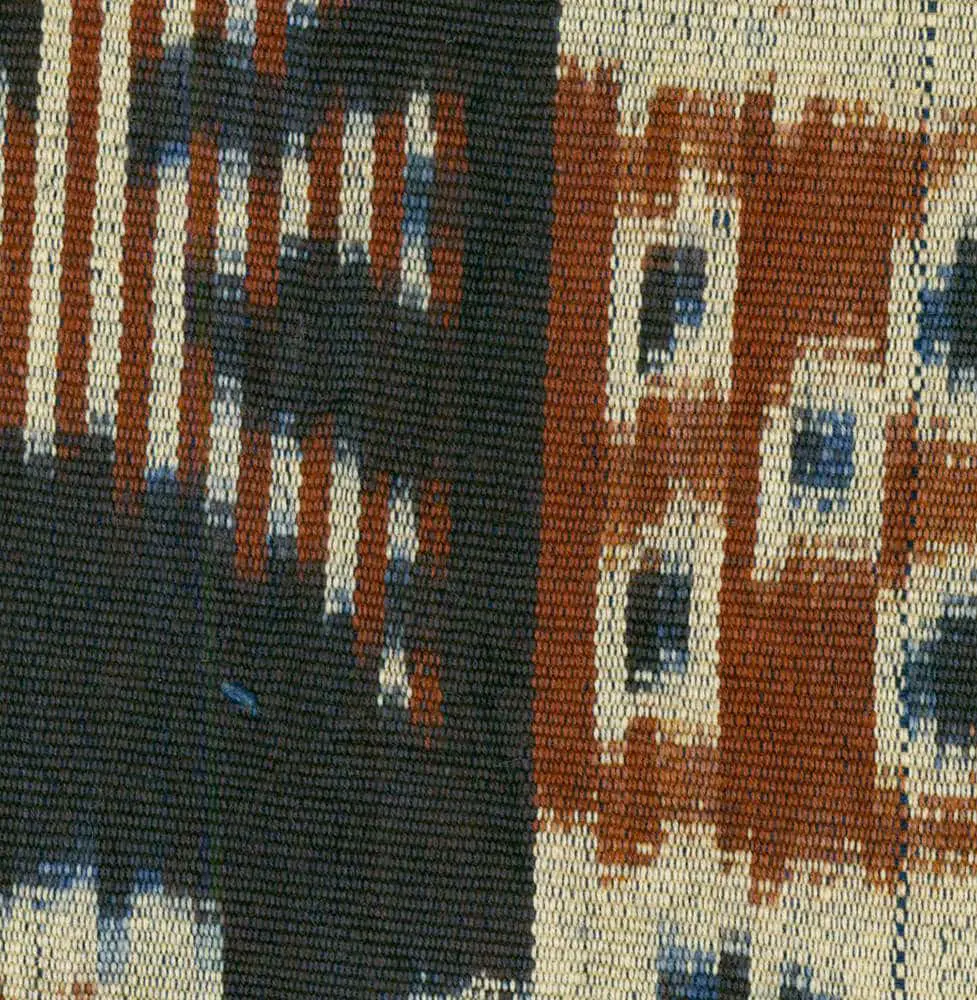
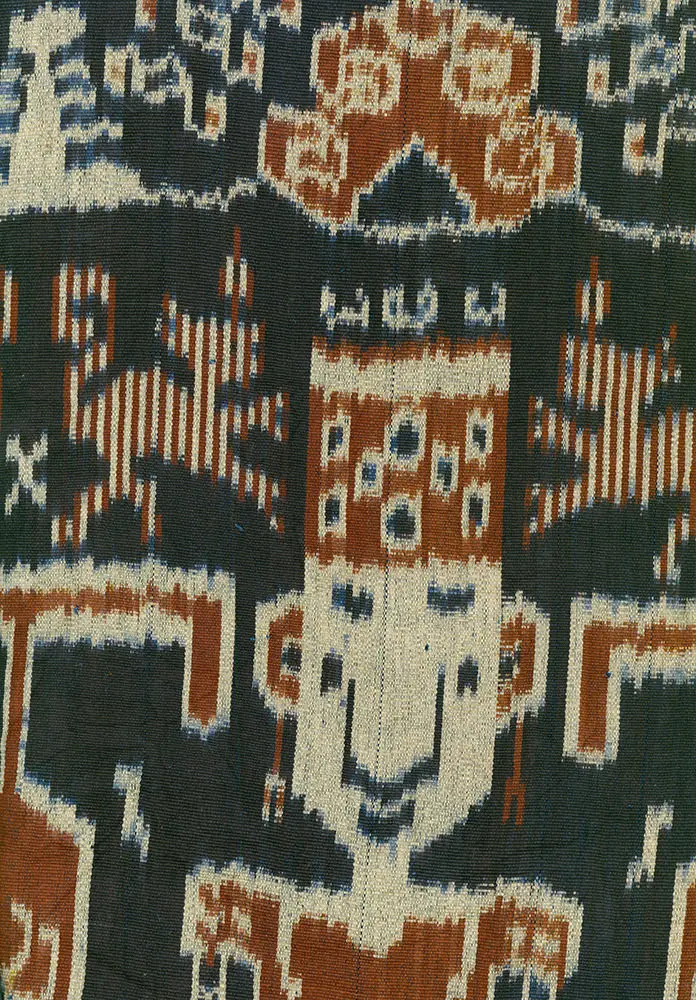
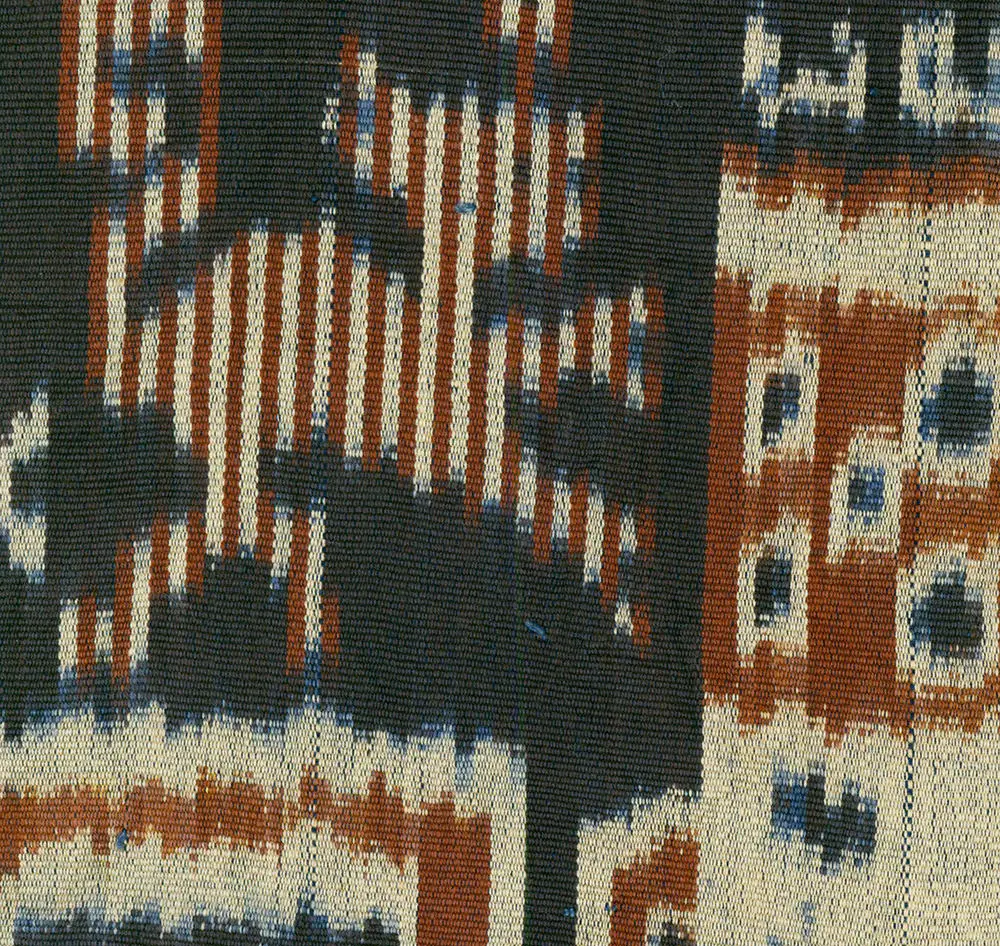
This cotton ikat hinggi, a traditional man's mantle, originates from Sumba, Indonesia, during the mid-20th century. Following centuries-old practice, the textile is constructed from two separately woven sections that have been meticulously hand-stitched together along a vertical center seam. Measuring approximately 93 inches by 49 inches (236 cm x 124 cm), this large-scale garment was traditionally worn by high-ranking men as part of a matched pair, draped over the shoulder and wrapped around the hips.
The composition is characterized by horizontal bands featuring bold, anthropomorphic and zoomorphic motifs typical of East Sumba iconography. The primary bands depict large, seated human figures—likely representing ancestors or local deities—rendered in a striking palette of cream and rust-red against a deep indigo-black ground. These figures are flanked by smaller zoomorphic motifs, including birds and deer, which serve as symbols of status and the spiritual world. The natural dyes used to achieve these rich tones—indigo for the dark fields and kombu for the rust-reds—remain vivid, and the piece is in excellent condition.

Payment Options: We primarily accept PayPal for all transactions. Credit and debit cards are not accepted. If you prefer to pay by personal check instead of PayPal, please note this preference in the "Additional comments" field when placing your order.Ordering Process
To receive your PayPal invoice, simply fill out the form.
Shipping Details: We ship all orders to the address associated with your PayPal payment. Please ensure your PayPal shipping address is current and accurate.A phone number is required during checkout, as our shipping carrier may need to contact you regarding delivery questions.Shipping RatesUnited States and Canada: $20International destinations (air mail): $40
