Copyright © 2026 Yorke Antique Textiles
.avif)

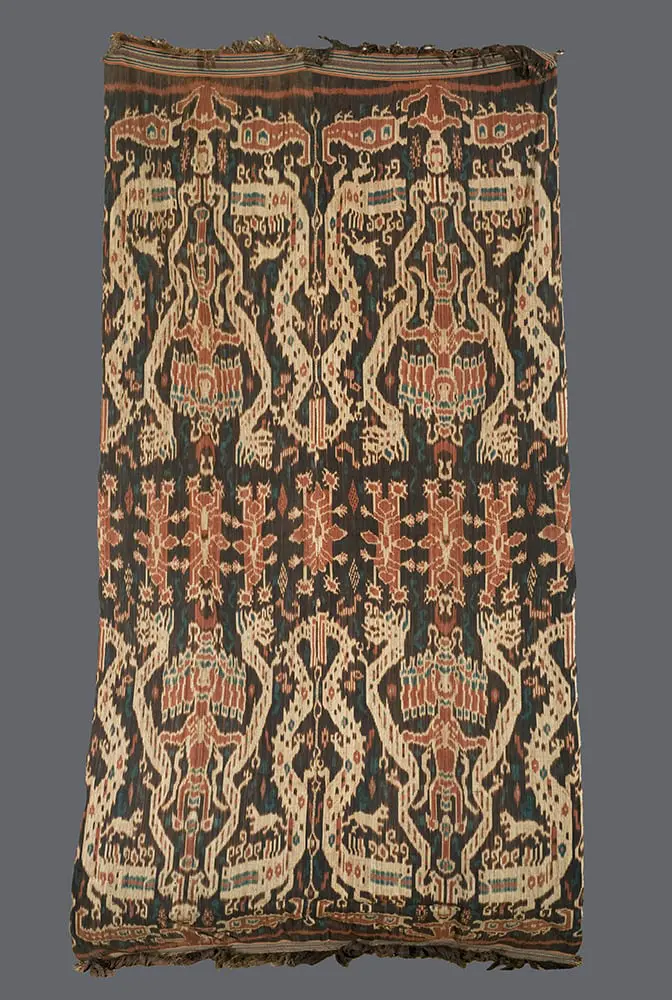
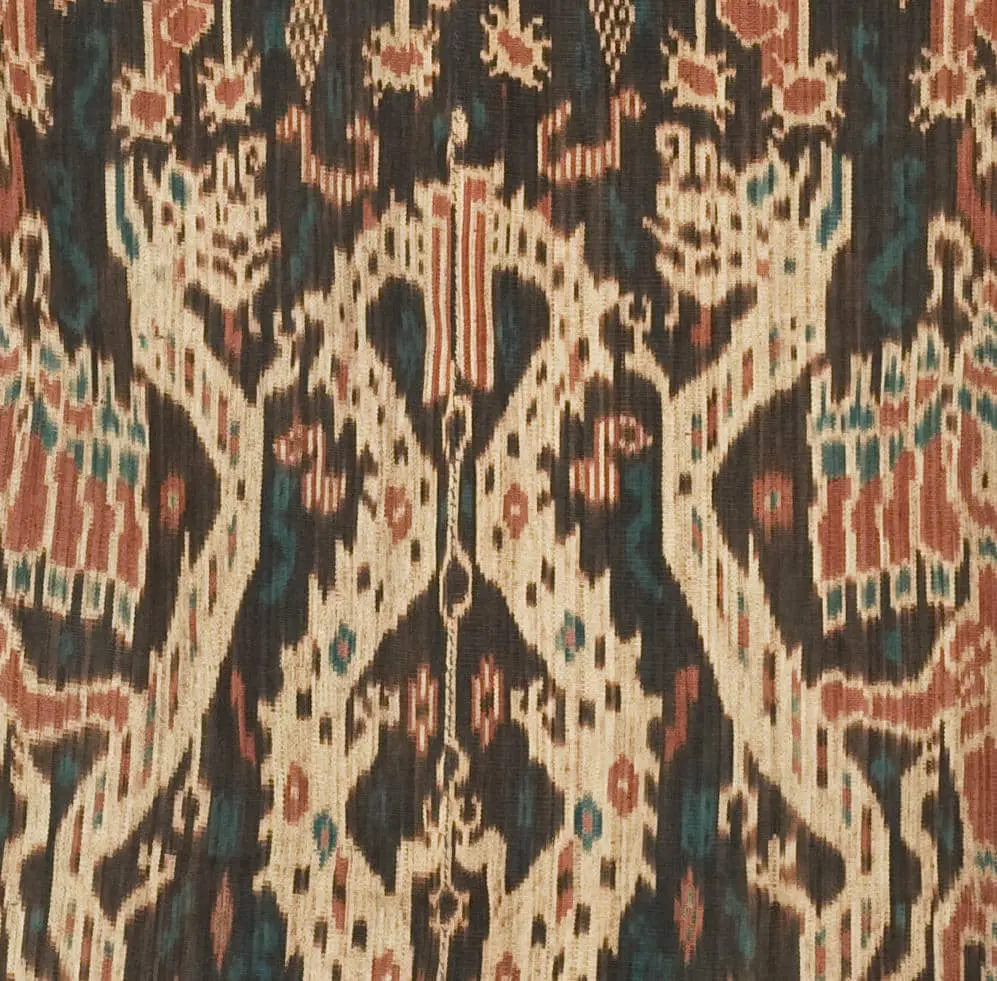
This cotton ikat handwoven shawl, originating from Sumba, Indonesia, during the first half of the 20th century (1900–1950), is a monumental example of East Sumbanese hinggi tradition. Measuring 48 inches by 97 inches (122 cm x 246 cm), this large mantle was traditionally worn by high-ranking aristocratic men as part of a matched pair for significant ceremonial life-cycle rites. The textile is constructed from two identical hand-loomed panels joined along a central vertical seam, a hallmark of traditional hinggi construction.
The iconography is arranged in horizontal bands that mirror one another on either side of a central focal panel, a layout that reflects the social and spiritual structure of a Sumbanese village. The design features traditional motifs such as the Andung (skull tree), representing village protection and ancestral power, alongside figures of horses and deer which symbolize wealth and high social status. The deep, resonant colors are achieved through labor-intensive natural dyeing: indigo provides the dark blues, while the kombu (noni) root creates the characteristic rust-reds. This piece remains in excellent condition, serving as a robust document of mid-century Indonesian weaving.

Payment Options: We primarily accept PayPal for all transactions. Credit and debit cards are not accepted. If you prefer to pay by personal check instead of PayPal, please note this preference in the "Additional comments" field when placing your order.Ordering Process
To receive your PayPal invoice, simply fill out the form.
Shipping Details: We ship all orders to the address associated with your PayPal payment. Please ensure your PayPal shipping address is current and accurate.A phone number is required during checkout, as our shipping carrier may need to contact you regarding delivery questions.Shipping RatesUnited States and Canada: $20International destinations (air mail): $40
