Copyright © 2026 Yorke Antique Textiles
.avif)

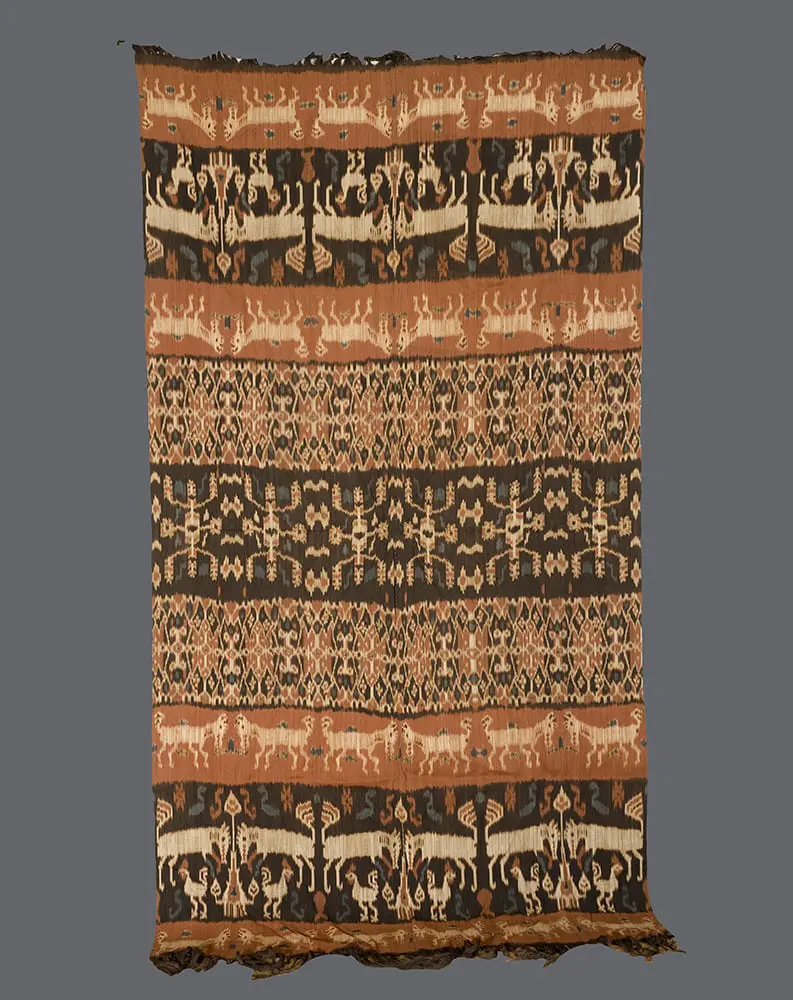
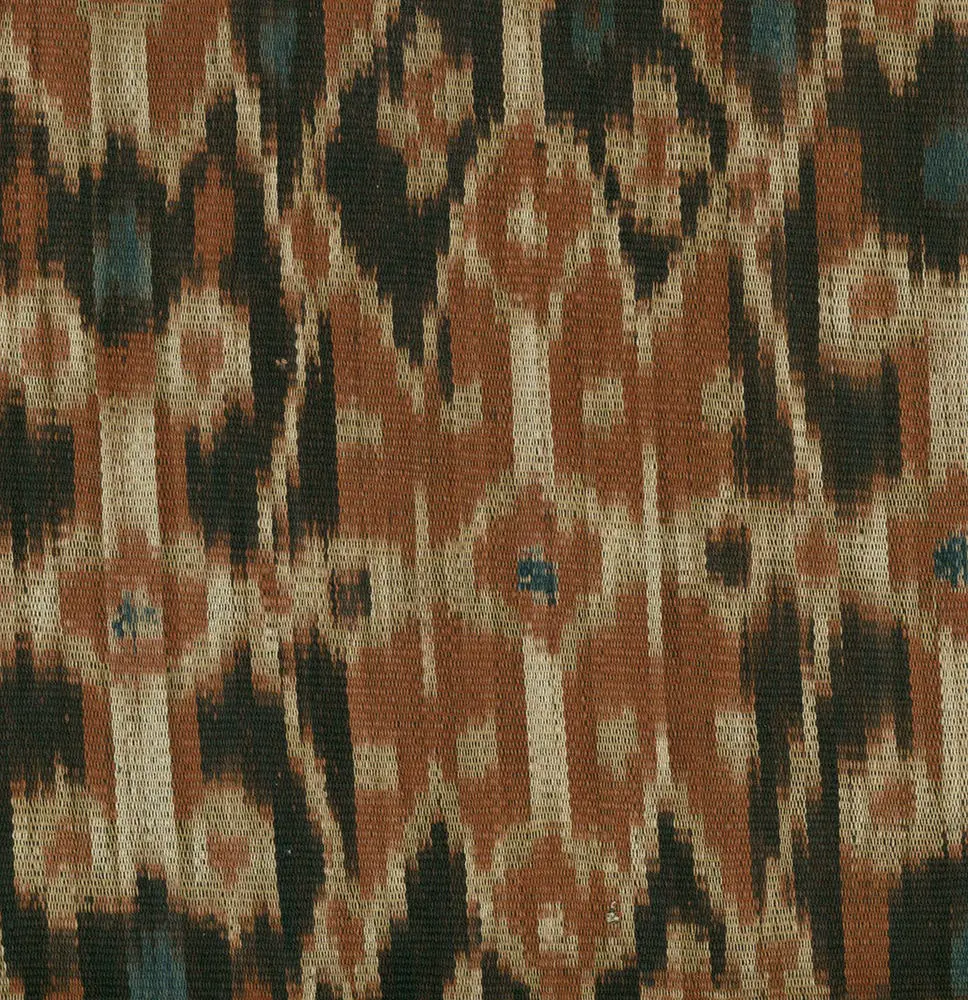
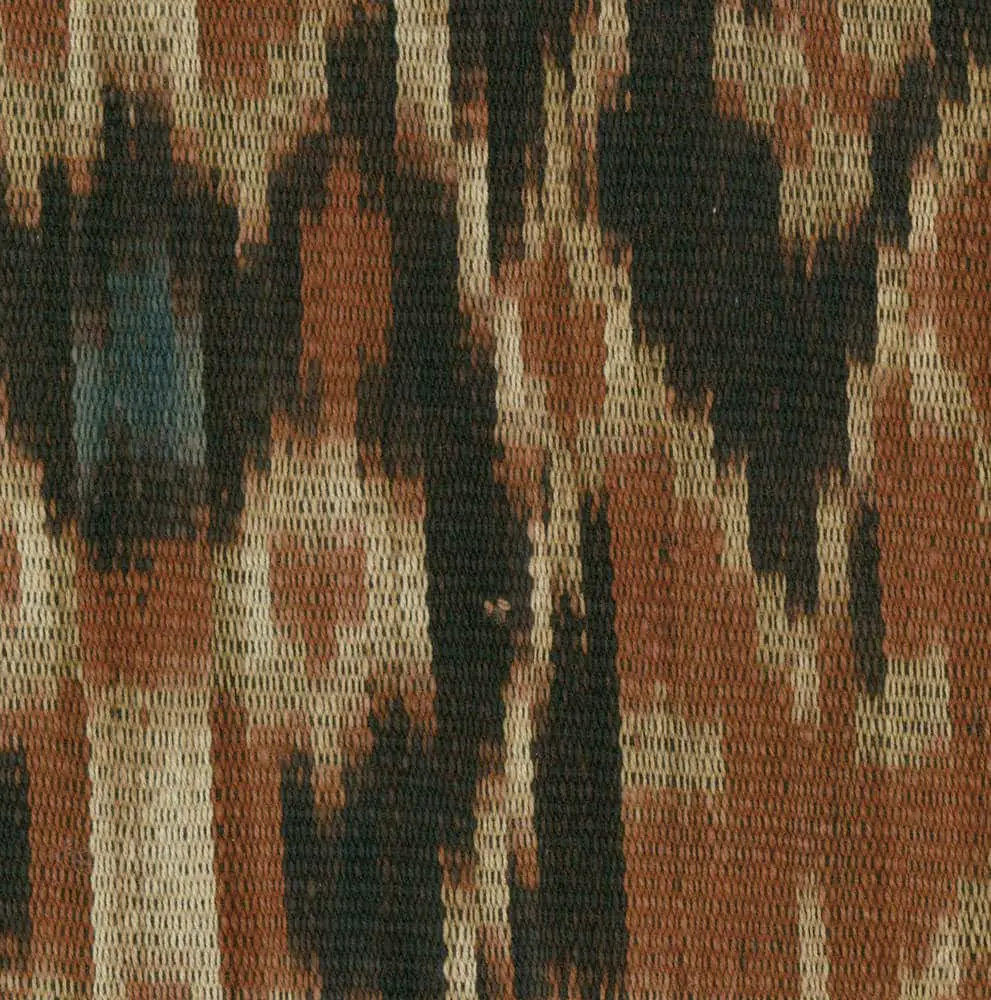
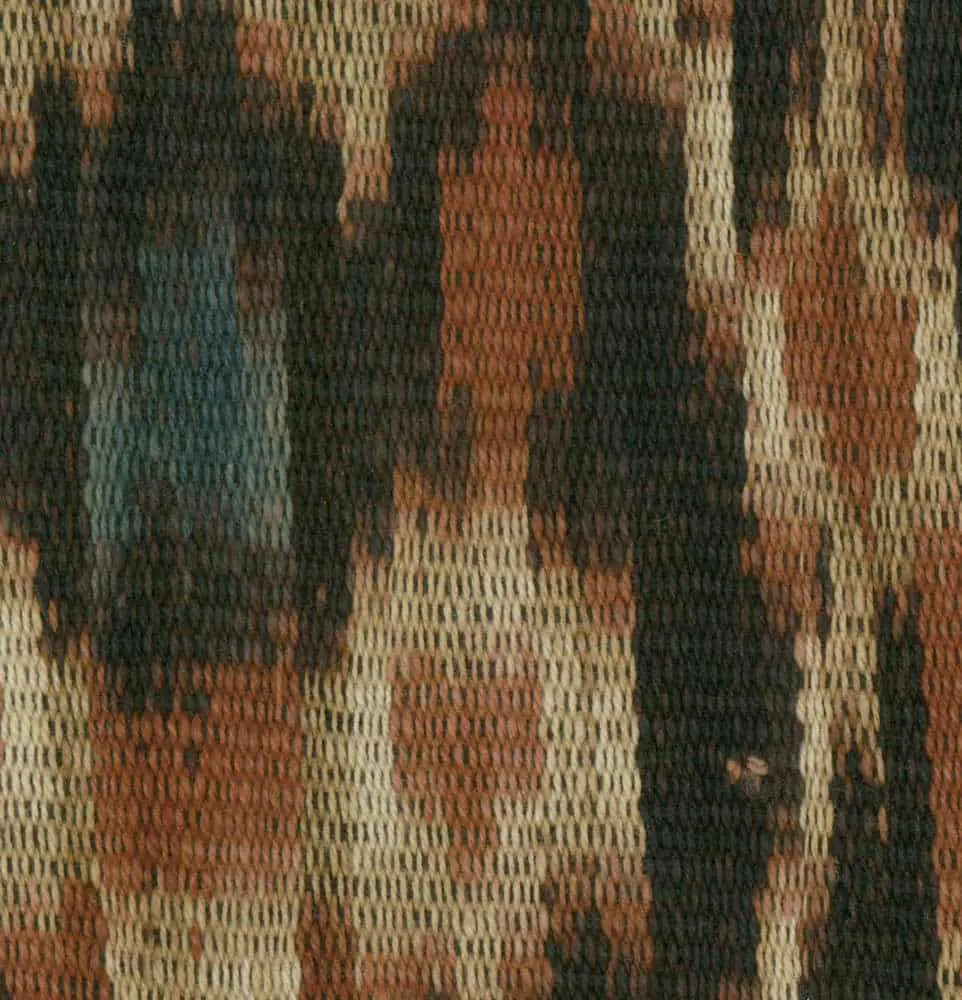


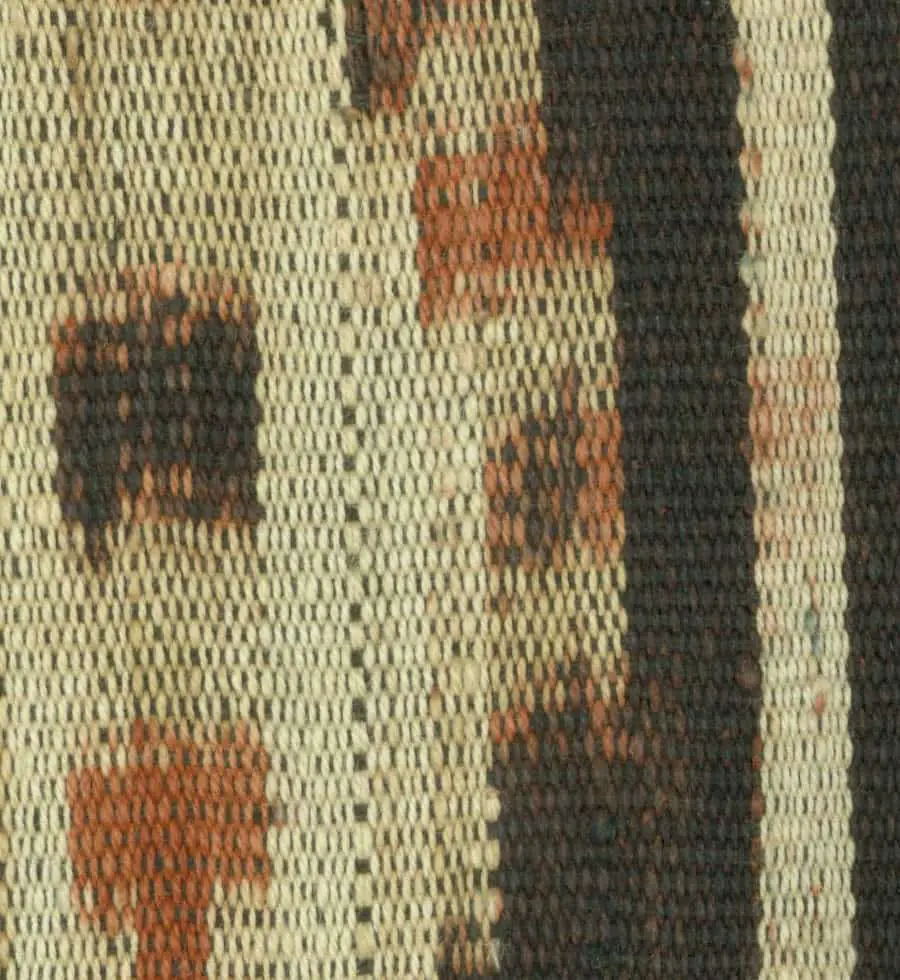
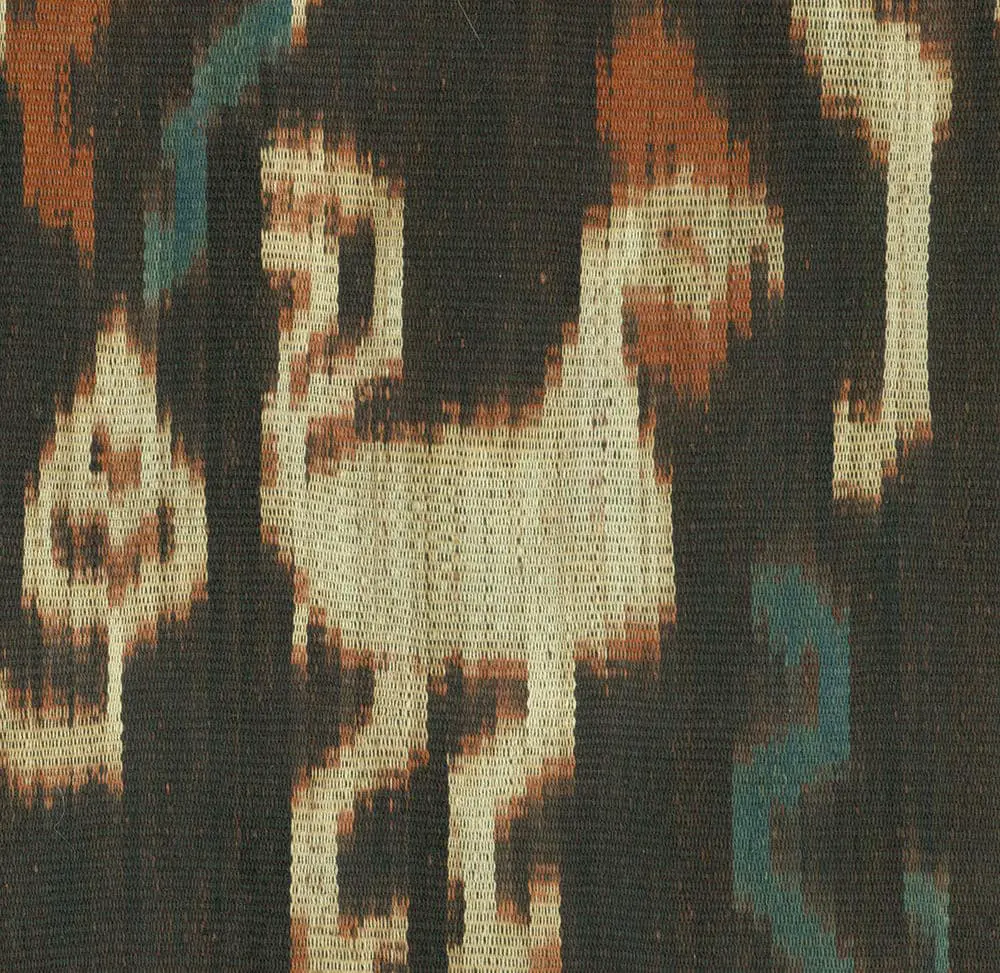


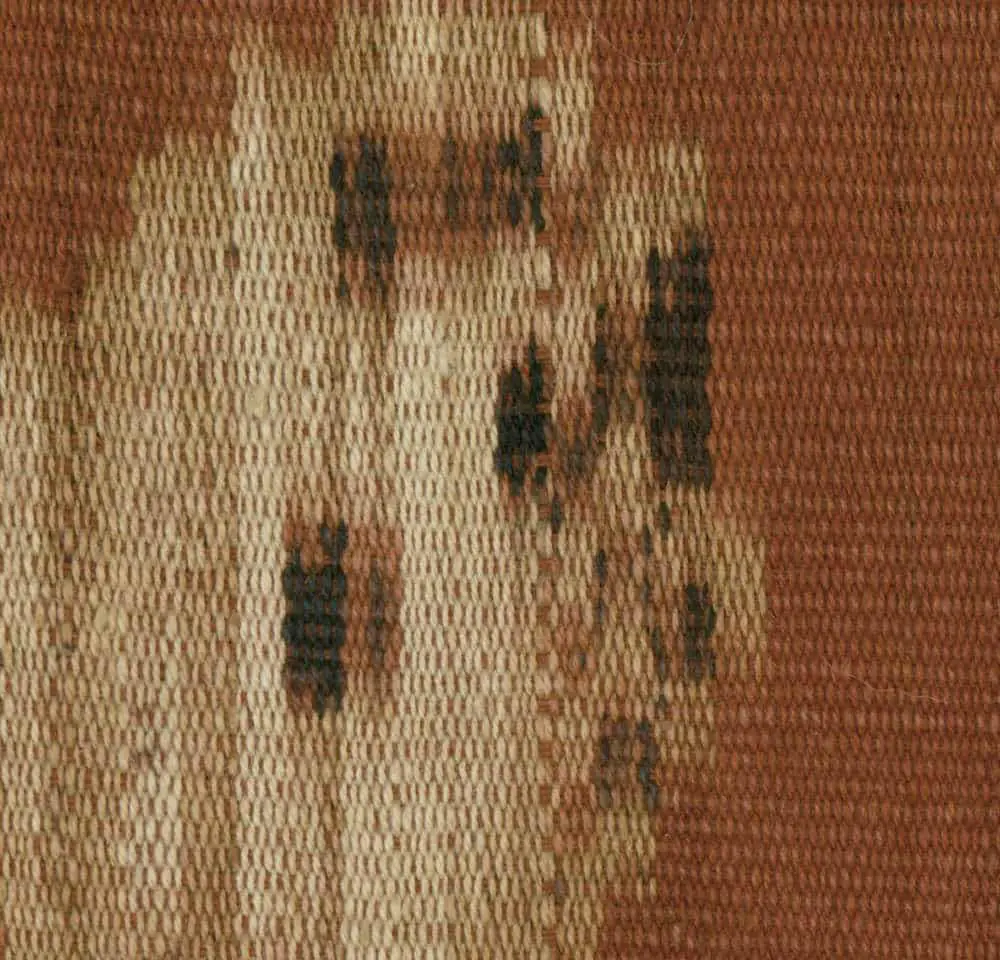
This extraordinary cotton hinggi (man's ceremonial mantle) from Kambera, East Sumba, dates to the early 20th century (1900–1920). It is woven from exceptionally fine, hand-spun cotton yarn—a material that became rare in Sumba after this period—offering a thin yet dense texture with a sandy handle and a heavy, springy drape. Measuring 50 inches by 101 inches (127 cm x 257 cm), the textile was crafted using the warp-ikat technique and colored exclusively with natural dyes.
The composition is a showcase of aristocratic status, featuring a glowing golden-brown and a deep, over-dyed violet-brown-wine ground. The central field is dominated by a rare branching motif associated with the ruling class, flanked by bands of the patola ratu pattern. Derived from prestigious Indian trade cloths, this geometric motif symbolizes regeneration and rebirth, inspired by the shedding of a python's skin. The design is further populated by horses, chickens, and red-edged zoomorphic figures, all exhibiting the "fuzzy" outlines characteristic of antique Sumba ikat. The piece is in impeccable condition, retaining its fresh, vibrant "watermelon red" hues without stains or tears.

Payment Options: We primarily accept PayPal for all transactions. Credit and debit cards are not accepted. If you prefer to pay by personal check instead of PayPal, please note this preference in the "Additional comments" field when placing your order.Ordering Process
To receive your PayPal invoice, simply fill out the form.
Shipping Details: We ship all orders to the address associated with your PayPal payment. Please ensure your PayPal shipping address is current and accurate.A phone number is required during checkout, as our shipping carrier may need to contact you regarding delivery questions.Shipping RatesUnited States and Canada: $20International destinations (air mail): $40
