Copyright © 2026 Yorke Antique Textiles
.avif)

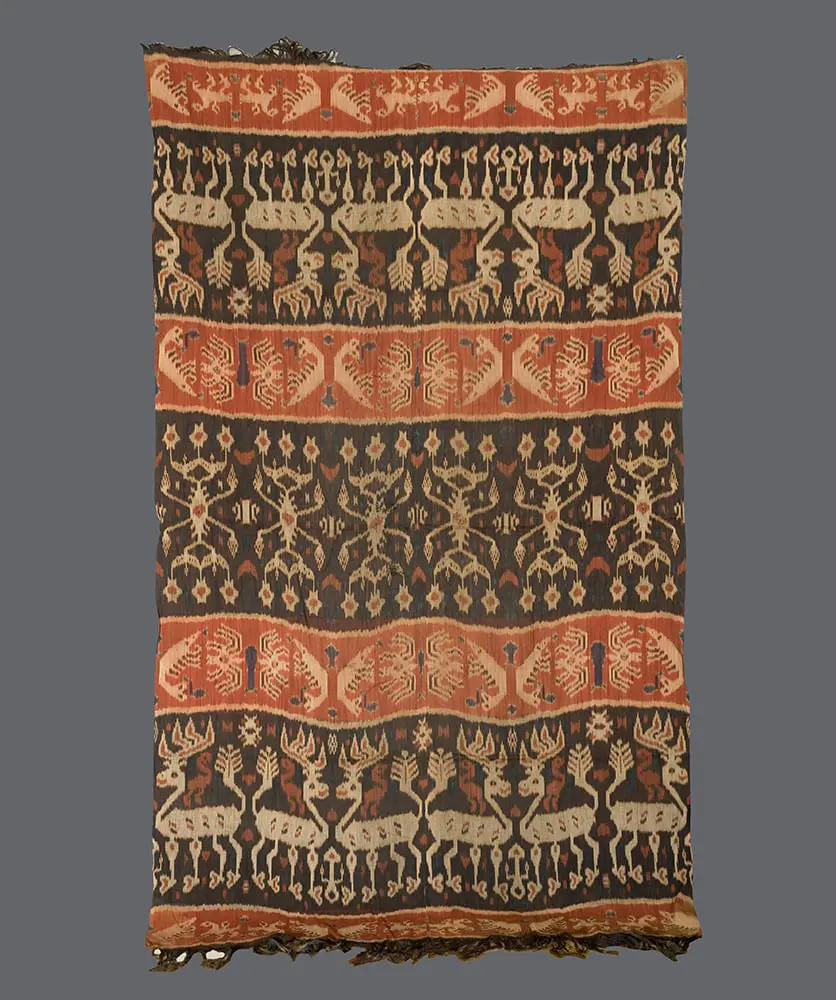
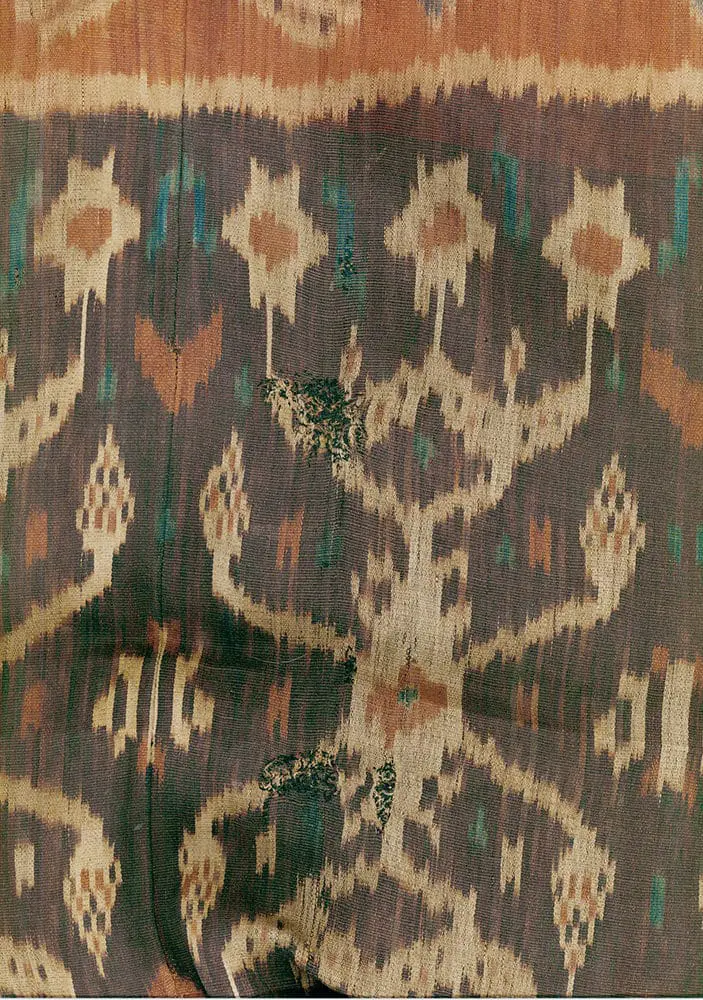
This cotton warp-ikat handwoven shawl, originating from the island of Sumba, Indonesia, dates to the second quarter of the 20th century (1925–1950). Measuring 54 inches by 90 inches (137 cm x 229 cm), this large textile is a classic example of a hinggi, a traditional man's mantle. In Sumbanese culture, hinggi were typically woven in near-identical pairs and worn as both a waist cloth and a shoulder wrap for ceremonial occasions, such as weddings and funerals.
The textile features complex figurative motifs typical of East Sumba, which often include animals of ritual sacrifice and royalty, such as deer with spreading antlers (symbolizing wisdom and high rank), roosters (signifying protective power and life), and horses (representing wealth and prestige). The design is organized into horizontal bands, a layout that mirrors the social structure and physical organization of a traditional Sumbanese village. The rich colors are achieved through natural dyes, with indigo providing the deep blues and the kombu (noni) root producing the characteristic rust-reds. The shawl is in very good condition overall, featuring two small, historically appropriate repairs.

Payment Options: We primarily accept PayPal for all transactions. Credit and debit cards are not accepted. If you prefer to pay by personal check instead of PayPal, please note this preference in the "Additional comments" field when placing your order.Ordering Process
To receive your PayPal invoice, simply fill out the form.
Shipping Details: We ship all orders to the address associated with your PayPal payment. Please ensure your PayPal shipping address is current and accurate.A phone number is required during checkout, as our shipping carrier may need to contact you regarding delivery questions.Shipping RatesUnited States and Canada: $20International destinations (air mail): $40
