Copyright © 2026 Yorke Antique Textiles
.avif)


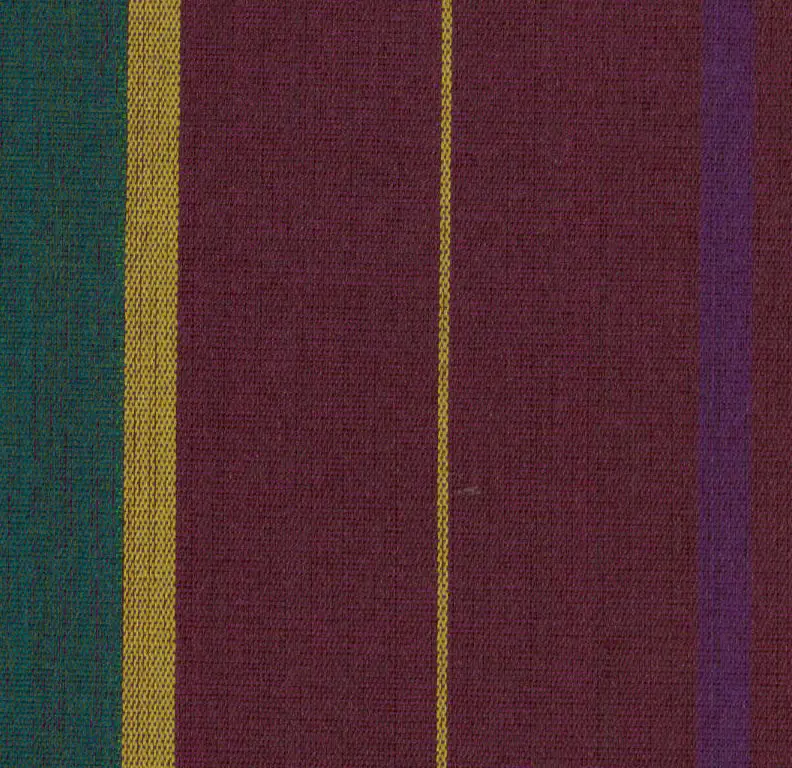
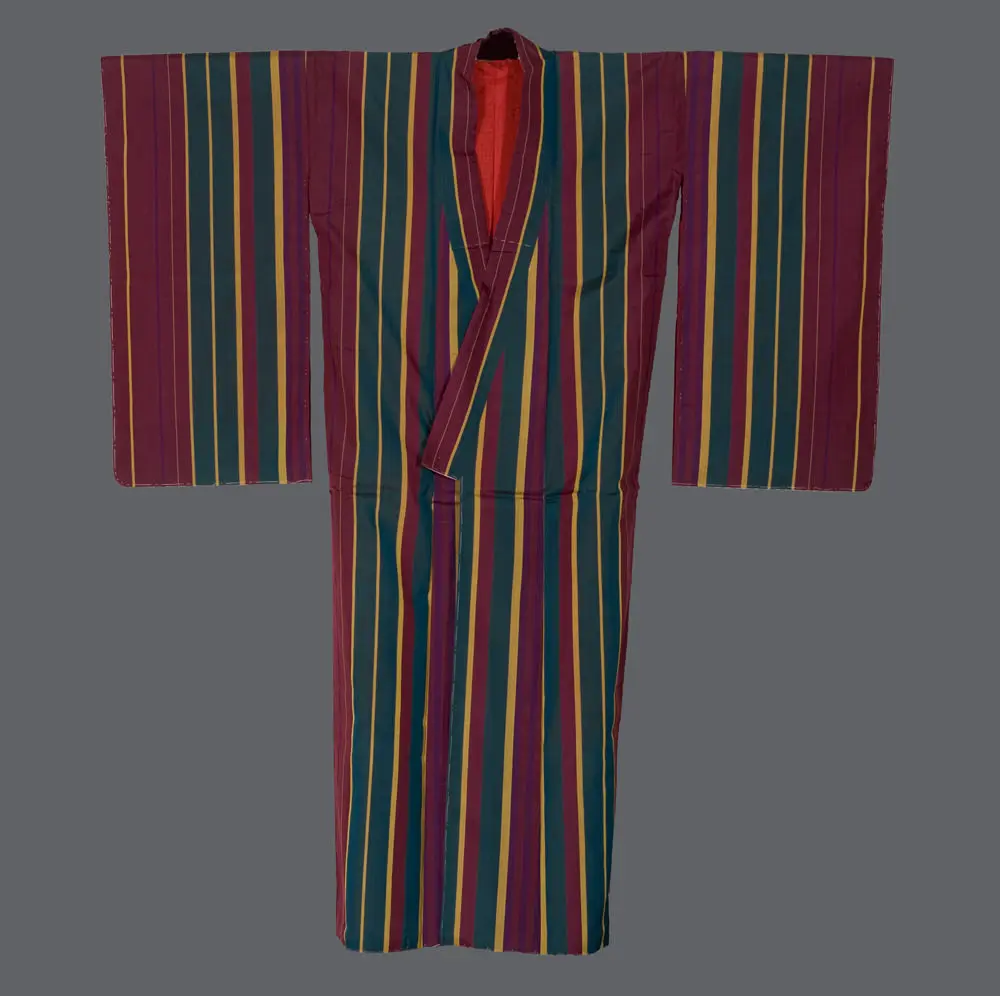
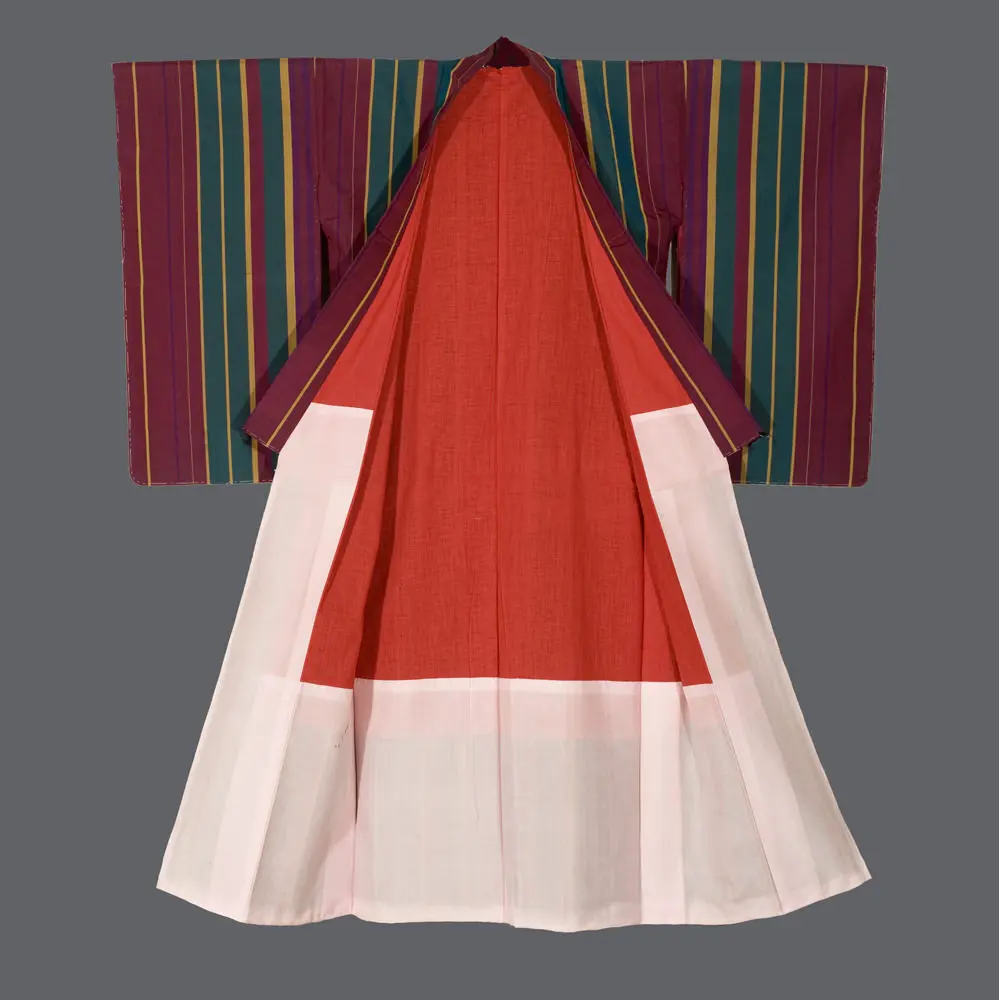
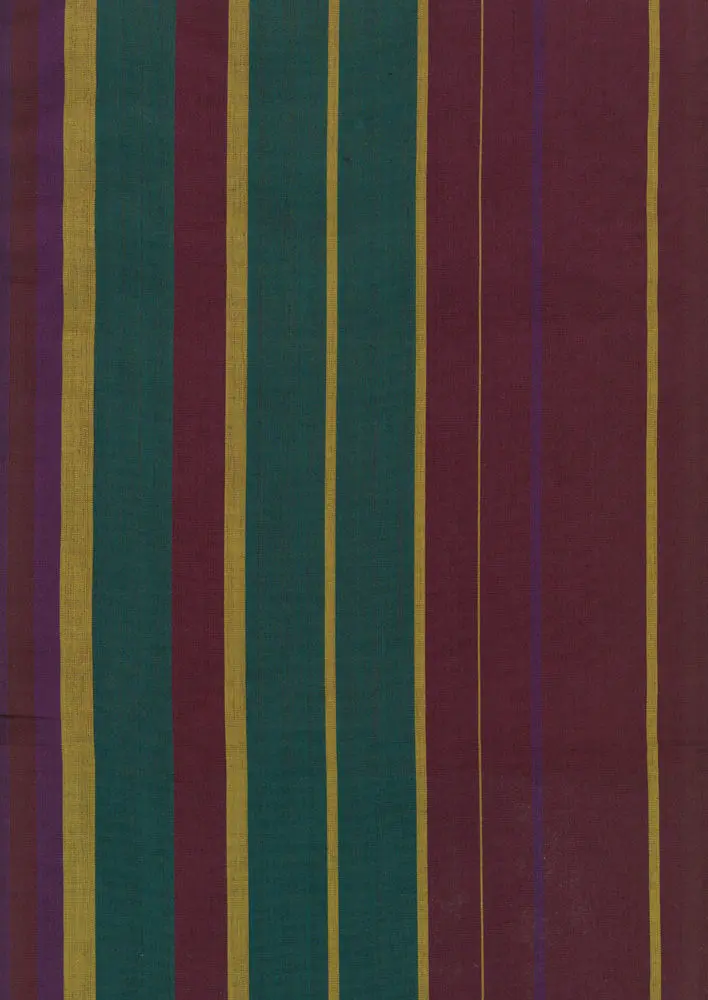
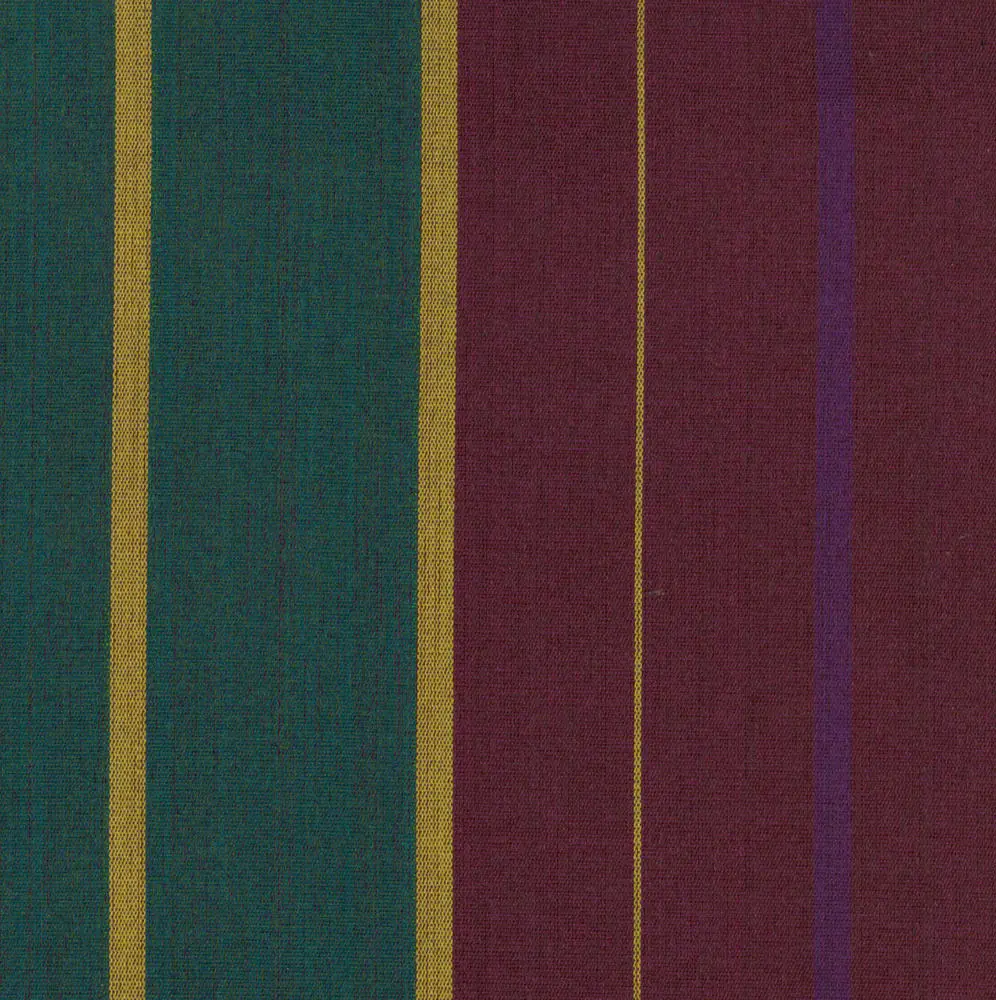
This mid-Showa period kimono (1940-1960) showcases the enduring appeal of shima, or stripe patterns, in Japanese textile tradition. The design features bold vertical stripes in a striking tricolor palette: deep teal, rich magenta-burgundy, and golden yellow. The stripes vary in width, with broader bands of teal and magenta punctuated by narrower accent lines of yellow, creating visual rhythm and energy across the garment's surface.
The firm texture indicates this is likely a tsumugi or similar sturdy woven cloth, created through yarn-dyeing techniques where threads are colored before weaving rather than printed or painted afterward. This method produces fabrics prized for their durability and depth of color, as the dye penetrates the fibers completely. Such textiles were favored for everyday wear and informal occasions.
Stripe patterns held particular significance in Japan's textile history. Once restricted by sumptuary laws that limited elaborate designs for commoners, stripes became a creative outlet—their apparent simplicity masking sophisticated color combinations and weaving techniques. By the Showa period, striped kimono represented both tradition and modernity, their clean geometry appealing to contemporary tastes while honoring centuries of Japanese design heritage.
Measures 50 inches (127 cm) from sleeve-end to sleeve-end and stands 55 inches (140 cm) tall.

Payment Options: We primarily accept PayPal for all transactions. Credit and debit cards are not accepted. If you prefer to pay by personal check instead of PayPal, please note this preference in the "Additional comments" field when placing your order.Ordering Process
To receive your PayPal invoice, simply fill out the form.
Shipping Details: We ship all orders to the address associated with your PayPal payment. Please ensure your PayPal shipping address is current and accurate.A phone number is required during checkout, as our shipping carrier may need to contact you regarding delivery questions.Shipping RatesUnited States and Canada: $20International destinations (air mail): $40
