Copyright © 2026 Yorke Antique Textiles
.avif)


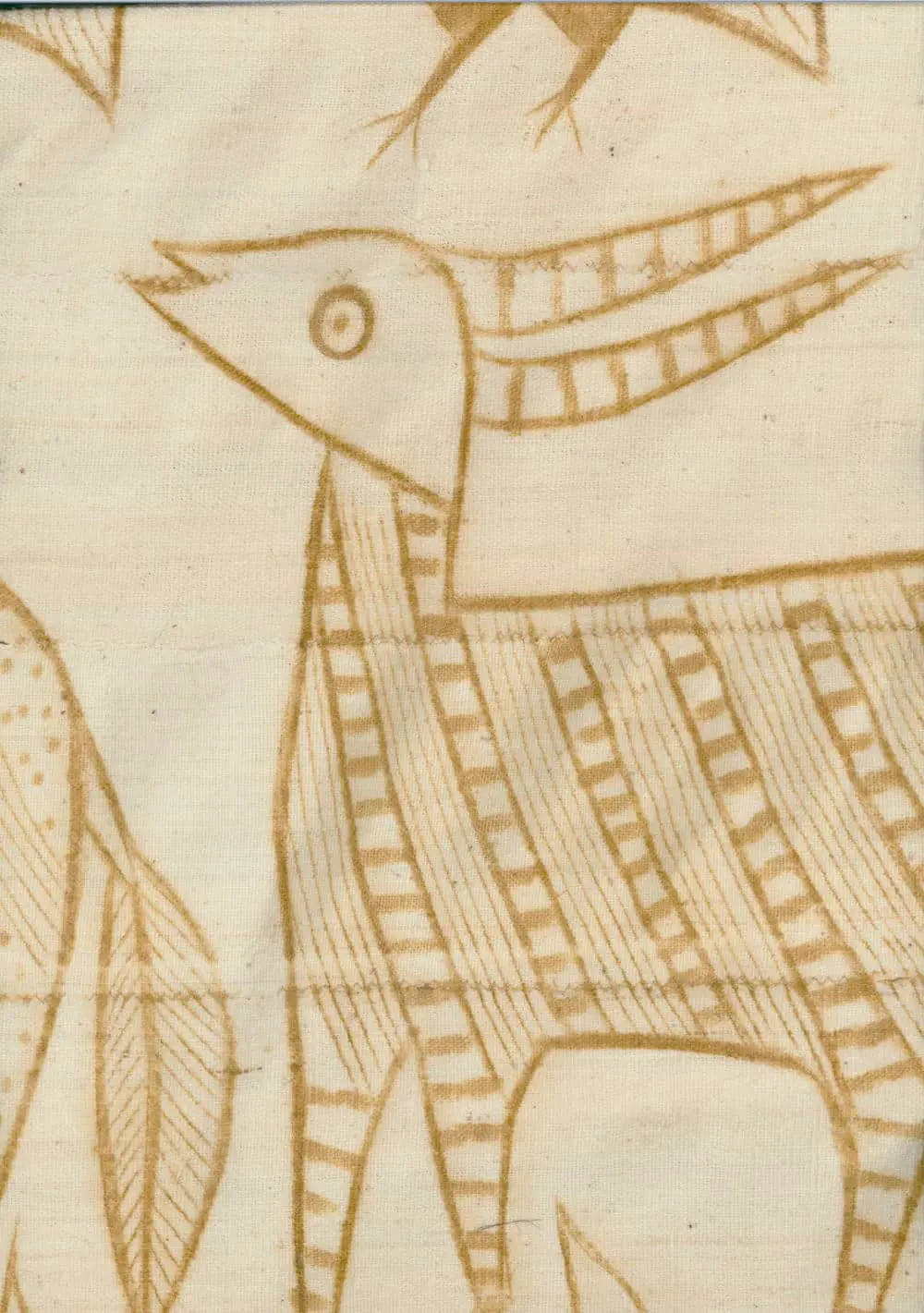
This monumental cotton textile, originating from the Senufo people of West Africa (primarily northern Ivory Coast and southern Mali) between 1950 and 2000, is a masterful example of fila cloth tradition. Measuring 50 inches by 82 inches (127 cm x 208 cm), the piece is constructed from eleven narrow, hand-loomed strips of heavy-weight cotton, meticulously sewn together edge-to-edge to create a wide canvas.
The textile features a fascinating menagerie of stylized fauna, rendered through a traditional staining process using fermented mud and plant-based dyes. The composition is organized into horizontal registers, depicting spotted feline predators—likely leopards or lions—stalking striped antelopes, flanked by rows of birds and fish. These motifs are deeply symbolic in Senufo culture, often representing the complex relationship between the village, the bush, and ancestral spirits. The earthy ochre and brown tones are achieved through repeated applications of organic pigments on the natural cream cotton. The textile remains in excellent condition.

Payment Options: We primarily accept PayPal for all transactions. Credit and debit cards are not accepted. If you prefer to pay by personal check instead of PayPal, please note this preference in the "Additional comments" field when placing your order.Ordering Process
To receive your PayPal invoice, simply fill out the form.
Shipping Details: We ship all orders to the address associated with your PayPal payment. Please ensure your PayPal shipping address is current and accurate.A phone number is required during checkout, as our shipping carrier may need to contact you regarding delivery questions.Shipping RatesUnited States and Canada: $20International destinations (air mail): $40
