Copyright © 2026 Yorke Antique Textiles
.avif)

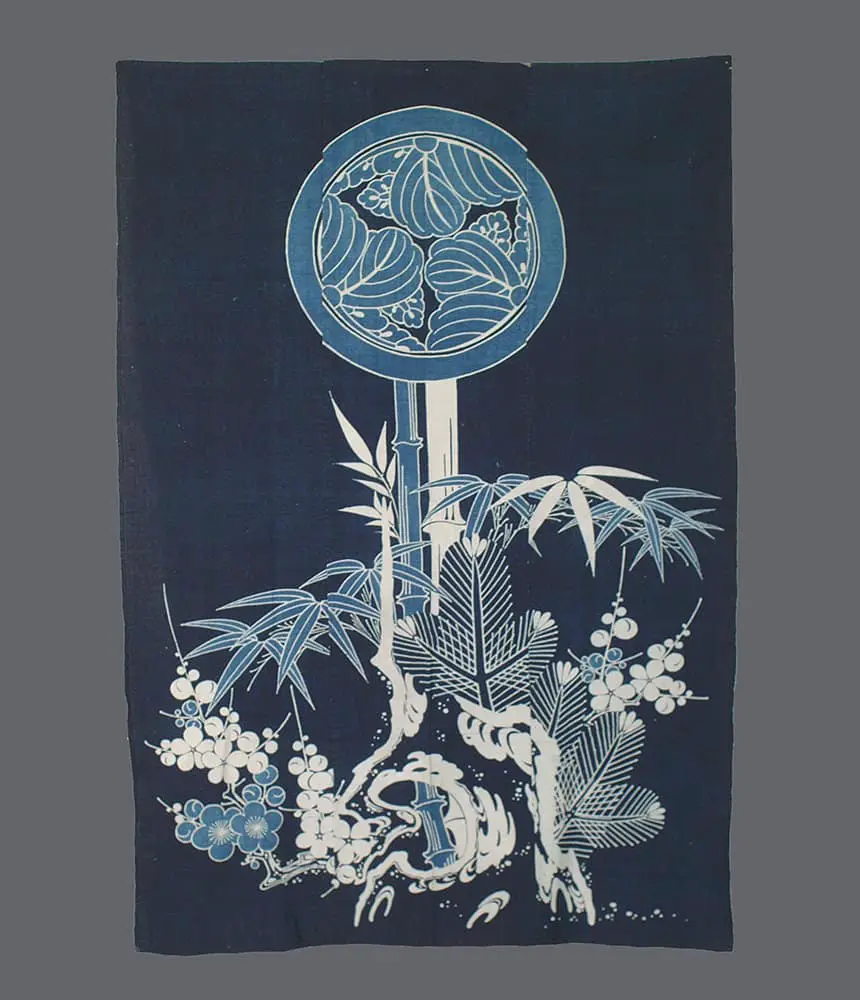
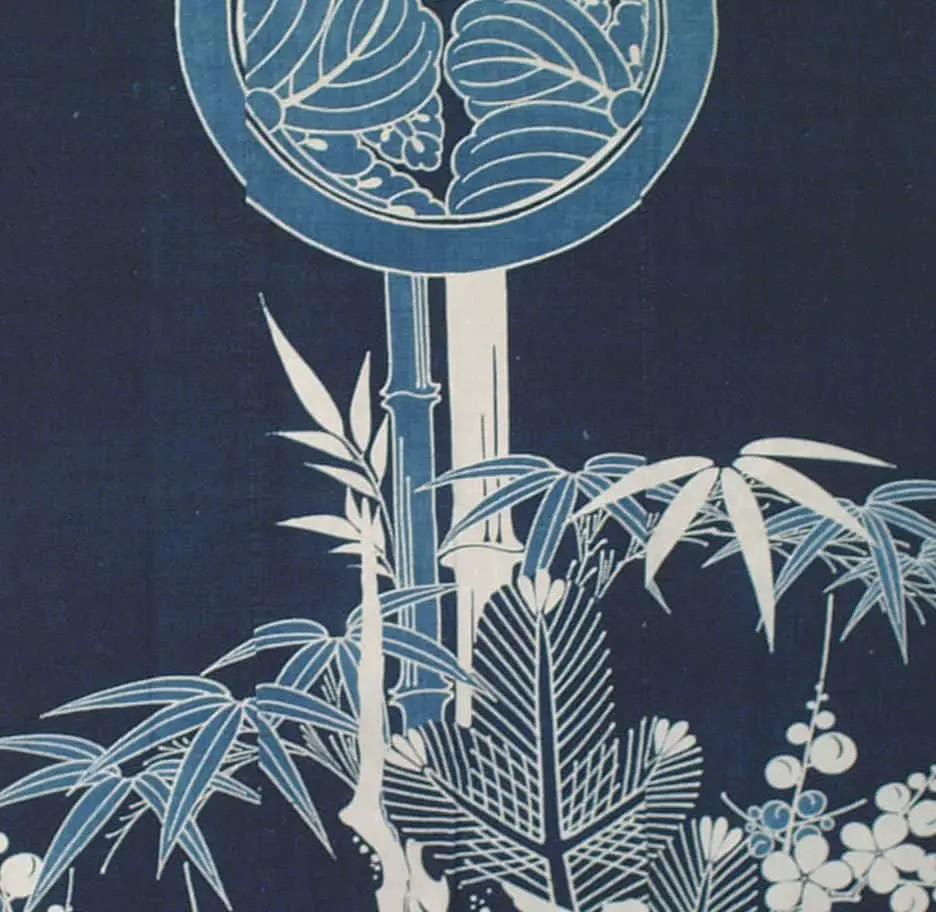
This striking three-panel cotton futon cover (futonji) from Japan dates to the late Meiji or Taisho period (1900–1920). Measuring 39 inches by 56 inches (99 cm x 142 cm), the textile is composed of three vertical panels of hand-loomed cotton joined to form a single expansive surface. The cover features a deep indigo ground with crisp white and light blue motifs achieved through a traditional resist-dyeing process, likely tsutsugaki.
The composition is anchored by a large, circular family crest (mon) at the top, featuring stylized leaves within a heavy border. Below the crest, a dense arrangement of auspicious botanical symbols—including bamboo stalks, flowering plum blossoms, and resilient pine branches—rises from the base. Collectively known as the "Three Friends of Winter" (Sho Chiku Bai), these motifs represent perseverance, integrity, and longevity. The piece is in excellent condition, with the indigo dye remaining exceptionally rich and the white resist areas sharp and clear.

Payment Options: We primarily accept PayPal for all transactions. Credit and debit cards are not accepted. If you prefer to pay by personal check instead of PayPal, please note this preference in the "Additional comments" field when placing your order.Ordering Process
To receive your PayPal invoice, simply fill out the form.
Shipping Details: We ship all orders to the address associated with your PayPal payment. Please ensure your PayPal shipping address is current and accurate.A phone number is required during checkout, as our shipping carrier may need to contact you regarding delivery questions.Shipping RatesUnited States and Canada: $20International destinations (air mail): $40
