Copyright © 2026 Yorke Antique Textiles
.avif)

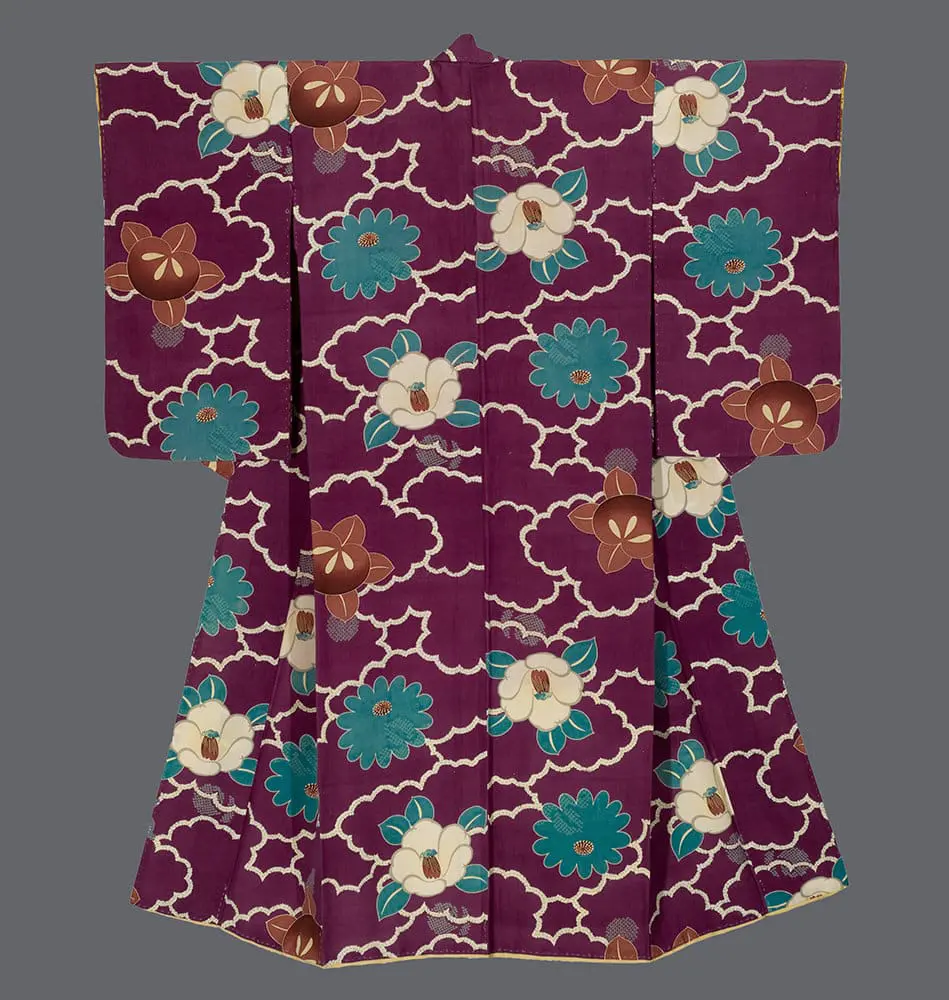
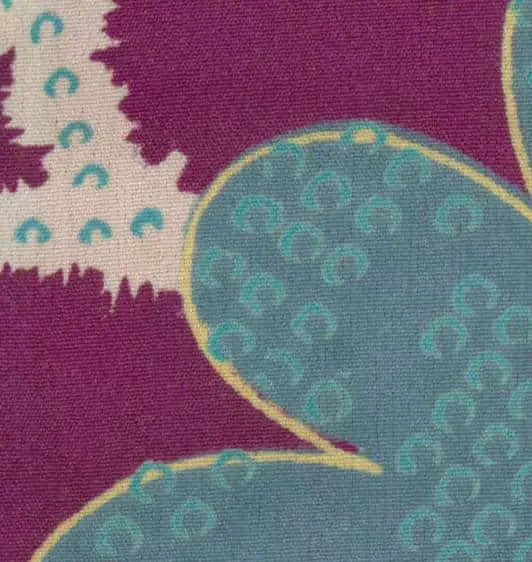
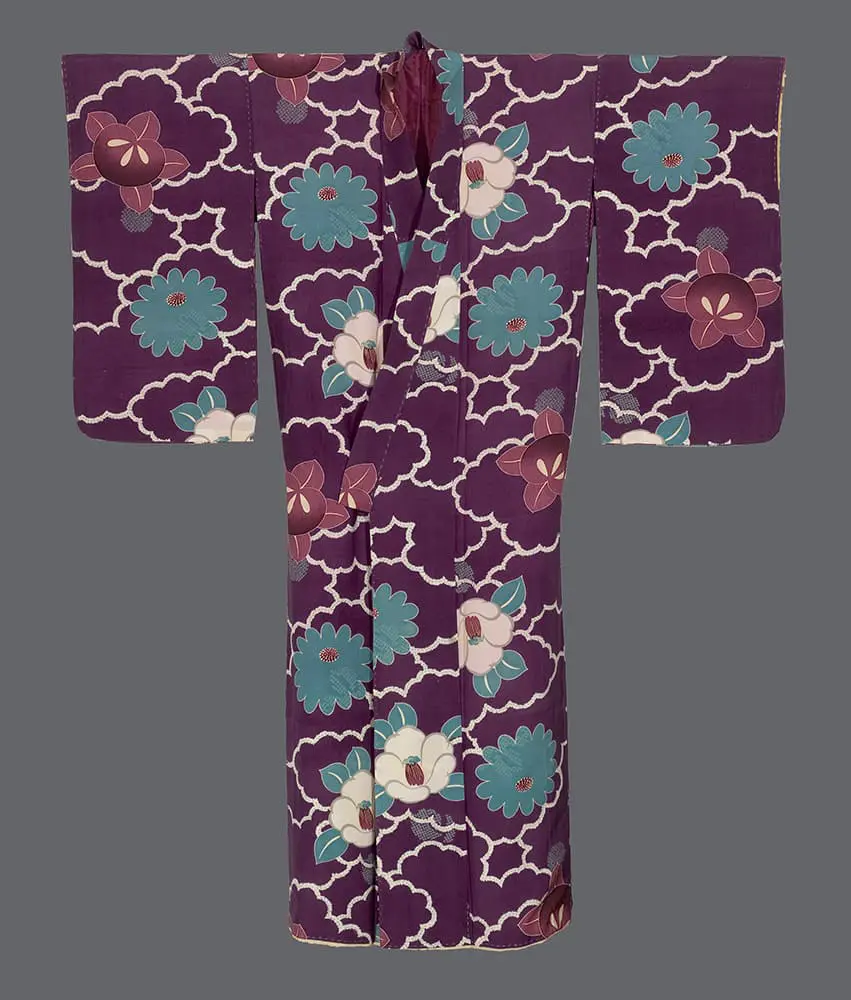
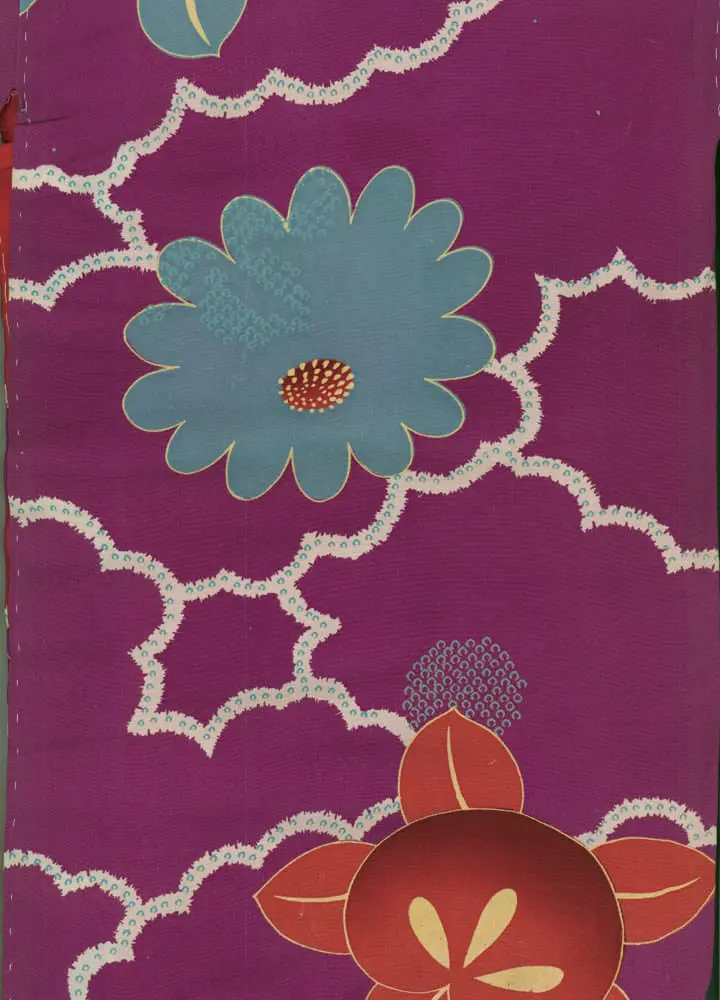
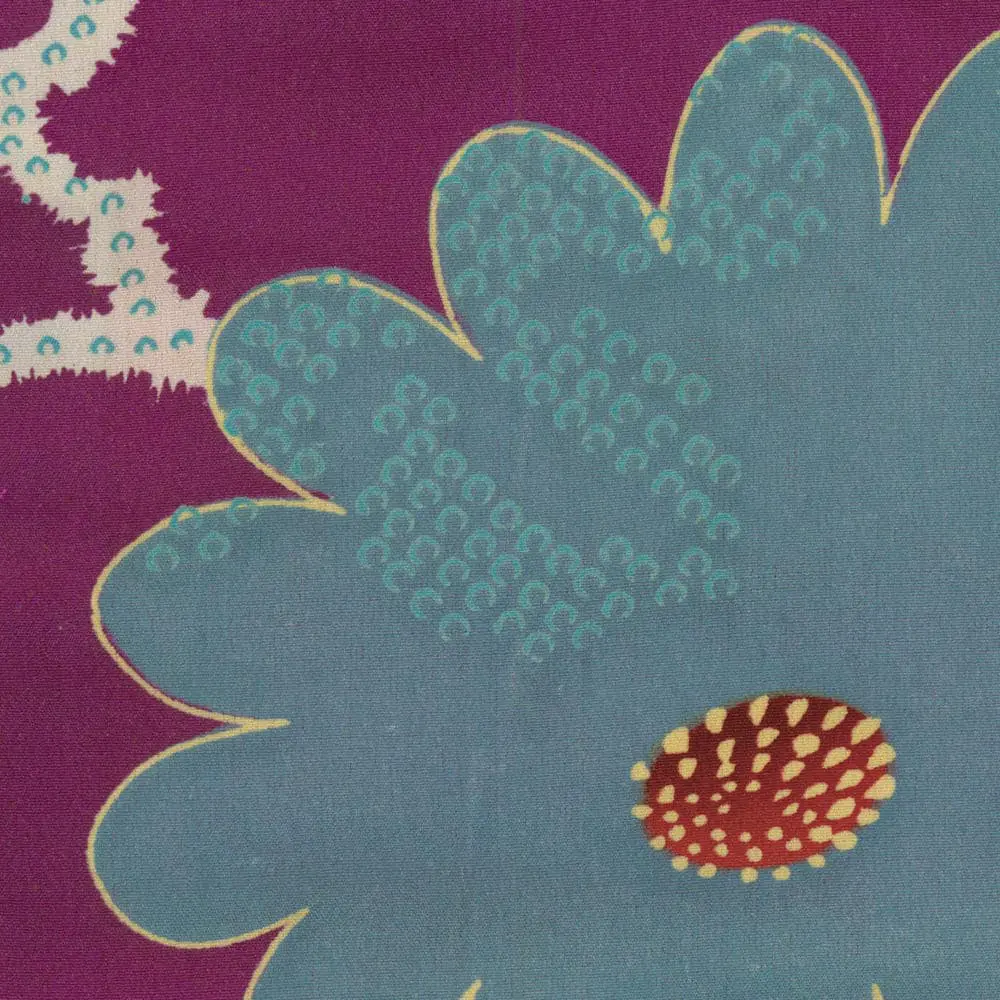
This vibrant silk kimono from the 1920s exemplifies the bold design sensibilities of the Taishō era, when Western printing technologies merged with traditional Japanese motifs to create striking new aesthetic expressions. The silkscreen technique allowed for crisp, repeating patterns with precise color registration, enabling complex multi-hued designs to be produced efficiently.
Against a rich purple-magenta ground, an interlocking lattice of stylized cloud forms (kumo) creates a geometric framework outlined in cream with subtle dotted texturing. Within and around this cloudlike grid, three types of flowers alternate: teal kiku (chrysanthemums) with densely layered petals, cream-colored tachibana (mandarin orange) blossoms with teal leaves and detailed stamens, and rust-brown stylized flowers adding warm contrast. Small gray patterned elements punctuate the spaces between.
Both chrysanthemum and tachibana carry imperial associations in Japanese culture. The sixteen-petaled chrysanthemum serves as the Imperial Seal, symbolizing longevity and nobility, while tachibana—an ancient citrus native to Japan—represents one of the symbols used by the imperial court and appears in numerous family crests. Their combination suggests refinement and auspicious wishes.
Though in good condition, it does have several frays and minor imperfections. Its measurements are 48 inches (122 cm) from sleeve-end to sleeve-end and 56 inches (142 cm) in height.

Payment Options: We primarily accept PayPal for all transactions. Credit and debit cards are not accepted. If you prefer to pay by personal check instead of PayPal, please note this preference in the "Additional comments" field when placing your order.Ordering Process
To receive your PayPal invoice, simply fill out the form.
Shipping Details: We ship all orders to the address associated with your PayPal payment. Please ensure your PayPal shipping address is current and accurate.A phone number is required during checkout, as our shipping carrier may need to contact you regarding delivery questions.Shipping RatesUnited States and Canada: $20International destinations (air mail): $40
